Weight loss that fits your goals and your life.
Get your plan
Weight loss that fits your goals and your life.
Get your plan
Polycystic ovary syndrome (PCOS) is a metabolic and hormonal condition that affects ovarian function.
Research shows that it affects 4%-20% of women of reproductive age worldwide.
Characterized by irregular periods, weight gain, skin changes, fatigue, mood changes, and fertility issues, it impacts quality of life in many different ways
In this article, we introduce the PCOS diet plan. We cover key guidelines, nutrient targets, foods to include, foods to avoid, a 7-day PCOS diet plan, and a downloadable PDF to help reduce the impact of PCOS.
PCOS Diet Plan Quick Reference Card

This quick-reference card provides PCOS diet rules, key information, and facts to help you improve your health.
Key Diet Rules for PCOS
This is a list of essential dietary guidelines that will help you improve your health if you have PCOS.
Key Facts
- Insulin resistance is common
- Weight gain is easier
- Inflammation may be increased
- Higher risk of type 2 diabetes
- Increased risk of cardiovascular disease
- Irregular appetite and cravings
Key Nutrition Goals for PCOS
- Improve insulin sensitivity
- Support hormone balance
- Reduce chronic inflammation
- Stabilize blood sugar levels
- Promote fullness and reduce cravings
Diet Rules
- Choose Low-Glycemic Foods: Stabilize blood sugar
- Prioritize Whole Foods: Nutrient-dense
- Maintain Hydration: 2–3 L/day
- Eat Regularly: Every 3–5 hours while awake
- Increase Fiber: Stabilizes blood sugar and supports gut health
- Increase Healthy Fats: Helps reduce inflammation
- Limit Added Sugar: Can improve insulin sensitivity and weight management
- Exercise Regularly: Improve insulin sensitivity and weight management
Nutrient Targets and Portion Sizes
Macronutrient Targets
- Carbohydrates: 25–35% of daily calories
- Protein: 30–40% of daily calories
- Fats: 30–35% of daily calories
Nutrient Targets
- Protein: Supports blood sugar, satiety, and muscle mass
- Fiber: Regulates blood sugar and supports gut health
- Omega-3: May help reduce inflammation
- Magnesium: Supports glucose metabolism and muscle function
- Vitamin D: Supports bone health and immune function
- Iron: Red blood cell support
- Zinc: Supports immune function and skin health
Simple Plate Portion Sizes
- ½ plate: Non-starchy vegetables
- ¼ plate: Lean protein
- ¼ plate: Low-GI carbohydrates
- Small servings: Healthy fats
Weekly PCOS Meal Plan Schedule

This weekly PCOS meal plan consists of breakfast, lunch, dinner, and a snack. Each meal is listed with ingredients and macros, with the total daily macros listed for each day.
Below, we list the recommended macronutrient goals, meal protein targets, and meal times, which can be modified to suit your schedule.
Calorie and Macronutrient Goals+
- Calories: 1,400 kcal/day
- Carbohydrates: 25–35% of daily calories
- Protein: 30–40% of daily calories
- Fat: 30-35% of daily calories
Meal Times
- Breakfast: 8:00 AM
- Lunch: 12:00 PM
- Snack: 3:00 PM
- Dinner: 6:30 PM
Protein Targets
- Breakfast: 25–30 g protein
- Lunch: 30–35 g protein
- Snack: 15–20 g protein
- Dinner: 30–35 g protein
Day 1
Total Macros: 1,400 kcal | Protein: 110 g | Carbohydrates: 120 g | Fat: 40 g
8:00 AM: Breakfast – Protein Berry Overnight Oats
Macros: 320 kcal | Protein: 28 g | Carbohydrates: 30 g | Fat: 7 g
- Rolled oats – 35 g
- Plain 0% Greek yogurt – 170 g
- Chia seeds – 10 g
- Mixed berries – 75 g
- Cinnamon
Prep tip: Mix the night before and refrigerate.
12:00 PM: Lunch – Grilled Chicken Quinoa Salad
Macros: 390 kcal | Protein: 34 g | Carbohydrates: 28 g | Fat: 12 g
- Chicken breast – 150 g
- Quinoa – 80 g cooked
- Mixed salad leaves – 2 cups
- Cucumber – 75 g
- Cherry tomatoes – 75 g
- Olive oil – 1 tsp
Prep tip: Grill the chicken while the quinoa cooks.
3:00 PM: Snack – Cottage Cheese & Apple
Macros: 180 kcal | Protein: 18 g | Carbohydrates: 18 g | Fat: 2 g
- Low-fat cottage cheese – 170 g
- Apple – 1 small
Prep tip: Slice the apple just before serving.
6:30 PM: Dinner – Baked Salmon & Greens
Macros: 510 kcal | Protein: 30 g | Carbohydrates: 44 g | Fat: 19 g
- Salmon – 140 g
- Sweet potato – 150 g
- Broccoli – 200 g
- Olive oil – 1 tsp
Prep tip: Roast the vegetables while the salmon bakes.
Day 2
Total Macros: 1,400 kcal | Protein: 111 g | Carbohydrates: 118 g | Fat: 40 g
8:00 AM: Breakfast – Spinach Mushroom Omelette
Macros: 310 kcal | Protein: 30 g | Carbohydrates: 15 g | Fat: 13 g
- Eggs – 2
- Egg whites – 150 g
- Spinach – 1 cup
- Mushrooms – 100 g
- Wholegrain toast – 1 slice
Prep tip: Cook the vegetables before adding the eggs.
12:00 PM: Lunch – Turkey Brown Rice Bowl
Macros: 390 kcal | Protein: 34 g | Carbohydrates: 30 g | Fat: 11 g
- Turkey breast – 150 g
- Brown rice – 90 g cooked
- Green beans – 200 g
- Olive oil – 1 tsp
Prep tip: Steam the beans while the rice cooks.
3:00 PM: Snack – Greek Yogurt & Walnuts
Macros: 180 kcal | Protein: 18 g | Carbohydrates: 10 g | Fat: 7 g
- Plain 0% Greek yogurt – 170 g
- Walnuts – 10 g
Prep tip: Sprinkle walnuts over the yogurt.
6:30 PM: Dinner – Lean Beef Stir-Fry
Macros: 520 kcal | Protein: 29 g | Carbohydrates: 63 g | Fat: 9 g
- Lean beef – 150 g
- Brown rice – 100 g cooked
- Broccoli – 150 g
- Capsicum – 100 g
- Olive oil – 1 tsp
Prep tip: Stir-fry the beef and vegetables together before serving over rice.
Day 3
Total Macros: 1,400 kcal | Protein: 110 g | Carbohydrates: 120 g | Fat: 40 g
8:00 AM: Breakfast – Greek Yogurt Protein Bowl
Macros: 300 kcal | Protein: 30 g | Carbohydrates: 22 g | Fat: 7 g
- Plain Greek yogurt – 200 g
- Vanilla protein powder – ½ scoop
- Blueberries – 75 g
- Almonds – 10 g
Prep tip: Stir the protein into the yogurt and top with fruit.
12:00 PM: Lunch – Tuna Quinoa Salad
Macros: 390 kcal | Protein: 34 g | Carbohydrates: 28 g | Fat: 11 g
- Tuna – 120 g
- Quinoa – 80 g cooked
- Mixed salad vegetables
- Olive oil – 1 tsp
Prep tip: Toss all ingredients together.
3:00 PM: Snack – Boiled Eggs & Carrot Sticks
Macros: 180 kcal | Protein: 15 g | Carbohydrates: 8 g | Fat: 10 g
- Boiled eggs – 2
- Carrot sticks – 100 g
Prep tip: Prepare the eggs ahead of time.
6:30 PM: Dinner – Herb Chicken & Roast Vegetables
Macros: 530 kcal | Protein: 31 g | Carbohydrates: 62 g | Fat: 12 g
- Chicken breast – 160 g
- Sweet potato – 150 g
- Broccoli – 150 g
- Zucchini – 150 g
- Olive oil – 1 tsp
Prep tip: Roast the vegetables while grilling the chicken.
Day 4
Total Macros: 1,400 kcal | Protein: 110 g | Carbohydrates: 120 g | Fat: 40 g
8:00 AM: Breakfast – Protein Oatmeal & Blueberries
Macros: 310 kcal | Protein: 28 g | Carbohydrates: 32 g | Fat: 6 g
- Rolled oats – 35 g
- Vanilla protein powder – 1 scoop
- Unsweetened almond milk – 200 ml
- Blueberries – 75 g
- Cinnamon
Prep tip: Cook the oats, then stir in the protein powder before topping with blueberries.
12:00 PM: Lunch – Chicken & Avocado Wrap
Macros: 390 kcal | Protein: 34 g | Carbohydrates: 28 g | Fat: 12 g
- Wholegrain wrap – 1 medium
- Chicken breast – 140 g
- Avocado – 40 g
- Lettuce – 1 cup
- Tomato – 75 g
Prep tip: Grill the chicken, then fill and roll the wrap just before serving.
3:00 PM: Snack – Cottage Cheese & Strawberries
Macros: 180 kcal | Protein: 18 g | Carbohydrates: 14 g | Fat: 2 g
- Low-fat cottage cheese – 170 g
- Strawberries – 100 g
Prep tip: Top the cottage cheese with sliced strawberries.
6:30 PM: Dinner – Baked Cod, Brown Rice & Green Beans
Macros: 520 kcal | Protein: 30 g | Carbohydrates: 46 g | Fat: 20 g
- Cod – 180 g
- Brown rice – 100 g cooked
- Green beans – 200 g
- Olive oil – 2 tsp
Prep tip: Bake the cod while the rice cooks and the beans steam.
Day 5
Total Macros: 1,400 kcal | Protein: 111 g | Carbohydrates: 118 g | Fat: 40 g
8:00 AM: Breakfast – Vegetable Egg Muffins & Wholegrain Toast
Macros: 300 kcal | Protein: 28 g | Carbohydrates: 18 g | Fat: 11 g
- Eggs – 2
- Egg whites – 150 g
- Spinach – 1 cup
- Mushrooms – 100 g
- Wholegrain toast – 1 slice
Prep tip: Bake the egg muffins ahead of time and toast the bread before serving.
12:00 PM: Lunch – Salmon Quinoa Bowl
Macros: 390 kcal | Protein: 33 g | Carbohydrates: 28 g | Fat: 12 g
- Salmon – 120 g
- Quinoa – 80 g cooked
- Broccoli – 150 g
- Lemon juice
Prep tip: Bake the salmon while the quinoa cooks.
3:00 PM: Snack – Greek Yogurt & Apple
Macros: 180 kcal | Protein: 18 g | Carbohydrates: 18 g | Fat: 0 g
- Plain 0% Greek yogurt – 170 g
- Apple – 1 small
- Cinnamon
Prep tip: Slice the apple and sprinkle with cinnamon.
6:30 PM: Dinner – Turkey Meatballs with Wholewheat Pasta
Macros: 530 kcal | Protein: 32 g | Carbohydrates: 54 g | Fat: 17 g
- Lean turkey mince – 150 g
- Wholewheat pasta – 75 g cooked
- Baby spinach – 2 cups
- Marinara sauce – 100 g
- Olive oil – 1 tsp
Prep tip: Bake the meatballs while the pasta cooks, then stir through the sauce and spinach.
Day 6
Total Macros: 1,400 kcal | Protein: 110 g | Carbohydrates: 120 g | Fat: 40 g
8:00 AM: Breakfast – Cottage Cheese Berry Bowl
Macros: 300 kcal | Protein: 30 g | Carbohydrates: 20 g | Fat: 8 g
- Low-fat cottage cheese – 200 g
- Mixed berries – 75 g
- Chia seeds – 10 g
Prep tip: Mix the cottage cheese with chia seeds and top with berries.
12:00 PM: Lunch – Chicken & Lentil Salad
Macros: 390 kcal | Protein: 35 g | Carbohydrates: 30 g | Fat: 10 g
- Chicken breast – 140 g
- Cooked lentils – 80 g
- Mixed salad leaves – 2 cups
- Cucumber – 75 g
- Olive oil – 1 tsp
Prep tip: Grill the chicken while the lentils warm, then combine with the salad.
3:00 PM: Snack – Protein Smoothie
Macros: 180 kcal | Protein: 22 g | Carbohydrates: 12 g | Fat: 3 g
- Vanilla protein powder – 1 scoop
- Unsweetened almond milk – 250 ml
- ½ banana
Prep tip: Blend all ingredients until smooth.
6:30 PM: Dinner – Lean Beef, Sweet Potato & Broccoli
Macros: 530 kcal | Protein: 23 g | Carbohydrates: 58 g | Fat: 19 g
- Lean beef – 150 g
- Sweet potato – 180 g
- Broccoli – 200 g
- Olive oil – 1 tsp
Prep tip: Roast the sweet potato while cooking the beef and steaming the broccoli.
Day 7
Total Macros: 1,400 kcal | Protein: 110 g | Carbohydrates: 120 g | Fat: 40 g
8:00 AM: Breakfast – Overnight Protein Oats
Macros: 320 kcal | Protein: 28 g | Carbohydrates: 30 g | Fat: 7 g
- Rolled oats – 35 g
- Plain 0% Greek yogurt – 170 g
- Chia seeds – 10 g
- Blueberries – 75 g
- Cinnamon
Prep tip: Combine the ingredients the night before and refrigerate.
12:00 PM: Lunch – Turkey Brown Rice Bowl
Macros: 390 kcal | Protein: 34 g | Carbohydrates: 30 g | Fat: 11 g
- Turkey breast – 150 g
- Brown rice – 90 g cooked
- Green beans – 200 g
- Olive oil – 1 tsp
Prep tip: Cook the turkey while the rice cooks and the beans steam.
3:00 PM: Snack – Boiled Eggs & Pear
Macros: 180 kcal | Protein: 16 g | Carbohydrates: 16 g | Fat: 7 g
- Hard-boiled eggs – 2
- Pear – 1 small
Prep tip: Boil the eggs ahead of time and serve with sliced pear.
6:30 PM: Dinner – Grilled Salmon with Quinoa & Roasted Vegetables
Macros: 510 kcal | Protein: 32 g | Carbohydrates: 44 g | Fat: 15 g
- Salmon – 140 g
- Quinoa – 80 g cooked
- Zucchini – 150 g
- Capsicum – 100 g
- Olive oil – 1 tsp
Prep tip: Roast the vegetables while the salmon grills and the quinoa cooks.
PCOS-Friendly Food List

Below is a list of foods that are suitable and beneficial for PCOS. The list contains food groups, foods, serving sizes, and benefits for PCOS.
Proteins and Healthy Fats
Protein and healthy fats are essential components of the PCOS diet. Protein is the most satiating macronutrient, tasked with preserving muscle, stabilizing blood sugar, and supporting weight loss.
The recommended daily protein intake is 1.2–1.6 g/kg of body weight. Adding 25–30 g of protein in the form of lean protein, fish eggs, and high-protein dairy to each meal to meet these requirements.
Healthy fats are vital during PCOS. They help reduce inflammation, stabilize blood sugar, and regulate hormones. Adding fatty fish, olive oil, avocado, nuts, and seeds can help you stay on top of your daily requirements and provide much-needed support.
Fruits, Vegetables, and Grains
Fruits, vegetables, and grains fill the rest of your plate and provide slow-release energy, vitamins, and antioxidants.
Fruits and non-starchy vegetables are low-calorie and contain fiber, vitamins, and antioxidants. Fruits such as berries, apples, pears, kiwi, oranges, and cherries can easily be added as snacks, providing a nutritious alternative to sugary treats.
Non-starchy vegetables boast a similar profile. Rich in fiber, vitamins, and antioxidants while being low-calorie, these can boost nutrient intake.
Foods such as broccoli, spinach, kale, zucchini, cauliflower, and green beans can be added to meals to increase food volume, helping you stay fuller for longer.
Grains and starchy vegetables make up the remaining portion of your plate. Foods such as brown rice, quinoa, wholegrain bread, sweet potato, pumpkin, and corn. These contain complex carbohydrates and fiber, which help stabilize blood sugar and provide sustainable energy that fends off cravings.
Foods to Limit or Avoid with PCOS
This table provides an overview of the foods you should limit or avoid if you have PCOS. It includes the food group, foods, and why they should be limited
Downloadable Summary and Checklist
This downloadable guide provides you with all the information you need to start the PCOS diet plan to begin regaining control of your health.
Having this digital resource gives you access to meal plans, recipes, and strategies to help you navigate the challenges.
Contents of the PDF Guide
- 30-Day PCOS Diet Plan
- PCOS Diet Strategies
- PCOS Diet Shopping List
- PCOS Diet Recipes
- Progress Tracker
Integration with Reverse Health Program
The Reverse Health program, combined with the PCOS diet plan, is designed to help women over 40 tackle the challenges of midlife while addressing PCOS.
Created by women’s health experts, it provides a holistic approach using nutrition, exercise, and mindfulness to manage symptoms and improve quality of life.
PCOS Diet Plan for Weight Loss

The PCOS diet plan is a whole foods diet, which is an excellent foundation for weight loss. Below is a list of steps to follow to safely and effectively lose weight.
Create a Moderate Calorie Deficit
Weight loss requires a calorie deficit. This is best done with a moderate deficit of 300–500 kcal per day, making it more sustainable, which leads to better long-term results.
Prioritize Protein
Protein promotes satiety and increases diet-induced thermogenesis, which is the energy the body uses to digest and absorb food.
By building each meal around a lean source of protein, you will feel fuller, resulting in fewer cravings and calories consumed, helping you to stay within a calorie deficit.
Focus on High-Fiber, Low-GI Carbohydrates
High-fiber and low-GI carbohydrates can help stabilize blood sugar and keep you fuller for longer. Like protein, this means fewer cravings, which will help you stick to your calorie deficit.
Fill Half Your Plate With Vegetables
Non-starchy vegetables such as broccoli, kale, spinach, zucchini, and peppers are low in calories and rich in vitamins, antioxidants, and fiber.
Filling half your plate will increase meal volume without blowing through your daily calorie limit. This makes meals more nutritious and filling, meaning fewer cravings.
Include Healthy Fats
Healthy fats are essential for hormone production, satiety, and may even provide anti-inflammatory support.
Adding foods such as olive oil, avocado, nuts, seeds, and fatty fish in moderation can provide support for PCOS and weight loss.
Prioritize Sleep
Research shows that sleep deprivation is a major risk factor for cardiovascular disease and metabolic disorders, while elevating anxiety, stress, and depressive symptoms.
Meanwhile, further studies highlight the impact of sleep disturbances on hormonal rhythms, metabolism, and appetite regulation.
This makes sleep the most important factor for weight loss and PCOS. Because of this, 7–9 hours of sleep each night are recommended for appetite, hormones, and emotional regulation.
Exercise Regularly
Research recommends that individuals with PCOS are encouraged to perform 150 to 300 minutes of moderate-intensity or 75 to 150 minutes of vigorous-intensity aerobic activity per week, alongside two resistance-training sessions.
Regular exercise increases energy expenditure. This will contribute to your calorie deficit and improve weight management.
Adapting the PCOS Diet Plan for Pregnancy
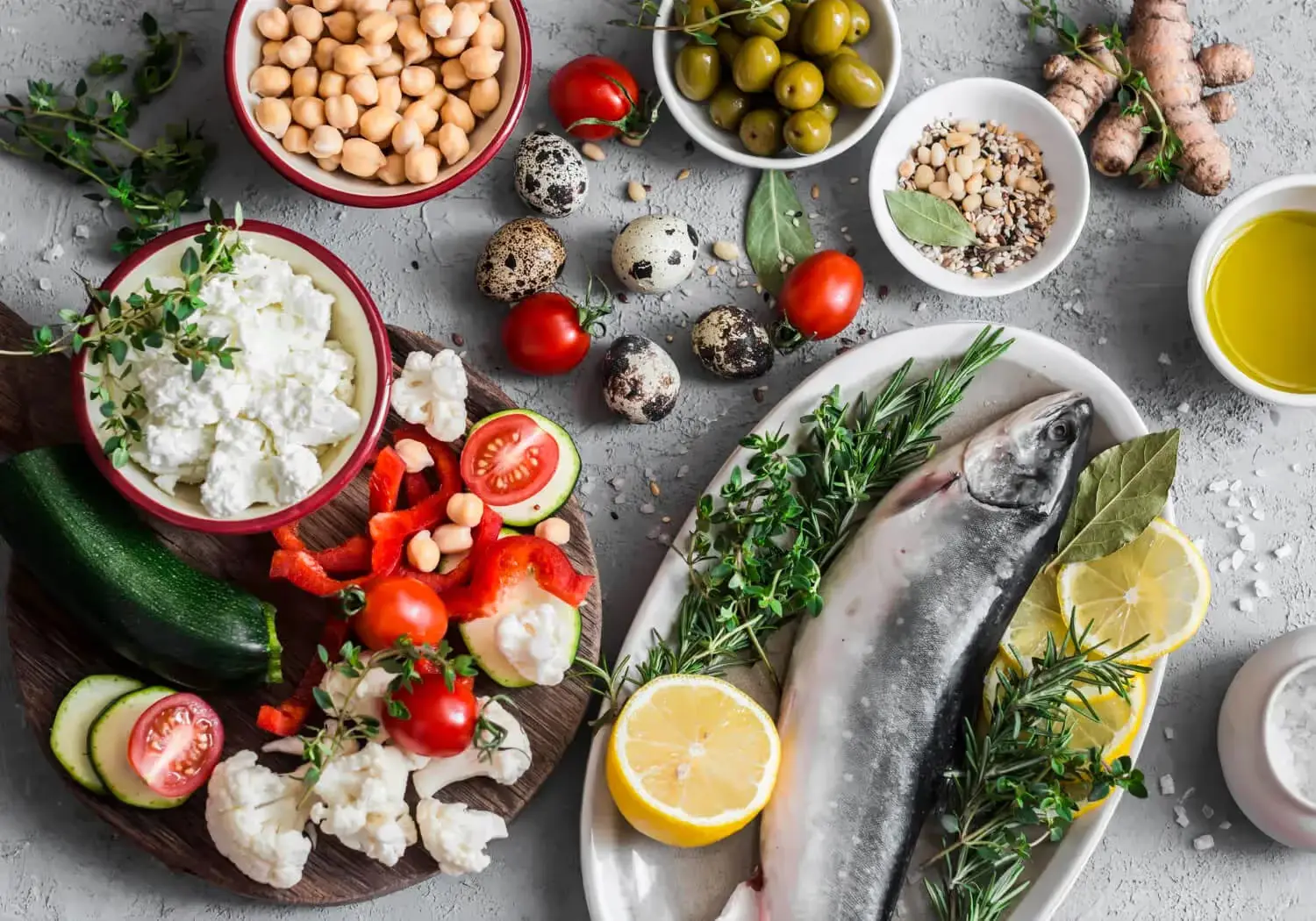
The PCOS diet plan can also be adapted for pregnancy. Below, we list how to prioritize your nutrition to support a healthy pregnancy. For further recommendations, please seek the guidance of your healthcare professional.
Don’t Restrict Calories
Adequate calorie intake is vital during pregnancy to support the baby’s growth. Eat meals every 3–4 hours and avoid skipping meals. This will help you maintain energy levels, stabilize blood sugar, reduce nausea, and provide your baby with vital nutrients.
Increase Key Nutrients
Women with PCOS must prioritize additional nutrient support during pregnancy. Below is a list of key nutrients and why they are important during pregnancy with PCOS.
- Folate: Supports early fetal development
- Iron: Supports increased blood volume and helps prevent iron deficiency
- Calcium: Supports baby’s development of bone and teeth
- Vitamin D: Supports bone and immune health
- Choline: Important for fetal brain development
- Iodine: Supports normal thyroid function and fetal brain development
- Omega-3: Supports brain and eye development
Manage Pregnancy Symptoms
Nutrition should also be modified to manage pregnancy symptoms. Below are common pregnancy symptoms and tips to alleviate them.
- Morning Sickness: Eat smaller, frequent meals. Choose bland foods.
- Heartburn: Eat smaller meals and avoid lying down after meals. Avoid spicy and fatty foods.
- Constipation: Gradually increase fiber, hydrate regularly (2–3 L day), and stay physically active.
- Fatigue: Eat regular meals containing iron and protein.
Stay Active
Research indicates that a sedentary lifestyle can be harmful to unborn children. Being physically inactive during pregnancy can potentially influence how active your child is in later life, which can reduce the risk of obesity and metabolic disorders.
Studies indicate that physical activity is beneficial for the fetus and newborns, recommending that women complete 150 minutes of moderate physical activity a week. This should also be coupled with strength training targeting large muscle groups twice per week.
PCOS Diet Plan for Indian Cuisine
Adapting the PCOS diet for Indian cuisine can be done with some simple swaps. Below is a list of easy changes that will allow you to enjoy your Indian meals without changing entire recipes.
- Prioritize Protein: Skinless chicken, fish, tofu, lentils, chickpeas, and kidney beans
- Choose Whole Grains: Add brown rice, wholemeal roti, wholegrain bread, and wholemeal paratha.
- Select Legumes: Add moong dal (split yellow lentils), masoor dal (split red lentils), toor dal (pigeon peas), chana dal (split black chickpeas), and rajma (red kidney beans).
- Reduce Added Sugar: Limit foods such as gulab jamun, jalebi, rasgulla, barfi, and sweet lassi.
- Reduce Oil: Grill or bake instead of frying, and choose tandoori, roasted, or steamed dishes
Common Mistakes in Following a PCOS Diet Plan
Navigating PCOS comes with its challenges, meaning there are several common pitfalls. Below, we highlight the common mistakes and how to avoid them.
Q: How can I customize the PCOS diet plan to fit my lifestyle?
You can customize the PCOS diet plan by swapping specific foods to meet your dietary requirements and preferences. Animal-based products can be swapped for plant-based alternatives for vegetarians and vegans. Dairy can be removed for those who are lactose intolerant.
Q: How to lose 20 pounds fast with PCOS?
To lose 20 pounds with PCOS, apply a moderate calorie deficit, focused on a balanced, nutrient-dense diet that prioritizes protein, fiber, and healthy fats. Add regular exercise and perform an achievable and predictable routine. This will lead to sustainable weight loss.
Q: Which is better for PCOS, Mounjaro or Ozempic?
Mounjaro (tirzepatide) may be more suitable for addressing PCOS as it targets the GLP-1 and GIP receptors, compared to Ozempic's. This can lead to greater weight loss and greater improvements in insulin resistance. You should seek medical advice for further assistance.
Q: How to lose PCOS belly fat?
To lose PCOS belly fat, you must eat in a calorie deficit, combined with a balanced diet of whole foods. Each meal should contain protein, fiber, and healthy fats. Combine this with regular exercise, and 7–9 hours of sleep will lead to weight loss.
Q: What are the benefits of following a PCOS diet plan for getting pregnant?
The PCOS diet is shown to improve fertility health. This included improving clinical pregnancy, ovulation, and menstrual regularity while reducing the miscarriage rate.
Weight loss that fits your goals and your life.
Get your plan
Sources
- Nunes EA, Colenso-Semple L, McKellar SR, Yau T, Ali MU, Fitzpatrick-Lewis D, Sherifali D, Gaudichon C, Tomé D, Atherton PJ, Robles MC, Naranjo-Modad S, Braun M, Landi F, Phillips SM. Systematic review and meta-analysis of protein intake to support muscle mass and function in healthy adults. J Cachexia Sarcopenia Muscle. 2022 Apr;13(2):795-810. doi: 10.1002/jcsm.12922. Epub 2022 Feb 20. PMID: 35187864; PMCID: PMC8978023. https://pmc.ncbi.nlm.nih.gov/articles/PMC8978023/
- Shah AS, Pant MR, Bommasamudram T, Nayak KR, Roberts SSH, Gallagher C, Vaishali K, Edwards BJ, Tod D, Davis F, Pullinger SA. Effects of Sleep Deprivation on Physical and Mental Health Outcomes: An Umbrella Review. Am J Lifestyle Med. 2025 May 27:15598276251346752. doi: 10.1177/15598276251346752. Epub ahead of print. PMID: 40443808; PMCID: PMC12116485. https://pmc.ncbi.nlm.nih.gov/articles/PMC12116485/
- Kim TW, Jeong JH, Hong SC. The impact of sleep and circadian disturbance on hormones and metabolism. Int J Endocrinol. 2015;2015:591729. doi: 10.1155/2015/591729. Epub 2015 Mar 11. PMID: 25861266; PMCID: PMC4377487. https://pmc.ncbi.nlm.nih.gov/articles/PMC4377487/
- Sabag, A., Patten, R.K., Moreno-Asso, A., Colombo, G.E., Dafauce Bouzo, X., Moran, L.J., Harrison, C., Kazemi, M., Mousa, A., Tay, C.T., Lindén Hirschberg, A., Redman, L.M. and Teede, H.J. (2024) ‘Exercise in the management of polycystic ovary syndrome: A position statement from Exercise and Sports Science Australia’, Journal of Science and Medicine in Sport, 27(10), pp. 668–677. doi:10.1016/j.jsams.2024.05.015. https://www.sciencedirect.com/science/article/pii/S1440244024002081
- Guinhouya BC, Duclos M, Enea C, Storme L. Beneficial Effects of Maternal Physical Activity during Pregnancy on Fetal, Newborn, and Child Health: Guidelines for Interventions during the Perinatal Period from the French National College of Midwives. J Midwifery Womens Health. 2022 Nov;67 Suppl 1(Suppl 1):S149-S157. doi: 10.1111/jmwh.13424. PMID: 36480665; PMCID: PMC10107927. https://pmc.ncbi.nlm.nih.gov/articles/PMC10107927/
- Shang Y, Zhou H, He R, Lu W. Dietary Modification for Reproductive Health in Women With Polycystic Ovary Syndrome: A Systematic Review and Meta-Analysis. Front Endocrinol (Lausanne). 2021 Nov 1;12:735954. doi: 10.3389/fendo.2021.735954. PMID: 34790167; PMCID: PMC8591222. https://pmc.ncbi.nlm.nih.gov/articles/PMC8591222/
- Deswal R, Narwal V, Dang A, Pundir CS. The Prevalence of Polycystic Ovary Syndrome: A Brief Systematic Review. J Hum Reprod Sci. 2020 Oct-Dec;13(4):261-271. doi: 10.4103/jhrs.JHRS_95_18. Epub 2020 Dec 28. PMID: 33627974; PMCID: PMC7879843. https://pmc.ncbi.nlm.nih.gov/articles/PMC7879843/
FAQs
How to lose 20 pounds fast with PCOS?
To lose 20 pounds with PCOS, focus on a balanced diet with controlled portions, regular physical activity, and possibly consulting a healthcare provider for personalized advice.
Which is better for PCOS, Mounjaro or Ozempic?
Mounjaro and Ozempic are medications used for different purposes; consult with a healthcare provider to determine which is more suitable for managing PCOS symptoms.
How to lose PCOS belly fat?
Reducing PCOS belly fat involves regular exercise, a diet high in fiber and low in sugar, and stress management techniques.