Chair Yoga that meets you where you are.
Get your plan
Chair Yoga that meets you where you are.
Get your plan
Somatic yoga is a gentle, awareness-based movement practice that focuses on internal sensation rather than external form to regulate the nervous system, release chronic tension, and reduce stress. This approach differs fundamentally from traditional yoga by emphasizing how movement feels inside your body instead of how poses look from the outside, making it particularly effective for women over 40 experiencing chronic stress, hormonal changes, and long-held tension patterns.
When life moves at an overwhelming pace and your body stores decades of accumulated tension from caring, achieving, and persisting through challenges, standard exercise often fails to address the deeper patterns of holding. Somatic movement offers a different pathway one that speaks directly to your nervous system, invites gentle exploration rather than performance, and creates space for genuine healing.
This complete guide explains what somatic yoga is, how it works with your nervous system, and provides over 20 practical exercises you can use to regulate stress, release stored tension, and reconnect with your body's innate capacity for ease and restoration.
What Is Somatic Yoga and How Is It Different?
Somatic Movement: Focusing on Internal Sensation Over External Form
Somatic yoga prioritizes curiosity about internal experience over achieving specific shapes or positions. The practice asks: Where does tension reside in this moment? How does breath move through different areas of the body? What does gentle release feel like when you allow it rather than force it? This internal focus contrasts sharply with conventional yoga classes that emphasize precise alignment, holding specific postures for set durations, and matching an external ideal demonstrated by an instructor.
The word "somatic" derives from the Greek word "soma," meaning the body as experienced from within rather than the body as observed from outside. In somatic practice, you become both the researcher and the subject, investigating your own patterns of tension, movement, and nervous system response through direct felt experience.
Origins: Thomas Hanna and Somatic Education
Thomas Hanna, a philosopher and movement educator, popularized the term "somatics" in the 1970s to describe educational approaches that develop awareness of the body from the inside. Hanna defined somatic education as work that enhances the internal control, awareness, and responsiveness of the neuromuscular system rather than simply manipulating the body from external positions.
Hanna observed that many chronic pain patterns and movement limitations stemmed not from structural damage but from sensory-motor amnesia the nervous system's learned forgetting of how to sense and control certain muscles. Through slow, mindful movement with focused attention, somatic practices help retrain these neural pathways, restoring voluntary control and releasing habitual tension patterns that have become unconscious.
Understanding how somatic movement differs from traditional approaches helps clarify its unique applications. Those interested in exploring how somatic principles integrate with other movement modalities may find value in Somatic Pilates: Everything You Need to Know, which combines Pilates structure with somatic awareness, or Wall Pilates vs Somatic Yoga: Which Is Right for You?, which provides detailed comparison for choosing the most appropriate practice.
The Key Difference: Slow, Mindful, Internally-Guided Movement
Traditional yoga instruction typically provides external directives: "Lift your right arm overhead, straighten your left leg, hold this position for ten breaths, engage your core." The practitioner's task is to replicate the demonstrated form and maintain it through muscular effort and willpower.
Somatic yoga offers a fundamentally different type of guidance: "Notice what shifts in your ribcage as breath moves in and out. Pause when you sense restriction. Allow your next movement to arise from what your nervous system signals rather than what you think should happen next." The pacing remains deliberately slow and reflective, the movements small and exploratory, and the authority for decision-making shifts from external instruction to internal sensation and self-regulation.
For those seeking structured guidance in this internally-guided approach, a comprehensive somatic yoga program provides step-by-step instruction that honors your unique nervous system needs while teaching foundational somatic principles.
This internally-guided approach means that two people practicing the same somatic sequence will move quite differently based on where each body holds tension, how each nervous system responds to the invitation to release, and what each person discovers through the process of careful attention. The practice serves each individual's unique needs rather than conforming everyone to a single standard.
Why Women Over 40 Benefit Especially from Somatic Practices
Women over 40 face distinct challenges that make somatic movement particularly valuable:
Accumulated Stress Patterns: Decades of caregiving, professional demands, and emotional labor create deeply ingrained tension patterns in the shoulders, jaw, hips, and pelvic floor. These patterns often persist long after the original stressors have passed because the nervous system continues running old protective programs.
Hormonal Transitions: Perimenopause and menopause alter stress hormone regulation, often increasing cortisol levels and creating more pronounced stress responses. Somatic movement directly addresses nervous system regulation, helping counterbalance hormonal stress effects.
Chronic Pain and Inflammation: Many women develop chronic pain conditions in their 40s and beyond. Somatic approaches work with pain rather than pushing through it, gradually retraining the nervous system's pain signals and movement responses without triggering protective guarding.
Need for Gentleness: After years of pushing, achieving, and meeting external demands, many women over 40 recognize the need for practices that offer restoration rather than depletion. Somatic movement meets the body where it is, inviting gentle exploration rather than demanding performance or progress toward arbitrary standards.
The somatic approach transforms movement from another item on a demanding to-do list into a sanctuary for nervous system healing, self-compassion, and genuine restoration.
How Somatic Movement Works with Your Nervous System
Polyvagal Theory Basics: Fight, Flight, Freeze, or Rest
The autonomic nervous system operates through distinct states that determine how your body responds to the world. Polyvagal theory, developed by Dr. Stephen Porges, describes three primary neural pathways that organize these responses:
Ventral Vagal (Social Engagement): When your nervous system perceives safety, the ventral vagal pathway supports rest, digestion, social connection, and restoration. This is the state where healing occurs, where sleep deepens, and where emotional regulation feels accessible.
Sympathetic (Mobilization): When your nervous system detects threat or demand, the sympathetic pathway activates, increasing heart rate, blood pressure, and muscle tension to prepare for fight or flight. This state serves essential protective functions but becomes problematic when chronically activated by ongoing stress.
Dorsal Vagal (Immobilization): When threat becomes overwhelming and escape seems impossible, the dorsal vagal pathway triggers shutdown, freeze, or dissociation. This ancient protective mechanism reduces awareness and metabolic activity, creating the sensation of being stuck, numb, or disconnected from the body.
Many women over 40 with chronic stress oscillate between sympathetic activation (feeling anxious, overwhelmed, unable to rest) and dorsal vagal shutdown (feeling exhausted, depressed, disconnected), rarely accessing the ventral vagal state where genuine restoration occurs.
Somatic movement specifically targets ventral vagal activation by creating experiences of safety, gentle exploration, and internal attunement that signal to the nervous system that it can shift from protection mode into restoration mode.
Activating the Parasympathetic (Rest and Digest) Response
The parasympathetic nervous system, particularly its ventral vagal branch, governs the body's rest, digest, heal, and restore functions. Activation of this system slows heart rate, deepens breathing, improves digestion, enhances immune function, and facilitates tissue repair and emotional processing.
Somatic movement activates parasympathetic response through several mechanisms:
Slow, Gentle Movement: Rapid or intense movement triggers sympathetic activation, while slow, non-threatening movement signals safety and allows parasympathetic engagement.
Breath Awareness: Attending to breath without forcing specific patterns allows the nervous system to find its natural rhythm, typically settling into slower, deeper breathing that stimulates vagal pathways.
Internal Attention: Shifting focus from external performance to internal sensation activates the insula, a brain region involved in interoception and emotional awareness that directly influences vagal tone.
Voluntary Control: The experience of choosing how and when to move, rather than following external commands, reinforces the nervous system's sense of agency and safety, both of which support parasympathetic activation.
When you practice somatic movement regularly, you train your nervous system to access parasympathetic states more readily, even when facing stressors. This improved nervous system flexibility represents one of the most valuable benefits of consistent somatic practice.
Vagal Tone and Why It Matters for Health
Vagal tone refers to the responsiveness and regulatory capacity of the vagus nerve, a major neural pathway connecting the brain to the heart, lungs, digestive organs, and other systems. High vagal tone indicates a nervous system that can effectively shift between activation and rest, responding appropriately to demands while returning to baseline restoration efficiently.
Research demonstrates that improved vagal tone correlates with numerous health benefits:
- Reduced Inflammation: Higher vagal tone supports the cholinergic anti-inflammatory pathway, which helps regulate immune responses and reduce chronic inflammation.
- Better Stress Resilience: People with higher vagal tone recover more quickly from stressful events, showing faster return to baseline heart rate and blood pressure.
- Improved Mood Regulation: Vagal tone influences neurotransmitter balance, with higher tone associated with reduced anxiety and depression symptoms.
- Enhanced Digestive Function: The vagus nerve plays a central role in gut motility, enzyme secretion, and the gut-brain communication that affects both digestion and mood.
- Cardiovascular Health: Higher vagal tone predicts better heart rate variability, a marker of cardiovascular health and longevity.
Studies show that practices emphasizing slow movement, breath awareness, and internal attention precisely the elements of somatic yoga effectively improve vagal tone and nervous system regulation. This represents a measurable physiological change that underlies many of the subjective benefits practitioners experience.
Releasing Stored Stress and Trauma from the Body
Chronic stress and traumatic experiences become encoded not just in memory but in the body's tissues, movement patterns, and nervous system responses. This embodiment of stress manifests as:
- Chronic Muscle Tension: Sustained contraction in shoulders, jaw, hips, or other areas that persists regardless of conscious relaxation attempts.
- Restricted Breathing: Shallow chest breathing or breath-holding patterns that limit oxygen exchange and maintain sympathetic activation.
- Postural Holding: Protective body positions shoulders lifted toward ears, pelvis tucked, chest collapsed that once served defensive purposes but now operate unconsciously.
- Movement Avoidance: Unconscious restriction of certain movements or ranges of motion associated with traumatic or stressful experiences.
Somatic movement addresses these stored patterns through a process fundamentally different from cognitive therapy or forced stretching:
Interoceptive Awareness: By learning to sense internal bodily states accurately, you begin recognizing when and where tension manifests, creating the possibility for conscious release.
Gentle Exploration: Small, slow movements allow you to approach areas of holding without triggering defensive responses that would reinforce the pattern.
Pendulation: Moving between areas of tension and areas of ease helps the nervous system process stored activation gradually, preventing overwhelm.
Completion of Protective Responses: Somatic practice allows the body to complete defensive movements that were interrupted during traumatic experiences, discharging stored activation through trembling, deep breathing, or spontaneous movement.
Research into somatic interventions highlights how internal awareness paired with gentle movement helps people process emotional and physical symptoms of trauma more effectively than approaches focusing solely on cognitive understanding or physical manipulation.
Creating Felt Safety Through Gentle Movement
The concept of "felt safety" refers to the nervous system's actual experience of safety rather than the intellectual understanding that you are safe. You can consciously know that no danger exists while your nervous system remains in protective activation, producing anxiety, hypervigilance, and tension.
Somatic movement cultivates felt safety through specific elements:
Predictability: Slow, simple movements that you control create predictable sensory experiences that signal safety to the nervous system.
Choice: Deciding when to move, how far to move, and when to rest reinforces the experience of agency that trauma often strips away.
Support: Practicing while lying down or well-supported allows the body to release some protective muscle tension required for maintaining upright posture.
Titration: Working with small amounts of sensation or movement at a time prevents nervous system overwhelm that would trigger protective responses.
Attunement: Paying careful attention to internal signals and responding to them with compassion builds the internal relationship that underlies self-regulation.
When your nervous system experiences felt safety regularly through somatic practice, it begins updating its threat assessment systems, gradually releasing chronic protective patterns and allowing access to deeper rest, more complete emotional processing, and fuller self-expression.
Benefits of Somatic Yoga for Women Over 40

Significant Stress and Cortisol Reduction
Chronic stress elevates cortisol and other stress hormones, creating a cascade of negative health effects including weight gain, sleep disruption, immune suppression, and accelerated aging. Women in perimenopause and menopause often experience particularly elevated stress hormone levels due to hormonal transitions.
Somatic yoga reduces stress hormones through multiple mechanisms:
Parasympathetic Activation: The slow, gentle movements and breath awareness characteristic of somatic practice directly stimulate parasympathetic pathways that counteract stress hormone production.
Muscle Release: Chronic muscle tension requires sustained energy expenditure and signals ongoing threat to the brain. Releasing this tension through somatic movement interrupts the stress signal feedback loop.
Present-Moment Focus: The internal attention required for somatic practice interrupts rumination about past stressors or worry about future demands, both of which maintain elevated cortisol.
Improved Sleep: Better sleep resulting from somatic practice normalizes cortisol rhythms, which should peak in morning and decline through the day but often remain elevated in chronically stressed individuals.
Regular somatic movement practice provides relief not just during the practice session but creates lasting changes in baseline stress hormone levels, offering genuine restoration rather than temporary distraction.
Release of Chronic Muscle Tension and Holding Patterns
After decades of life, bodies often maintain habitual tension patterns long after the original cause has passed. These patterns serve no current protective function but persist because they have become neurologically ingrained the nervous system has "forgotten" how to release and control these muscles voluntarily.
Common chronic holding patterns in women over 40 include:
Upper Trapezius Tension: Shoulders lifted toward ears from years of stress, creating neck pain and headaches.
Jaw Clenching: TMJ tension from unconscious clenching during sleep or stress, causing facial pain and headaches.
Hip Flexor Shortening: Tight hip flexors from prolonged sitting, creating lower back pain and postural imbalance.
Pelvic Floor Gripping: Chronic pelvic tension from stress, childbirth trauma, or cultural conditioning about "holding it together," causing pelvic pain, urinary issues, and sexual dysfunction.
Respiratory Restriction: Shallow chest breathing from chronic stress, limiting oxygen exchange and maintaining sympathetic activation.
Somatic yoga addresses these patterns through a specific process called pandiculation a gentle contract-release-relax pattern that recalibrates the nervous system's control of muscle length and tension. By slowly contracting the tense muscle, then consciously releasing it while maintaining awareness, you restore voluntary control and interrupt the unconscious holding pattern.
Unlike passive stretching, which temporarily lengthens muscle but doesn't address the neural component, pandiculation retrains the sensory-motor feedback loop itself, creating lasting release that the nervous system can maintain because it has relearned how to control that area.
Improved Sleep Quality Through Nervous System Regulation
Sleep quality declines for many women over 40 due to hormonal changes, stress, and chronic tension that prevents the nervous system from fully downregulating at night. The parasympathetic activation required for deep, restorative sleep becomes less accessible when the nervous system remains in chronic protective activation.
Somatic yoga improves sleep through several pathways:
Evening Parasympathetic Activation: Practicing somatic movement before bed shifts the nervous system into rest mode, facilitating the transition to sleep.
Reduced Physical Tension: Releasing muscle tension that causes discomfort or pain allows more comfortable rest and fewer sleep disruptions.
Quieter Mental Activity: The present-moment focus of somatic practice calms the racing thoughts and worry that often interfere with falling asleep.
Deeper Rest Capacity: Regular somatic practice improves the nervous system's overall capacity to access deep rest states, enhancing sleep architecture even on nights when you don't practice immediately before bed.
Pain Reduction: Decreased chronic pain from somatic practice removes a major source of sleep disruption for many women.
Studies demonstrate that regular yoga practice, particularly approaches emphasizing awareness and gentleness, produces measurable improvements in sleep quality, sleep duration, and sleep efficiency. The somatic approach, with its specific focus on nervous system regulation, may offer particular benefits for sleep compared to more vigorous styles.
Reduced Chronic Pain (Especially Back, Neck, Shoulders)
Chronic pain affects millions of women over 40, with lower back pain, neck pain, and shoulder tension among the most common complaints. While structural issues sometimes contribute, much chronic pain stems from neuromuscular patterns habitual tension, movement restrictions, and sensitized pain pathways that persist regardless of tissue damage.
Somatic movement addresses chronic pain through mechanisms distinct from pain medication or physical manipulation:
Neural Repatterning: By retraining the brain-muscle communication loop, somatic practice changes how the nervous system interprets and responds to sensations from painful areas.
Reduced Muscle Guarding: Chronic pain triggers protective muscle guarding that often worsens pain by creating additional tension. Somatic movement's gentle approach allows this guarding to release gradually.
Improved Movement Quality: Pain often results from compensatory movement patterns where some muscles overwork to compensate for others that have "gone offline." Somatic awareness helps identify and rebalance these patterns.
Central Sensitization Reduction: Chronic pain involves central nervous system sensitization where normal sensations get interpreted as pain. The safety and gentleness of somatic practice helps desensitize these pathways.
Breath and Tension Connection: Many people unconsciously hold their breath or breathe shallowly in response to pain, which increases muscle tension and pain. Somatic practice restores natural breathing that supports pain reduction.
The key difference between somatic approaches and forced stretching or aggressive bodywork lies in working with the nervous system rather than against it. When you force a stretch despite pain signals, you trigger protective responses that reinforce tension. When you move slowly, gently, and with awareness, you create the safety that allows genuine release.
Better Body Awareness and Interoception
Interoception refers to the ability to sense internal bodily states heartbeat, breathing, muscle tension, hunger, fullness, emotional states, and other internal signals. Many women over 40 have developed patterns of ignoring or overriding these signals due to decades of prioritizing external demands over internal needs.
Somatic yoga systematically rebuilds interoceptive capacity through:
Direct Sensation Practice: Each movement invites attention to specific internal sensations, strengthening the neural pathways involved in interoceptive awareness.
Comparison and Contrast: Moving one side then the other, or alternating between movement and stillness, creates opportunities to notice differences and refine sensory discrimination.
Slowed Pace: The deliberately slow movement gives time to notice subtle sensations that faster movement obscures.
Non-Judgmental Observation: Practicing noticing without trying to change or fix what you notice builds the observational capacity underlying interoception.
Improved interoception offers numerous benefits beyond somatic practice itself:
Earlier Stress Detection: You notice tension arising before it becomes chronic, allowing earlier intervention.
Better Self-Care Decisions: You can sense what your body needs rest, movement, food, connection rather than relying solely on external schedules or rules.
Emotional Awareness: Many emotions manifest first as bodily sensations. Better interoception supports emotional awareness and regulation.
Reduced Dissociation: Trauma often creates dissociation from bodily experience. Rebuilding interoception supports reconnection and integration.
Improved Posture: You notice postural holding patterns as they occur rather than only after they create pain.
The enhanced body awareness from somatic practice creates a foundation for self-regulation that extends into all areas of life, supporting healthier choices and earlier recognition of when something needs attention.
Emotional Release and Trauma Processing (Gentle, Safe)
Emotions and traumatic experiences become stored not just in memory but in the body's tissues, posture, and movement patterns. The expression "the body keeps the score" captures how past experiences shape present physical experience, often outside conscious awareness.
Somatic movement provides a gentle, safe pathway for processing stored emotions and trauma:
Bottom-Up Processing: Rather than starting with cognitive understanding, somatic practice accesses emotions through bodily sensation, often reaching material that cognitive approaches miss.
Titrated Release: The slow, gentle nature of somatic movement allows emotional material to surface gradually in manageable amounts rather than overwhelming you.
Discharge of Activation: Traumatic experiences often involve interrupted defensive responses. Somatic practice allows completion of these responses through trembling, spontaneous movement, or deep breathing, discharging stored activation.
Safe Relationship: The internal attunement practiced during somatic movement builds a compassionate relationship with yourself that provides the safety needed for emotional processing.
Avoidance of Retraumatization: The self-paced, internally-guided nature of somatic practice allows you to stay within your window of tolerance, processing material without becoming overwhelmed in ways that would reinforce trauma.
Common signs of emotional release during somatic practice include spontaneous tears, deep sighs, yawning, trembling, warmth or coolness in specific areas, or memories arising. These releases represent healing rather than problems and typically feel relieving rather than overwhelming when they occur within properly paced somatic practice.
For women who have experienced trauma, working with a trauma-informed somatic practitioner or therapist provides additional safety and support for deeper processing while using somatic movement as one element of a comprehensive healing approach.
Enhanced Mind-Body Connection
The mind-body connection refers to the bidirectional communication between mental and physical states how thoughts influence bodily tension and how bodily states influence emotional and mental experience. Chronic stress, trauma, and cultural conditioning often create disconnection where people think about their bodies rather than inhabiting them.
Somatic yoga rebuilds the mind-body connection through:
Embodied Presence: The practice requires being present in bodily experience rather than thinking about the body from outside.
Sensation-Thought Integration: Noticing how specific movements or breath patterns influence mental states reveals the concrete pathways of mind-body influence.
Reduced Dissociation: For those who cope with difficult experiences through dissociation or "leaving" the body, gentle somatic practice provides a safe pathway back to embodied presence.
Proprioceptive Development: Enhanced awareness of body position and movement in space strengthens the felt sense of having a body rather than just intellectually knowing about the body.
Internal Authority: Learning to trust internal sensations over external instructions rebuilds the relationship between mind and body as collaborative partners rather than the mind as controller of a rebellious body.
A strong mind-body connection supports emotional regulation, stress management, intuitive decision-making, creative expression, and the embodied presence that allows full engagement with life rather than constant mental monitoring and control.
Complementary to Other Exercise (Aids Recovery)
Many women over 40 engage in structured exercise programs for cardiovascular health, strength, or other fitness goals. Somatic movement serves as an ideal complement to these practices rather than a replacement:
Enhanced Recovery: Somatic movement facilitates nervous system downregulation and muscle release after intense training, supporting faster recovery and reducing injury risk.
Improved Movement Quality: The body awareness developed through somatic practice enhances coordination and efficiency in other movement forms.
Injury Prevention: Early detection of compensatory patterns or emerging tension through interoceptive awareness allows correction before injury occurs.
Nervous System Balance: Balancing intense training (sympathetic activation) with restorative somatic practice (parasympathetic activation) optimizes the hormonal and neural adaptations to exercise.
Sustainability: The gentleness and restoration offered by somatic practice makes long-term exercise adherence more sustainable by preventing the burnout that occurs when all movement feels demanding.
For women who find traditional exercise depleting rather than energizing, somatic movement offers an entirely different category of practice one that restores rather than depletes, that builds awareness rather than demanding performance, and that can be practiced even when energy levels or physical capacity would preclude more intense activity.
Those exploring specific applications of gentle, mindful movement may benefit from 10 Somatic Exercises for Women to Boost Weight Loss, which demonstrates how somatic principles support metabolic health alongside nervous system regulation.
Foundational Somatic Concepts

Interoception: Sensing Your Body from Within
Interoception is the sense that allows you to feel internal bodily states and processes the subtle and not-so-subtle signals arising from inside your body rather than from external senses like sight or hearing. This includes sensing:
- Heart rate and rhythm
- Breathing depth and pace
- Muscle tension or ease
- Digestive sensations
- Temperature changes
- Pain or pleasure
- Emotional states as bodily feelings
- Energy levels
- Need states (hunger, thirst, rest)
Interoception differs from proprioception, which tells you where your body parts are positioned in space. Interoception tells you how your internal state feels in this moment.
Somatic yoga systematically develops interoceptive capacity by directing attention repeatedly to internal sensations during slow, mindful movement. Over time, this practice strengthens the neural pathways between the body's sensory receptors and the brain regions involved in interoceptive awareness, particularly the insula.
Stronger interoception supports:
- Earlier recognition of stress signals
- Better emotional awareness and regulation
- More accurate assessment of bodily needs
- Reduced anxiety from clearer internal information
- Improved self-trust and decision-making
Many women discover through somatic practice that they have spent years disconnected from internal experience, relying primarily on external cues, schedules, and rules to determine when to eat, rest, or address needs. Rebuilding interoception restores internal authority and self-attunement that supports both physical and emotional wellbeing.
Pandiculation: The Gentle Contract-Release-Relax Pattern
Pandiculation is a neuromuscular process that resets muscle length and tension through a specific sequence: voluntary contraction, slow release while maintaining awareness, and complete relaxation. You experience pandiculation naturally when you stretch and yawn upon waking this instinctive movement recalibrates muscle tension after the stillness of sleep.
The pandiculation sequence works differently from passive stretching:
Passive Stretch:
- Lengthen muscle from outside force
- Nervous system may resist (stretch reflex)
- Temporary length change
- No change in neural control
- Muscle returns to previous tension
Pandiculation:
- Voluntary contraction of tight muscle
- Slow, conscious release while sensing
- Complete relaxation
- Nervous system recalibrates control
- Lasting release maintained neurally
The key difference lies in the active, conscious involvement of the nervous system during the release phase. By slowly releasing the contraction while maintaining sensory awareness, you update the sensory-motor feedback loop that determines resting muscle length and tension.
Somatic movement sequences incorporate pandiculation patterns throughout, often without explicitly naming them. When you gently contract shoulder muscles then consciously soften and release them while sensing the process, you are pandiculating. When you arch your back, hold briefly, then slowly release while noticing how the spine moves segment by segment, you are pandiculating.
This process addresses sensory-motor amnesia the nervous system's learned forgetting of how to sense and control certain muscles that become habitually tight. Through repeated pandiculation practice, you restore voluntary control and conscious awareness to areas that have been operating unconsciously in protective tension patterns.
Slow, Small, Exploratory Movements
Somatic movement prioritizes slowness and small range of motion for specific neurological reasons:
Slow Movement Allows Sensory Processing: The nervous system requires time to process sensory information from movement. Moving slowly gives time to notice subtle sensations that fast movement obscures.
Small Movements Maintain Safety: Large, dramatic movements can trigger protective guarding responses. Small movements allow exploration without activating defensive patterns.
Exploration Over Achievement: The goal involves discovering how your unique body moves and where it holds tension, not achieving a specific shape or range of motion.
Differentiation of Movement: Moving slowly and small allows you to differentiate movement in one area from another isolating spinal segments, moving ribs independent of shoulders, separating hip movement from lower back movement.
Access to Subtle Holding: Major tension patterns consist of many subtle holdings. Small movements reveal these smaller components that large movements would miss.
This approach contrasts sharply with cultural conditioning around exercise that equates benefit with intensity, large range of motion, and pushing through resistance. Somatic practice reveals that the most profound changes often come from the smallest, slowest, most attentive movements that allow the nervous system to update its patterns rather than reinforce them through force.
No Forcing, No "Should," Just Exploration
Somatic practice operates from a fundamentally different relationship to the body than most exercise:
Not This:
- "I should be able to do this"
- "If I force it, it will change"
- "Tightness means I need to stretch harder"
- "The instructor's version is correct"
- "I need to match what others can do"
But This:
- "What does my body actually feel right now?"
- "What becomes possible when I move gently?"
- "Tightness is information about nervous system protection"
- "My unique experience is the correct one for me"
- "Comparison interrupts awareness"
This non-forcing approach proves essential for working with the nervous system effectively. Force triggers protective responses that reinforce tension patterns. Gentle exploration in an atmosphere of curiosity and self-compassion creates the safety that allows genuine release.
The absence of "should" extends beyond the movement itself to how you relate to your experience. If you notice tension, you don't "should" yourself for having it. If you discover limited range of motion, you don't judge it as a failure. Each discovery represents valuable information about how your nervous system currently organizes protection and where you might invite release.
This exploratory attitude builds self-compassion and internal attunement that support healing far beyond the physical benefits of the movement itself.
Following Sensation Rather Than Instruction
Traditional exercise instruction provides external directives about what your body should do. Somatic movement offers internal directives about what to notice, then invites you to follow what you discover rather than following preset instructions.
"Lift your right arm overhead. Hold for five breaths. Lower slowly."
"Sense how your right shoulder feels. Allow your arm to lift as far as feels easy. Notice where you feel the first restriction. Pause there. Breathe into that area. When your nervous system signals readiness, allow a small amount more. Or return to rest if that feels right."
Following sensation rather than instruction requires developing trust in internal signals and releasing the habit of looking outside yourself for what is correct. This proves challenging for many women who have been conditioned to defer to external authority and override internal signals in favor of external demands.
The practice of following sensation builds:
- Self-trust and internal authority
- Accurate interoception
- Respect for personal boundaries
- Self-paced regulation
- Discrimination between external pressure and internal knowing
Over time, this capacity to follow internal sensation rather than external instruction extends beyond movement practice into other life areas, supporting better boundary-setting, more authentic choices, and reduced compliance with demands that don't serve your genuine needs.
Somatic Breathing Practices
Diaphragmatic Breathing for Calm
Diaphragmatic breathing, also called belly breathing or abdominal breathing, uses the diaphragm muscle rather than the chest muscles as the primary breathing mechanism. The diaphragm is a dome-shaped muscle separating the chest and abdominal cavities. When it contracts, it flattens downward, creating negative pressure that draws air into the lungs while gently pressing abdominal contents down and forward, creating the visible "belly breath."
Many women over 40 have developed chronic chest breathing patterns from stress, postural habits, or cultural conditioning about maintaining flat stomachs. Chest breathing uses accessory muscles in the neck and shoulders, requires more effort for less air exchange, and maintains sympathetic activation that reinforces stress.
How to Practice Diaphragmatic Breathing:
- Lie on your back with knees bent, feet flat on the floor, one hand on your chest and one on your belly.
- Without forcing, allow the next inhale to expand your belly, letting the hand on your abdomen rise while the hand on your chest remains relatively still.
- Exhale naturally, feeling the belly gently fall.
- Continue for several minutes, noticing the gentle rise and fall of the abdomen with each breath.
- If belly movement doesn't happen naturally, don't force it. Simply imagine breath flowing down into the lower belly, and over time the pattern will develop.
Benefits of Diaphragmatic Breathing:
- Activates parasympathetic nervous system
- Lowers heart rate and blood pressure
- Reduces stress hormone production
- Improves oxygen exchange efficiency
- Releases tension in neck and shoulders
- Massages abdominal organs supporting digestion
- Provides baseline for other breathing practices
Practice diaphragmatic breathing lying down initially, then gradually incorporate it into sitting, standing, and moving. Eventually this pattern can become your default breathing rather than something you consciously practice.
For those seeking supported seated options that facilitate proper breathing mechanics, Best Yoga Poses for Women Over 40: Boost Energy, Ease Stress & Find Balance offers accessible variations that support diaphragmatic breathing development.
Extended Exhale Breathing (5-7 Count Out)
Extended exhale breathing deliberately lengthens the exhalation relative to the inhalation, which specifically activates parasympathetic nervous system pathways and signals safety to the body. The vagus nerve, which governs the parasympathetic response, becomes more active during exhalation. Extending the exhale enhances this activation, creating deeper relaxation.
How to Practice Extended Exhale Breathing:
- Sit or lie comfortably and establish natural breathing rhythm.
- Begin counting the length of your natural inhale and exhale without changing them. Perhaps you inhale for 3 counts and exhale for 4 counts.
- Gradually lengthen only the exhale, working toward a 5-7 count exhalation while keeping the inhale comfortable and natural (perhaps 3-4 counts).
- The exhale should remain smooth and controlled, not forced or strained. If you feel air hunger or tension, shorten the count.
- Practice for 5-10 minutes, allowing the extended exhale to create progressive relaxation.
Extended Exhale Applications:
- Evening practice before bed to support sleep
- During stressful moments to activate calming response
- After intense exercise to facilitate recovery
- When you notice anxiety arising
- As preparation for deeper meditation or rest
The 5-7 count exhale provides enough lengthening to activate parasympathetic pathways without creating strain that would counteract the calming effect. Some people can comfortably extend exhalation further, but longer is not necessarily better the goal involves smooth, comfortable breathing that signals safety rather than forced breathing that creates effort.
Resonant Frequency Breathing (5-6 Breaths Per Minute)
Resonant frequency breathing, also called coherent breathing, involves breathing at approximately 5-6 breaths per minute (inhaling for 5 seconds, exhaling for 5 seconds). This specific rate optimizes heart rate variability, creating coherent rhythms between breathing, heart rate, and blood pressure that enhance vagal tone and nervous system regulation.
At resonant frequency, the cardiovascular system operates most efficiently blood pressure and heart rate oscillations synchronize with breath in a coherent pattern that reduces system stress and improves regulatory capacity.
How to Practice Resonant Frequency Breathing:
- Sit comfortably with an upright but relaxed spine.
- Inhale smoothly for 5 seconds.
- Exhale smoothly for 5 seconds.
- Continue this even 5-5 pattern for 10-20 minutes.
- Breath should remain comfortable and smooth. If 5 seconds feels too long or too short, adjust to 4-6 seconds to find your resonant frequency (most people fall between 4.5 and 6.5 seconds per cycle).
- Focus attention on the smooth, even quality of breath rather than thinking about other things.
Benefits of Resonant Frequency Breathing:
- Maximizes heart rate variability
- Improves vagal tone over time
- Reduces anxiety and depression symptoms
- Enhances emotional regulation capacity
- Improves cardiovascular efficiency
- Supports better stress resilience
Research demonstrates that regular resonant frequency breathing practice produces measurable improvements in heart rate variability, vagal tone, and stress resilience. These effects accumulate with consistent practice, making this one of the most powerful standalone interventions for nervous system regulation.
Practice resonant frequency breathing as a dedicated session once or twice daily, or use it during transitional moments before beginning work, between tasks, or when feeling stressed.
Humming/Buzzing for Vagal Stimulation
The vagus nerve innervates the vocal cords and muscles of the throat. Gentle vocalization, particularly humming or buzzing, creates vibration that stimulates vagal pathways, supporting parasympathetic activation and nervous system regulation. This practice, sometimes called bhramari pranayama in yoga traditions, provides a simple, effective tool for calming the nervous system.
How to Practice Humming/Buzzing:
- Sit comfortably with spine upright but relaxed.
- Inhale naturally through the nose.
- Exhale while making a gentle humming sound, as if saying "mmmmm" with lips closed.
- Feel the vibration in your throat, face, and head.
- Continue for 5-10 breaths, noticing the calming effect.
Variations:
- Place fingertips gently on your face or throat to feel vibration more directly
- Experiment with different pitches to find what feels most calming
- Try a buzzing "zzzzz" sound instead of humming
- Alternate between humming and silent breath
Benefits of Humming/Buzzing:
- Direct vagal nerve stimulation through vibration
- Rapid activation of parasympathetic response
- Reduction in racing thoughts (sound provides focus)
- Release of facial and jaw tension
- Enhanced sense of internal grounding
- Immediate calming available anywhere
Humming proves particularly valuable during moments of acute stress when other practices feel too complex or effortful. The simple act of humming for even 5-10 breaths can shift nervous system state remarkably quickly, providing relief when you need it most.
Essential Somatic Movement Exercises (20+ Practices)

Somatic Cat-Cow: Sensing Spinal Movement
Traditional cat-cow focuses on achieving specific shapes a deep arch and a deep curve of the spine. Somatic cat-cow prioritizes sensing how each segment of the spine moves and where movement becomes restricted or unclear.
How to Practice:
- Begin on hands and knees with hands under shoulders and knees under hips.
- Pause and sense your spine in neutral. Notice any areas that feel tight, compressed, or unclear.
- On an inhale, begin very slowly allowing your spine to arch, starting from the tailbone and sequencing forward through each vertebra. Let your head lift last.
- Notice which areas move easily and which feel stuck or held. Move only as far as feels smooth.
- Pause at the top of the arch and sense the position without forcing deeper.
- On an exhale, begin slowly reversing the movement, tucking the tailbone and sequencing the curve forward through each spinal segment. Let your head release last.
- Pause in the rounded position and notice the sensations.
- Continue for 5-10 cycles, moving slower with each repetition, noticing finer details of spinal movement.
What to Notice:
- Which spinal segments move freely versus which feel stuck
- Whether movement sequences smoothly or jumps from one area to another
- Where you hold breath or tighten unnecessarily
- How the movement changes as you repeat it slowly
- Areas of the back that you can barely sense versus areas with clear sensation
Somatic cat-cow teaches spinal differentiation and segmental control rather than achieving a specific stretch. Over time, areas that initially felt stuck or numb begin moving more freely as the nervous system relearns how to control them.
Arch and Flatten: Releasing Lower Back Tension
This supine practice addresses chronic lower back and hip tension through gentle pelvic tilts that restore natural spinal curves and release protective holding patterns in the psoas, back muscles, and pelvic floor.
How to Practice:
- Lie on your back with knees bent, feet flat on the floor about hip-width apart, arms resting by your sides.
- Sense your lower back in its current state. Notice any areas of tension, compression, or discomfort.
- On an inhale, slowly tilt your pelvis so the lower back gently arches away from the floor (tailbone tilts toward feet, pubic bone toward chest). Move only as far as feels smooth and comfortable.
- Pause and sense the arch. Notice sensations in lower back, belly, hip flexors, pelvic floor.
- On an exhale, slowly reverse the tilt, bringing the lower back toward the floor (tailbone tilts toward head, pubic bone toward feet). The movement should feel like a gentle pressing of the low back into the floor.
- Pause and sense the flattened position. Notice which muscles activate to create this position.
- Continue for 8-12 repetitions, moving progressively slower, making the movements smaller, sensing more detail.
Refinements:
- Notice if one direction feels easier or more familiar than the other
- Observe whether you hold breath during movement
- Feel whether movement initiates from the pelvis or from tensing other areas
- Sense the relationship between pelvic movement and breathing
- Notice if one side of the lower back releases differently than the other
This practice addresses a common pattern where the lower back either chronically arches (anterior pelvic tilt with tight hip flexors) or chronically flattens (posterior tilt with tight hamstrings and gluteals). By moving slowly through both directions with awareness, you restore the nervous system's ability to access the full range and find neutral rather than remaining stuck in protective holding.
Diagonal Curl: Releasing Hip and Core Holding
Diagonal core patterns address rotational tension in the waist, hips, and oblique abdominal muscles that accumulate from habitual movement patterns, postural holding, and stress-related bracing of the core.
How to Practice:
- Lie on your back with knees bent, feet flat, arms resting comfortably.
- On an exhale, slowly draw your right knee toward your left shoulder while very gently engaging the left side abdominal muscles to support the movement. The movement should be small and easy.
- Pause when you reach a comfortable endpoint and sense the diagonal engagement across your core and hip.
- Inhale and slowly release, allowing the right leg to return to the starting position while sensing the softening of abdominal and hip muscles.
- Pause and notice how the right side feels compared to before.
- Repeat 3-5 times on the right side, then switch to the left side.
- After practicing both sides, pause in neutral and notice whether the two sides feel different.
What to Notice:
- Does one side feel tighter or more restricted?
- Do you hold breath or brace unnecessarily during movement?
- Can you sense the diagonal connection from hip to opposite shoulder?
- Do lower back, belly, hip, or shoulder areas hold tension during the movement?
- How does your core feel after the practice more released or more engaged?
Diagonal curl addresses chronic patterns of core bracing where the abdominal and hip muscles maintain protective tension long after the original threat has passed. By gently engaging then consciously releasing these muscles while tracking sensation, you restore voluntary control and interrupt unconscious holding.
Shoulder Releases: Melting Upper Body Tension
Chronic shoulder tension represents one of the most common holding patterns in women over 40, resulting from stress, computer work, emotional armor, and unconscious bracing against life's demands. This practice releases shoulder, upper back, and neck tension through gentle movement and conscious relaxation.
How to Practice:
- Sit comfortably or stand with feet grounded and spine upright but relaxed.
- Sense your shoulders in their current position. Notice whether they lift toward your ears, round forward, pull back, or rest in some other pattern.
- On an inhale, slowly and deliberately lift your shoulders toward your ears, engaging the upper trapezius muscles intentionally. Move with control, not force.
- Hold the lifted position for 2-3 seconds, consciously sensing the engagement.
- On an exhale, very slowly release the shoulders, lowering them while maintaining awareness of the movement. Feel the shoulder blades gliding down the back, the trapezius releasing, the neck lengthening.
- Pause with shoulders fully released and sense the difference from the engaged position.
- Repeat 5-8 times, moving progressively slower and noticing finer details of engagement and release.
- After the last repetition, pause and notice whether your shoulders rest in a different position than when you began.
Additional Shoulder Movement:
- Slowly roll your shoulders backward in small circles, coordinating with breath. Notice areas that move smoothly versus areas that feel sticky or unclear.
- Reverse direction, rolling shoulders forward, again noting quality of movement.
- Experiment with other shoulder movements reaching forward, pulling back, rotating always slowly, always with attention to sensation rather than achievement.
This shoulder release practice uses pandiculation (conscious engagement and release) rather than passive stretching. By deliberately engaging the muscles that chronically hold tension, then consciously releasing them while sensing the process, you restore the nervous system's voluntary control over shoulder position.
Neck and Jaw Releases: Releasing Face and Head Tension
The neck, jaw, face, and scalp hold tremendous tension from stress, unconscious clenching, and emotional holding. This area also contains concentrated vagal pathways, so releasing tension here can significantly impact nervous system regulation.
How to Practice Neck Release:
- Sit comfortably with spine upright, shoulders relaxed.
- Very slowly allow your head to drop forward, letting gravity draw your chin toward your chest. Move only as far as feels comfortable without force.
- Pause and sense the gentle stretch along the back of the neck. Breathe naturally.
- Very slowly lift your head back to neutral, sensing the movement.
- Pause in neutral.
- Slowly allow your head to tilt toward the right shoulder, ear moving toward shoulder without lifting the shoulder. Sense the left side of the neck lengthening.
- Return slowly to neutral.
- Repeat to the left side.
- If it feels appropriate, make very slow, small circles with your head, noticing areas of restriction or discomfort without forcing through them.
How to Practice Jaw Release:
- Bring attention to your jaw. Notice whether your teeth are clenched or whether your jaw muscles feel tight.
- Allow your mouth to open slightly so teeth separate. Let the jaw hang slightly loose.
- Very gently massage the jaw hinge points (where the jaw connects to the skull in front of your ears) with your fingertips, using small circular motions.
- Make very small, slow movements of the jaw opening slightly wider, shifting side to side, gentle forward movement all without force or stretching.
- Intentionally clench the jaw briefly (2 seconds), then consciously release and soften, noticing the difference.
- Allow the tongue to rest heavily in the floor of the mouth rather than pressing against the roof.
- Soften the muscles around the eyes, forehead, and scalp, allowing tension to melt downward.
These practices address chronic holding that operates almost entirely unconsciously. Many women discover through this practice that they have been clenching their jaw or holding their neck rigid for years without awareness. The slow, gentle attention allows these patterns to soften.
Hip Circles and Figure-8s: Freeing Pelvic Holding
The pelvis and hips accumulate layers of protective holding from stress, trauma, childbirth, sexual experiences, and emotional material. This practice invites gentle exploration of pelvic movement to release chronic tension and restore fluid, free movement in this central area of the body.
How to Practice:
- Sit comfortably on the edge of a chair or on the floor, or lie on your back with knees bent choose the position where you can sense your pelvis most clearly.
- Begin making very small, very slow circular movements with your pelvis. Imagine tracing a small circle on the surface beneath you.
- Move in one direction for 5-8 circles, noticing where the movement flows smoothly and where it feels sticky, unclear, or restricted.
- Pause in neutral and sense the effects.
- Reverse direction, making 5-8 circles the opposite way.
- Pause in neutral again.
- Experiment with figure-8 patterns, moving the pelvis forward and to the right, back to center, forward and to the left, back to center, creating a sideways figure-8 or infinity symbol.
- Reverse the figure-8 pattern.
- Try other exploratory pelvic movements forward and back tilts, side-to-side rocking, or any movement that your pelvis seems to want to make.
What to Notice:
- Does one direction of circling feel easier than the other?
- Do you hold breath during pelvic movement?
- Are there areas of the circular pattern that feel unclear or where the movement seems to "skip"?
- Does one hip move more freely than the other?
- What emotions or memories arise during pelvic movement?
- How does your lower back, belly, or pelvic floor respond to the movement?
Pelvic movement often brings up emotional material because this area stores so much emotional and relational experience. If emotions arise, allow them without trying to force them away or dive deeper into them. The gentle movement itself provides the processing; you don't need to analyze or understand the emotions intellectually.
Gentle Twists: Releasing Spinal Tension
Spinal rotation addresses tension throughout the entire back, ribcage, and waist while also creating gentle massage of internal organs and stimulation of vagal pathways. Somatic twists prioritize internal sensation over depth of twist.
How to Practice Supine Twist:
- Lie on your back with knees bent, feet flat on the floor.
- Extend your arms out to the sides in a T-position, palms up or down depending on what feels comfortable.
- Very slowly allow both knees to drop toward the right, moving only as far as feels easy and comfortable. The left shoulder may lift from the floor this is fine.
- Pause in the twist and breathe naturally for several breaths, sensing the rotation through the spine, the opening across the chest, the gentle compression on the right side.
- Slowly bring the knees back to center, sensing the movement.
- Pause in center and notice any changes.
- Slowly allow both knees to drop toward the left, again moving only as far as feels comfortable.
- Pause and breathe for several breaths.
- Return to center.
- Repeat 3-5 times to each side, moving progressively slower, perhaps allowing the twist to deepen slightly but never forcing.
How to Practice Seated Twist:
- Sit on the floor or in a chair with spine upright.
- On an inhale, lengthen through the spine.
- On an exhale, very slowly begin rotating your torso to the right, allowing your head, shoulders, ribcage, and waist to participate in the rotation.
- Move only as far as feels smooth and easy. Place your hands wherever they naturally fall to support the position.
- Breathe naturally in the twist for 3-5 breaths, sensing the rotation.
- Slowly unwind back to center.
- Pause and notice the effects.
- Repeat to the left side.
Twists should feel releasing rather than forcing. If you feel strain or if breathing becomes restricted, you have moved too far. The benefit comes from gentle, sustained presence in a moderate twist, not from achieving maximum rotation.
Leg Slide / Knee-Rock: Gentle Hip and Pelvis Release
This simple supine practice releases tension in the hip flexors, lower back, and pelvic floor through slow, sliding leg movements that invite the nervous system to release protective holding.
How to Practice Leg Slide:
- Lie on your back with both knees bent, feet flat on the floor.
- Sense your pelvis and lower back against the floor. Notice areas of contact and areas that lift away.
- On an inhale, very slowly slide your right foot along the floor, extending the right leg until it straightens completely.
- Notice how the pelvis, lower back, hip, and thigh feel during this movement. Move slowly enough to sense details.
- Pause with the leg extended and sense the difference between the extended right leg and the bent left leg.
- On an exhale, slowly slide the right foot back along the floor, bending the knee and returning to the starting position.
- Pause and notice how the right side feels.
- Repeat 4-6 times with the right leg, moving progressively slower.
- Pause and compare the two sides does the right hip, leg, or side of the lower back feel different from the left?
- Repeat the practice with the left leg.
Knee-Rock Variation:
- From the same starting position (lying on back, knees bent), allow both knees to drop toward the right a few inches, then back to center, then toward the left a few inches.
- Create a gentle rocking motion of the knees side to side, moving slowly and sensing how the pelvis, lower back, and hips respond.
- Continue for 1-2 minutes, allowing the movement to remain small, easy, and rhythmic.
This practice addresses hip flexor tension (particularly psoas) and lower back holding that accumulates from sitting, stress, and protective bracing. The slow, gentle sliding allows these chronically tight areas to release without triggering protective responses that more aggressive stretching would provoke.
Knees-Apart / Seated-or-Supine Hip-Openers: Restoring Hip Mobility Gently
Hip opening practices address inner thigh, groin, and deep hip rotator tension that restricts pelvic movement and contributes to lower back pain and pelvic floor dysfunction.
How to Practice Supine Hip Opening:
- Lie on your back with knees bent, feet flat on the floor.
- Slowly allow your knees to fall apart, opening the hips. The soles of the feet may come together (constructive rest position) or feet may remain flat with knees simply separating.
- Allow gravity to draw the knees toward the floor without forcing them down. Support the knees with pillows or blocks if they don't come close to the floor.
- Rest in this position for 3-5 minutes, breathing naturally and sensing the gentle opening across the inner thighs, groin, and hips.
- Notice if one hip feels tighter or more resistant than the other.
- To come out, use your hands to help bring the knees back together, then rest with knees together for a moment before moving on.
Seated Hip Opening:
- Sit on the floor with legs extended forward.
- Bend both knees and allow them to fall to the sides, bringing the soles of the feet together in front of you (butterfly or cobbler's pose).
- The feet can be close to the pelvis or farther away choose the distance where you feel moderate sensation without strain.
- Sit upright without collapsing through the spine. Use support under your sit bones if helpful.
- Rest in this position for 3-5 minutes, breathing naturally and allowing gravity to gently open the hips.
- You can very gently press the knees toward the floor with your hands or elbows, but only with light pressure the release should come from sustained gentle presence, not force.
- To come out, use your hands to help the knees come together, then extend the legs and rest.
Hip opening proves emotionally potent for many women because the pelvis stores emotional and relational experiences. If emotions arise during hip opening practices, allow them to be present without forcing them away or diving deeper into analysis. The gentle, sustained opening itself provides the processing and release.
Seated Torso Circles or Side-Body Sweep: Releasing Spine and Rib-Cage Tension
The ribcage and side-body hold tension from restricted breathing, postural habits, and stress. This practice restores mobility and release through gentle circling and side-bending movements.
How to Practice Torso Circles:
- Sit on the floor or in a chair with a comfortable, upright spine.
- Place your hands on your thighs or knees for light support.
- Begin making very small, very slow circles with your torso. Imagine your spine is a flexible stalk that can gently bend in all directions.
- Move forward slightly, to the right, back slightly, to the left, returning to center creating a circular pattern.
- Continue for 5-8 circles in one direction, moving slowly enough to sense which areas move freely and which feel restricted.
- Pause and notice the effects.
- Reverse direction for 5-8 circles.
- Gradually make the circles larger if that feels comfortable, but keep the movement smooth and controlled.
How to Practice Side-Body Sweep:
- Sit with a comfortable, upright spine.
- On an inhale, sweep your right arm overhead in an arc, allowing your torso to bend gently to the left as the right arm reaches up and over.
- Sense the lengthening along the entire right side of the body right ribs, waist, side of the torso.
- Breathe into the right side, feeling ribs expand.
- On an exhale, slowly return to upright, bringing the arm down.
- Pause and notice the difference between the right and left sides.
- Repeat to the other side.
- Continue alternating sides 4-6 times total.
These practices restore the three-dimensional movement capacity of the spine and ribcage that often becomes restricted to primarily forward-and-back movement. The circular and side-bending patterns help release chronic bracing of the oblique abdominal muscles, intercostal muscles between the ribs, and deep spinal stabilizers that hold tension unconsciously.
Slow Rocking or Swaying (Seated or Supine): Nervous-System Reset
Gentle, rhythmic rocking provides direct nervous system regulation through several mechanisms: vestibular stimulation, rhythmic sensory input, and the association with early soothing experiences of being rocked. This practice offers immediate calming during times of stress or transition.
How to Practice Seated Rocking:
- Sit comfortably on the floor or in a chair.
- Begin very gently rocking forward and back, allowing your pelvis and spine to move as one unit.
- Keep the movement small and rhythmic perhaps 2-3 inches forward, 2-3 inches back.
- Find a pace that feels soothing. Many people naturally settle into a pace of about 60-80 rocks per minute (one rock per second or slightly slower).
- Continue for 2-5 minutes, allowing the repetitive movement to calm your nervous system.
- Notice your breathing. Allow it to find its own rhythm in relationship to the rocking.
- Gradually slow and still the movement, then pause and notice the effects.
How to Practice Supine Rocking:
- Lie on your back with knees bent, feet flat on the floor.
- Very gently rock your pelvis, creating a small movement where the lower back alternately arches slightly away from the floor and presses gently toward the floor.
- Keep the movement minimal and rhythmic.
- Continue for 2-5 minutes, allowing the gentle motion to soothe your nervous system.
Side-to-Side Swaying:
- Stand with feet hip-width apart, knees slightly soft.
- Gently shift your weight from the right foot to the left foot and back, creating a slow side-to-side swaying.
- Allow your arms to swing gently with the movement or rest them wherever feels comfortable.
- Continue swaying for 2-5 minutes.
Rocking and swaying provide immediate nervous system regulation and prove particularly valuable:
- When feeling overwhelmed or anxious
- During transitions (before bed, before starting work, between tasks)
- After stressful events
- When you need soothing but don't have access to other resources
- As a gentle warm-up or cool-down for other somatic practices
The rhythmic, repetitive nature directly calms the nervous system, while the movement itself provides gentle proprioceptive and vestibular input that supports regulation.
Grounding Weight-Shifts / Weight-Redistribution: Reconnecting to Support
Grounding practices address disconnection from the lower body and feeling of being "stuck in your head" that accompanies chronic stress and anxiety. By deliberately sensing contact with the ground and weight distribution, you activate grounding neural pathways that support regulation.
How to Practice Standing Weight-Shifts:
- Stand with feet hip-width apart, knees very slightly bent (not locked).
- Pause and sense how your weight distributes across both feet. Notice whether you stand more on your toes or heels, inner or outer edges of feet, right or left side.
- Very slowly shift your weight onto your right foot, allowing most of your weight to transfer to the right while the left foot remains gently in contact with the floor for balance.
- Pause and sense standing primarily on the right leg and foot. Notice how the right leg, hip, and side of the body respond to bearing weight.
- Slowly shift your weight back to center, sensing the transition.
- Pause in center.
- Slowly shift your weight onto your left foot.
- Pause and sense.
- Return to center.
- Continue shifting side to side slowly 8-12 times, moving more slowly with each repetition, sensing finer details of how weight transfers.
Forward-Back Weight-Shifts:
- From the same standing position, slowly rock your weight slightly forward toward the balls of your feet.
- Pause and sense.
- Slowly rock your weight back toward your heels.
- Pause and sense.
- Continue rocking forward and back slowly 8-12 times.
Seated Weight-Shifts:
- Sit on the edge of a chair or on the floor.
- Notice how your weight distributes across your sit bones and thighs.
- Slowly shift your weight onto your right sit bone.
- Pause and sense.
- Shift to the left sit bone.
- Continue shifting side to side slowly.
These grounding practices restore connection to the lower body and to the support beneath you literal grounding that supports emotional and nervous system grounding. Many people discover they have been unconsciously bracing or lifting away from full contact with the ground, maintaining low-level tension that the nervous system interprets as lack of safety.
Full-Body Rest with Body-Scan and Breath Awareness: Integration and Relaxation
Stillness practices provide essential integration time after movement, allowing the nervous system to consolidate the changes invited through practice. This final relaxation represents one of the most important elements of somatic work, not a dispensable addition.
How to Practice:
- Lie on your back in a comfortable position. You might have knees bent with feet flat on the floor, or legs extended, or legs supported on pillows or a bolster choose the position where your body can fully release without holding.
- Allow your arms to rest by your sides, palms up or down depending on what feels comfortable.
- Take a few deeper breaths, then allow breathing to return to its natural rhythm.
- Begin bringing attention to different areas of your body sequentially, simply noticing sensation without trying to change anything:
- Notice your feet and lower legs. Sense weight, temperature, contact with the floor, any tingling or pulsing.
- Notice your thighs and hips. Allow any remaining tension to soften toward the floor.
- Notice your pelvis, lower back, and belly. Sense breath moving through the abdomen.
- Notice your mid and upper back. Allow the back to settle into support.
- Notice your chest, shoulders, and arms. Allow the shoulders to release away from the ears.
- Notice your neck, jaw, face, and head. Soften the jaw, relax the tongue, release tension around the eyes and forehead.
- Notice your whole body as one continuous field of sensation.
- Rest for 5-15 minutes in this state of relaxed awareness, allowing attention to flow naturally through the body, returning to breath whenever the mind wanders.
- Before transitioning to activity, begin deepening your breath slightly, then gently moving fingers and toes, then larger movements, taking time to transition rather than jumping immediately to the next thing.
Integration Benefits:
- Allows nervous system changes to consolidate
- Provides parasympathetic activation time
- Develops interoceptive awareness
- Offers deep rest and restoration
- Supports processing of emotional material
- Trains the skill of simply being rather than always doing
Many people skip final relaxation, feeling they don't have time or that it's not "real" practice. The integration phase proves as essential as the movement itself this is when the nervous system actually processes and consolidates the changes invited through practice.
Daily Somatic Reset Routine (10 Minutes)

Morning Practice: Gentle Awakening Movements
Morning somatic practice prepares your nervous system for the day by creating calm, grounded activation rather than launching directly from sleep into stress mode. This practice takes 10 minutes and establishes a baseline of regulation that influences the entire day.
Morning Somatic Sequence:
- Still Sensing (2 minutes): Before getting out of bed or immediately after, lie comfortably and sense your body. Notice areas of ease and areas holding tension. Observe your breathing without changing it. This initial sensing provides baseline awareness.
- Gentle Spinal Arcs (2 minutes): While lying on your back with knees bent, practice the arch and flatten movement slowly 6-8 times, sensing how your spine and pelvis feel after sleep. This gentle movement awakens spinal awareness and begins releasing overnight tension.
- Hip Circles (2 minutes): Still lying down or coming to sitting, make slow, small circles with your pelvis in both directions, noticing how your hips feel in the morning. This mobilizes the hips and lower back.
- Shoulder and Neck Release (2 minutes): From sitting or standing, practice slow shoulder lifts and releases 4-6 times, followed by gentle neck movements. This addresses upper body tension that often accumulates overnight.
- Breath and Grounding (2 minutes): Stand and practice a few slow weight-shifts side to side, forward and back, feeling contact with the ground. End with 5-10 diaphragmatic breaths, sensing your readiness to begin the day.
Research demonstrates that beginning the day with mindful movement practices supports calmer stress responses throughout the day and enhances overall wellbeing. The morning practice establishes nervous system tone that carries forward, making it one of the most impactful times to practice.
Morning Practice Principles:
- Keep movements gentle and exploratory, not demanding
- Honor how your body feels this particular morning
- Establish calm activation rather than intense stimulation
- Create a baseline of body awareness you can reference throughout the day
- End feeling more grounded and present than when you began
Midday Practice: Releasing Work-Related Tension
Hours of sitting, computer work, concentrating, or other focused activity create specific tension patterns in the shoulders, neck, jaw, and hips. A brief midday somatic reset interrupts these accumulating patterns before they become chronic.
Midday Somatic Sequence:
- Breathing Reset (2 minutes): Sit or stand and practice extended exhale breathing for 10-15 breaths, allowing your nervous system to shift from sympathetic activation toward rest mode.
- Shoulder and Neck Release (3 minutes): Practice slow shoulder lifts and releases 6-8 times. Add gentle neck rotations side to side and forward tilts. These address the primary areas of computer-work tension.
- Seated Spinal Movements (2 minutes): From sitting, practice gentle torso circles or side-bending movements to release tension from sitting and restore spinal mobility.
- Hip Shifts (2 minutes): While seated or standing, practice gentle weight-shifts and hip circles to counteract hip tightness from sitting.
- Body Scan (1 minute): Pause and sense your whole body, noticing whether tension has reduced and whether you feel more present and grounded.
Studies on brief somatic interventions demonstrate that even short practices during the workday significantly reduce stress, improve focus, and prevent the accumulation of chronic tension patterns.
Midday Practice Principles:
- Practice right at your desk or work area no special space needed
- Target the specific areas holding work-related tension
- Create a clear break between work periods
- Reset nervous system activation before it becomes chronic
- Return to work feeling refreshed rather than depleted
Many people find that a midday somatic reset improves afternoon productivity and prevents the 2-3 PM energy crash by addressing nervous system fatigue rather than relying on caffeine or sugar for false energy.
Evening Practice: Preparing for Rest and Sleep
Evening somatic practice transitions your nervous system from daytime activation toward rest mode, addressing accumulated tension from the day and preparing for deep, restorative sleep.
Evening Somatic Sequence:
- Slow Spinal Movement (2 minutes): Lie on your back and practice gentle arch and flatten movements or cat-cow on hands and knees, releasing spinal tension accumulated during the day.
- Hip and Pelvic Release (2 minutes): Practice hip circles, leg slides, or gentle supine twists to release hip and lower back tension.
- Shoulder and Jaw Release (2 minutes): Release upper body tension through slow shoulder movements and jaw releases, addressing stress-holding areas.
- Extended Exhale Breathing (2 minutes): Practice extended exhale breathing to activate parasympathetic response and signal to your body that it's time to rest.
- Final Relaxation (2 minutes): Rest in stillness with a brief body scan, allowing all areas to settle and soften.
Research confirms that evening relaxation practices improve both sleep quality and sleep duration by facilitating the nervous system transition required for rest. Evening somatic practice proves particularly valuable for women over 40 who often experience sleep disruptions from hormonal changes and stress.
For women seeking additional evening relaxation approaches, Evening Yoga for Women Over 40 - Relaxing Routine offers complementary practices that pair well with somatic techniques, while Restorative Yoga for Women Over 40: Poses for Stress, Sleep provides deeply supported positions that facilitate parasympathetic activation through sustained gentle holding.
Evening Practice Principles:
- Practice on the floor, in bed, or anywhere you can fully release
- Emphasize releasing rather than activating movements
- End in stillness to maximize parasympathetic response
- Create a consistent evening ritual that signals bedtime
- Allow movements to be slower and smaller than morning practice
The evening practice represents a gift to yourself dedicated time to release the day, tend to your body with compassion, and prepare for the restoration that sleep provides.
Longer Somatic Sequences (20-30 Minutes)
Full-Body Tension Release Sequence
This comprehensive sequence addresses tension throughout the entire body through a progressive practice moving from ground to head.
Sequence (25 minutes):
- Settling and Sensing (3 minutes): Lie comfortably and sense your whole body, noticing areas of ease and tension. Allow breathing to settle into its natural rhythm.
- Pelvic and Lower Back Release (5 minutes): Practice arch and flatten movements, followed by hip circles, then leg slides. Move slowly, sensing how the pelvis and lower spine begin releasing.
- Spinal Mobility (5 minutes): Transition to hands and knees for somatic cat-cow, followed by gentle spinal twists from supine position. Sense movement sequencing through each vertebra.
- Hip Opening (4 minutes): Practice supine hip opening with knees apart or gentle knee-rock movements, allowing gravity to release inner thigh and hip tension.
- Shoulder and Upper Body Release (4 minutes): From sitting or standing, practice shoulder releases, neck movements, and jaw releases, addressing upper body tension.
- Integration Breathing (2 minutes): Practice resonant frequency breathing or extended exhale breathing to consolidate the nervous system shifts.
- Final Relaxation (2 minutes): Rest in supported supine position with body scan, allowing all changes to integrate.
This sequence provides comprehensive release when you have time for deeper practice. Practice weekly or whenever you notice significant accumulated tension.
Stress and Anxiety Relief Sequence
This sequence specifically targets nervous system regulation and stress hormone reduction through practices that maximize parasympathetic activation.
Sequence (20 minutes):
- Extended Exhale Breathing (4 minutes): Begin with breathing to shift nervous system state immediately.
- Humming/Buzzing (2 minutes): Add humming to enhance vagal stimulation.
- Gentle Rocking (3 minutes): Practice seated or supine rocking to provide rhythmic nervous system soothing.
- Slow Spinal Movements (4 minutes): Add gentle arch and flatten, cat-cow, or twists, moving slowly with breath awareness.
- Shoulder and Jaw Release (3 minutes): Release primary stress-holding areas.
- Resonant Frequency Breathing (2 minutes): Return to breathing for final regulation.
- Final Relaxation (2 minutes): Rest in stillness with body awareness.
This sequence proves particularly valuable during periods of acute stress or when anxiety feels elevated. The emphasis on breathing, rhythmic movement, and specific vagal stimulation provides direct nervous system regulation.
Lower Back and Hip Pain Relief Sequence
This sequence addresses the interconnected tension patterns in the lower back, hips, and pelvis that create or maintain chronic pain.
Sequence (25 minutes):
- Sensing and Breathing (3 minutes): Lie on your back with knees bent and sense the lower back and hip areas. Notice patterns of tension, compression, or discomfort. Breathe into these areas.
- Arch and Flatten (5 minutes): Practice slow pelvic tilts, moving progressively slower, making movements smaller, sensing finer details of lower back and hip involvement.
- Leg Slides (4 minutes): Practice sliding each leg out and back slowly, sensing hip flexor, lower back, and pelvic floor responses.
- Hip Circles (4 minutes): From supine, seated, or hands-and-knees position, practice slow hip circles in both directions, sensing where movement flows and where it sticks.
- Gentle Twists (4 minutes): Practice supine twists, allowing knees to drop side to side very slowly, releasing rotational tension through the lower back.
- Hip Opening (3 minutes): Rest with knees apart, allowing gravity to gently open the hips and release groin and inner thigh tension.
- Final Relaxation (2 minutes): Rest in neutral position and sense the changes in your lower back and hips.
This sequence retrains the neuromuscular patterns that create lower back and hip pain through gentle, sustained attention rather than forcing or stretching. Many people experience significant pain reduction after consistent practice.
Shoulder and Neck Tension Sequence
Chronic upper body tension from stress, computer work, and emotional armoring responds well to this targeted sequence.
Sequence (20 minutes):
- Breathing and Upper Body Sensing (3 minutes): Sit comfortably and sense your shoulders, neck, jaw, and upper back. Notice holding patterns. Breathe diaphragmatically to begin releasing upper body gripping.
- Shoulder Releases (5 minutes): Practice slow shoulder lifts and releases 10-15 times, moving progressively slower. Add shoulder rolls backward and forward, sensing quality of movement.
- Neck Movements (4 minutes): Practice gentle neck tilts side to side, forward, and small circles. Move slowly without forcing. Sense areas of restriction.
- Jaw Releases (3 minutes): Practice gentle jaw movements and conscious jaw relaxation, releasing TMJ tension.
- Upper Back Movements (3 minutes): From hands and knees or seated, practice movements that engage and release the muscles between shoulder blades gentle cat-cow, reaching one arm forward then the other, small upper body circles.
- Final Relaxation (2 minutes): Rest with arms supported and sense the changes in your upper body.
This sequence addresses the primary stress-holding areas that affect most women over 40. Regular practice retrains chronic holding patterns that have often persisted for years.
Before-Bed Deep Relaxation Sequence
This evening sequence maximizes parasympathetic activation and prepares the nervous system for deep sleep.
Sequence (30 minutes):
- Gentle Movement (5 minutes): Begin with very slow, very gentle spinal movements arch and flatten, cat-cow, or gentle twists. Keep all movement minimal and easy.
- Hip and Pelvic Release (4 minutes): Practice hip circles and leg slides slowly, releasing lower body tension.
- Shoulder and Jaw Release (4 minutes): Release upper body tension through slow shoulder and jaw movements.
- Extended Exhale Breathing (4 minutes): Transition to breathing practice with extended exhale to enhance parasympathetic activation.
- Humming/Buzzing (2 minutes): Add vagal stimulation through gentle humming.
- Progressive Body Scan (8 minutes): Rest in stillness and scan through the entire body slowly, inviting each area to soften completely.
- Final Rest (3 minutes): Rest in complete stillness, allowing yourself to drift toward sleep.
This sequence can be practiced in bed or on the floor near bed. If practiced in bed, you may simply drift to sleep during the final relaxation. The extended time in restorative positions and breathing practices provides maximum support for sleep quality.
Working with Stored Trauma and Tension
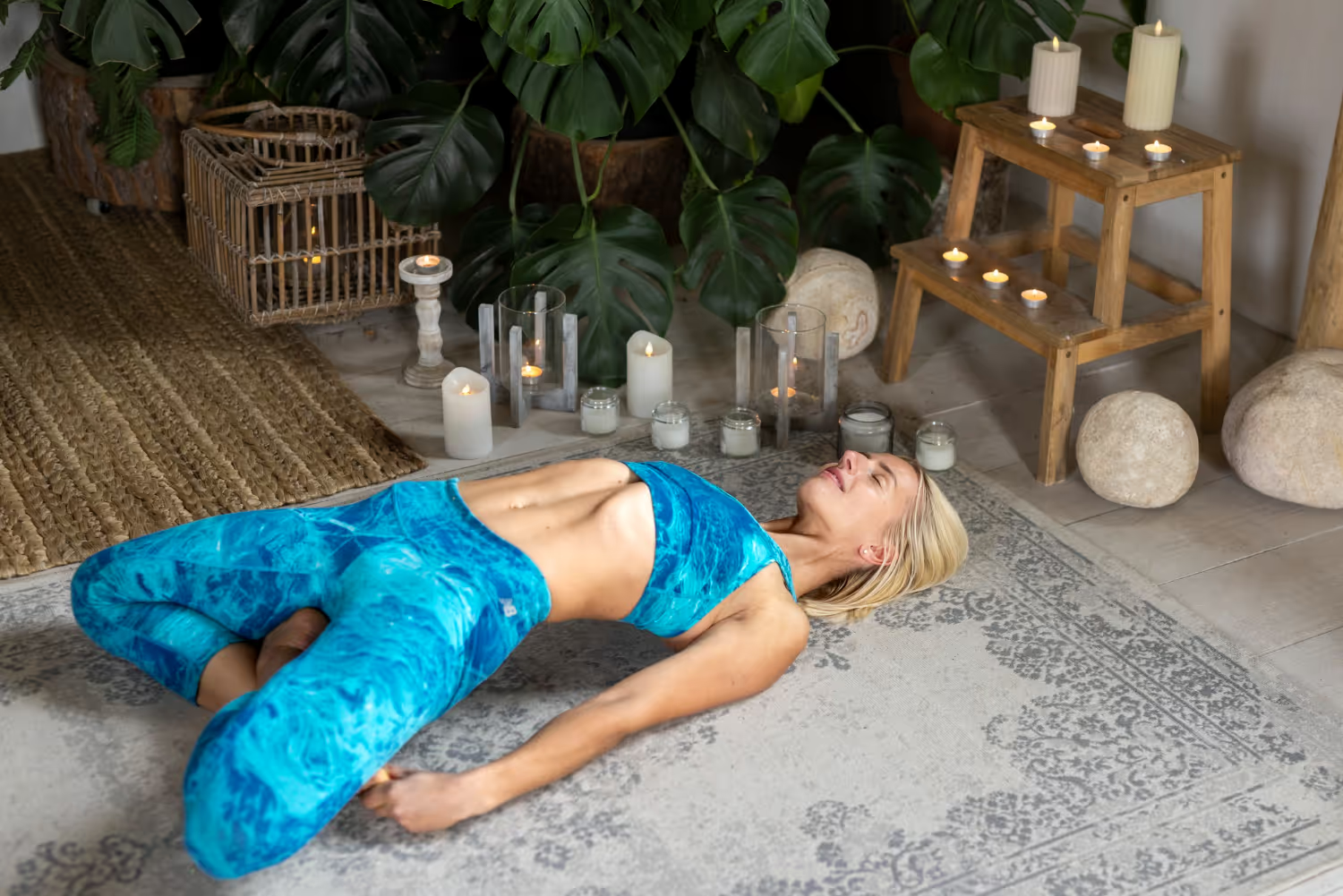
Understanding How Stress Lives in the Body
Stressful and traumatic experiences become encoded in multiple body systems simultaneously:
Muscular System: Protective muscular contractions that served immediate defensive needs often persist chronically. The shoulders that lifted to protect during a threatening experience may remain elevated years later. The jaw that clenched to prevent screaming may maintain tension decades afterward.
Fascia: The connective tissue web throughout the body responds to stress by becoming denser, less hydrated, and more restricted. Chronic stress creates fascial restrictions that limit movement and create pain.
Nervous System: Traumatic experiences establish sensitized neural pathways where the nervous system remains in protective activation, perceiving threat even in safe situations. The body continues running old protective programs automatically.
Breathing: Stress alters breathing patterns, often creating chronic shallow chest breathing or breath-holding that maintains sympathetic activation and limits parasympathetic access.
Posture and Movement: Protective postures collapsed chest, tucked pelvis, lifted shoulders and movement restrictions become habitual, operating outside conscious awareness.
Understanding that stress and trauma live in the body as physical patterns rather than just memories explains why cognitive approaches alone often fail to provide complete healing. The body requires direct engagement through somatic work that addresses the physical encoding of difficult experiences.
Creating Safety: Going Slow, Staying Present
Safety represents the essential foundation for working with stored trauma and tension. The nervous system will not release protective patterns unless it experiences sufficient safety to do so. Somatic practice creates safety through specific elements:
Slow Pace: Moving slowly prevents overwhelming the nervous system with too much stimulation or sensation at once. Slow movement allows processing and integration rather than triggering protective shutdown.
Small Movements: Small movements stay within the window of tolerance where the nervous system can process experience without becoming overwhelmed. Large, dramatic movements can trigger protective responses.
Internal Authority: Choosing how, when, and how much to move based on internal sensation rather than external instruction reinforces the sense of agency essential for healing trauma.
Predictability: Practicing in familiar, consistent ways creates predictability that supports nervous system safety.
Support: Practicing lying down or well-supported reduces the protective muscle engagement required for maintaining upright posture, freeing the nervous system to release.
Permission to Stop: Knowing you can pause or stop any movement at any time creates the psychological safety needed for exploration.
Self-Compassion: Approaching yourself with kindness rather than judgment creates the relational safety within yourself that allows vulnerability.
The principle of going slow and staying present applies both to individual movements within practice and to the overall arc of healing work. Rushing leads to retraumatization; patience supports genuine integration.
Recognizing Releases: Shaking, Yawning, Sighing, Tears
As the body releases stored stress and trauma activation, natural discharge mechanisms often appear. These release signs indicate healing rather than problems:
Trembling or Shaking: Spontaneous trembling represents the nervous system discharging stored activation completing the defensive movements that were interrupted during threatening experiences. Allow trembling without trying to stop it or force it.
Yawning: Deep yawning stimulates vagal pathways and represents parasympathetic activation. Frequent yawning during somatic practice indicates nervous system downregulation.
Sighing: Deep exhales and sighs release tension held in the breathing muscles and diaphragm. They also activate parasympathetic response.
Tears: Emotional tears may arise without specific thoughts or memories attached. Crying represents release and should be allowed without needing to understand what the tears mean.
Temperature Changes: Sudden warmth or coolness in specific body areas indicates changes in circulation and nervous system activation patterns.
Tingling or Buzzing: Sensations of energy movement, tingling, or buzzing often accompany release of chronic holding patterns as sensation returns to previously numb areas.
Deep Breathing: Spontaneous deep breaths indicate restoration of natural breathing patterns that stress had restricted.
These release mechanisms represent positive signs that the nervous system feels safe enough to let go of protective holding. Welcome them without trying to force them to occur or stop them when they arise. The release happens according to the body's wisdom about what it's ready to process.
Self-Compassion During Emotional Releases
When emotions arise during somatic practice, self-compassion provides the container that allows safe processing:
Allow Without Forcing: If emotions come, allow them. If they don't, don't try to force emotional release. The body's wisdom determines what's ready to process.
Observe Without Analyzing: You don't need to understand where emotions come from or what they mean. Simply allowing them to move through provides the healing.
Normalize the Experience: Emotions arising during bodywork are normal and expected, not signs of weakness or something wrong.
Gentle Self-Talk: Speak to yourself as you would to a dear friend experiencing difficulty with kindness, patience, and compassion rather than judgment or criticism.
Honor Your Pace: Some people process quickly; others slowly. Some release through tears; others through different mechanisms. Trust your unique process.
Return to Breath and Sensation: If emotional intensity becomes overwhelming, return attention to breath and simple body sensations. This grounds you in the present moment.
Rest When Needed: Taking breaks, pausing practice, or simply resting represents wise self-care, not failure.
Self-compassion proves particularly important for women who have spent decades prioritizing others' needs and judging themselves harshly. Somatic practice offers opportunity to develop a different internal relationship one of care, attunement, and compassion that supports deep healing.
When to Seek Additional Support (Trauma-Informed Therapy)
Somatic movement provides powerful healing support, but some experiences benefit from additional professional guidance:
Consider Seeking Support When:
- Somatic practice consistently triggers overwhelming emotions or dissociation
- You have history of significant trauma (abuse, assault, major accidents, combat, etc.)
- Flashbacks or intrusive memories arise during practice
- You feel stuck and unable to progress despite consistent practice
- Physical symptoms worsen rather than improve
- You experience persistent shame, fear, or self-judgment
- Mental health symptoms (depression, anxiety, suicidal thoughts) intensify
Trauma-Informed Professionals Can Provide:
- Safe relationship for processing difficult material
- Specialized techniques for working with complex trauma
- Help establishing window of tolerance
- Support for experiences too overwhelming to process alone
- Integration of somatic work with other therapeutic modalities
- Assessment of when additional interventions might help
Seeking professional support demonstrates wisdom and self-awareness, not weakness. Trauma-informed therapists, particularly those trained in somatic approaches like Somatic Experiencing, Sensorimotor Psychotherapy, or EMDR, can work synergistically with your personal somatic practice.
Many people benefit from combining professional trauma therapy with personal somatic practice the therapy provides supported processing of difficult material while the somatic practice provides daily nervous system regulation and body reconnection.
How Often to Practice Somatic Movement
Daily Micro-Practices (5-10 Minutes): Maximum Benefit
Brief daily somatic practices provide greater cumulative benefit than infrequent longer sessions. The nervous system responds to consistent, regular input rather than occasional intense input.
Benefits of Daily Brief Practice:
- Prevents tension from accumulating into chronic patterns
- Maintains nervous system flexibility and regulation capacity
- Builds body awareness through consistent attention
- Integrates somatic awareness into daily life
- Remains sustainable long-term
- Provides stress relief when you need it most
Research on mindful movement demonstrates that frequent small practices produce better outcomes for stress reduction, body awareness, and nervous system regulation than relying solely on weekly longer sessions.
Daily Practice Options:
- 10-minute morning awakening sequence
- 5-minute midday tension reset
- 10-minute evening relaxation sequence
- 5 minutes of breathing practice during transitions
- Brief shoulder, neck, or jaw releases whenever you notice tension
The key to daily practice lies in removing barriers. Practice in regular clothes, practice at your desk or in bed, practice for just 5 minutes if that's what time allows. Consistency matters more than duration.
Weekly Longer Sessions (20-30 Minutes): Deep Work
While daily brief practices provide foundational maintenance, weekly longer sessions allow deeper exploration and release:
Benefits of Weekly Longer Practice:
- Time to address multiple areas comprehensively
- Deeper nervous system shifts from sustained practice
- Opportunity to work with areas needing more time
- Space for emotional processing that brief sessions don't allow
- Development of more refined body awareness
- Stronger sense of completion and integration
Weekly Practice Structure:
- Designate specific day and time for longer practice
- Create environment supporting deeper work (quiet space, comfortable temperature, no interruptions)
- Use one of the 20-30 minute sequences provided
- Allow time for extended final relaxation
- Journal afterward if helpful for tracking progress
Weekly longer sessions complement daily brief practices together they provide both maintenance and deeper transformation.
On-Demand Practices: Anytime You Notice Tension or Stress
One of the most valuable aspects of somatic practice involves using it responsively when stress or tension arise:
On-Demand Practice Situations:
- Notice shoulders creeping toward ears during stressful task
- Feel anxiety rising before challenging conversation
- Experience lower back tightness after sitting
- Can't fall asleep due to racing thoughts
- Feel overwhelmed by emotions
- Notice jaw clenching during the day
- Experience pain flare-up
On-Demand Practice Options:
- 2-3 minutes of extended exhale breathing
- 5 shoulder releases at your desk
- 10 slow neck movements
- Brief body scan noticing and releasing tension
- Gentle rocking or swaying
- Humming for vagal stimulation
This responsive use of somatic tools trains the nervous system in self-regulation the capacity to notice activation and consciously engage practices that support return to baseline rather than remaining in chronic stress activation.
Over time, the on-demand use of somatic practices becomes almost automatic. You notice tension arising and instinctively engage a breath pattern, shoulder release, or grounding practice without conscious deliberation. This represents integrated nervous system regulation capacity.
Combining with Other Exercise for Recovery and Balance
Somatic movement complements rather than replaces other forms of exercise. The combination provides optimal results:
Somatic Practice Before Other Exercise:
- Prepares nervous system for activity
- Improves body awareness and coordination
- Reduces compensatory patterns and injury risk
- Establishes breath awareness
Somatic Practice After Other Exercise:
- Facilitates recovery and nervous system downregulation
- Releases residual tension from intense activity
- Supports muscle release and flexibility
- Enhances training adaptations
Somatic Practice on Rest Days:
- Provides active recovery without stress
- Maintains body awareness and connection
- Supports recovery through gentle movement and breath
- Addresses chronic tension patterns
Integration Example:
Monday: Intense workout + 10-minute evening somatic cooldown
Tuesday: 20-minute somatic practice (active recovery)
Wednesday: Moderate workout + 10-minute evening somatic practice
Thursday: Brief morning somatic practice + intense workout + evening somatic cooldown
Friday: 30-minute somatic practice (recovery day)
Saturday: Moderate workout + evening somatic practice
Sunday: 20-minute somatic practice + rest
This integration balances the sympathetic activation of intense training with parasympathetic restoration from somatic work, optimizing both performance and recovery while preventing burnout.
Measuring Progress in Somatic Work
Subjective Measures: How You Feel, Tension Awareness
Unlike external fitness metrics (weight lifted, miles run, calories burned), somatic progress manifests primarily through subjective experience:
Signs of Progress:
- Feeling lighter or more at ease after practice
- Noticing reduced stiffness in previously tight areas
- Experiencing calmer reactions to stressors
- Sensing your body more clearly during daily activities
- Detecting tension earlier before it becomes chronic
- Feeling more grounded and present
- Experiencing greater emotional regulation
- Noticing improved posture without conscious effort
These subjective markers represent genuine progress even though they can't be quantified numerically. The shift from chronic tension to greater ease, from disconnection to embodied presence, from reactive stress to regulated responsiveness these changes reflect profound nervous system healing.
Tracking Subjective Progress:
- Brief journaling after practice noting what you noticed
- Monthly reflection on overall changes
- Comparing current body awareness to when you started
- Noticing life situations that no longer trigger tension
- Observing emotional responses that have shifted
Trust your subjective experience as valid data. Your felt sense of your body represents accurate information about nervous system state and healing progress.
Sleep Quality Improvements
Sleep represents one of the most sensitive indicators of nervous system regulation. Improvements in sleep often appear early in consistent somatic practice:
Sleep Improvements to Notice:
- Falling asleep faster
- Sleeping through the night more consistently
- Waking feeling more rested
- Needing less sleep for adequate rest
- Fewer stress dreams or nightmares
- Easier time returning to sleep if you wake
- Deeper overall sleep quality
These changes reflect enhanced parasympathetic access and reduced baseline nervous system activation. Better sleep creates a positive feedback loop improved sleep supports nervous system healing, which further improves sleep.
Stress Response Changes (Less Reactive)
Over time, consistent somatic practice changes how your nervous system responds to stressors:
Changes in Stress Response:
- Situations that previously triggered anxiety now feel manageable
- Recovery to baseline happens faster after stressful events
- Intensity of stress response decreases
- Greater capacity to remain present during difficulty
- Less residual tension after stressful situations
- Better discrimination between actual threat and perceived threat
- Increased window of tolerance for challenging experiences
These changes reflect improved vagal tone and nervous system flexibility the capacity to activate appropriately in response to demands but return efficiently to rest and restoration rather than remaining chronically activated.
You might not notice these changes day to day, but looking back over weeks or months, you'll recognize that situations that once felt overwhelming now feel within your capacity not because the situations changed but because your nervous system's response capacity expanded.
Pain Reduction
Chronic pain often decreases with consistent somatic practice, though the timeline varies:
Pain Changes to Notice:
- Reduced pain intensity in affected areas
- Fewer pain flare-ups
- Faster recovery from pain episodes
- Greater ranges of motion without pain
- Reduced need for pain medication
- Better ability to engage in activities pain had limited
- Improved pain-free time during the day
Pain reduction occurs through multiple mechanisms: neural repatterning, reduced protective guarding, improved movement quality, and central nervous system desensitization. The changes compound over time rather than occurring instantly.
Some people experience rapid pain reduction; others require months of consistent practice. The pace reflects individual factors including how long the pain has been present, contributing factors, and nervous system sensitivity.
Increased Body Awareness and Interoception
Enhanced interoceptive capacity represents both a goal and a marker of somatic progress:
Signs of Improved Body Awareness:
- Noticing subtle sensations you previously missed
- Sensing your posture throughout the day
- Detecting hunger, thirst, or tiredness more accurately
- Feeling your heartbeat and breathing more clearly
- Recognizing emotional states through body sensations
- Knowing what your body needs in different situations
- Detecting tension early before it becomes chronic
Improved interoception supports better self-care, earlier intervention with stress, enhanced emotional awareness, and greater trust in your body's signals. This represents foundational capacity for self-regulation that extends far beyond the practice itself.
Emotional Regulation Improvements
The body-emotion connection means that nervous system regulation through somatic practice enhances emotional regulation:
Emotional Regulation Changes:
- Less intense emotional reactivity
- Greater emotional range and access
- Ability to feel emotions without being overwhelmed
- Faster recovery from emotional upset
- Better discrimination between emotions
- Reduced emotional numbing or dissociation
- Increased capacity to sit with difficult feelings
Studies demonstrate that gentle movement paired with breath awareness supports emotional regulation capacity. The physical release of chronic holding patterns allows emotional material to process and move rather than remaining stuck.
Improved emotional regulation doesn't mean never feeling difficult emotions. It means having greater capacity to experience emotions without becoming overwhelmed or needing to shut them down the flexibility to feel fully while maintaining your center.
Somatic Yoga as Complement to Other Exercise
Post-Wall Pilates Recovery and Release
Wall Pilates and other structured strength training create specific demands on the nervous system and musculature. Somatic movement offers ideal recovery support:
After Wall Pilates:
- Intense muscular engagement leaves residual tension that somatic practice releases
- Nervous system remains in sympathetic activation that somatic practice downregulates
- Specific muscle groups worked intensely benefit from gentle somatic attention
- Overall recovery accelerates with parasympathetic restoration
Post-Workout Somatic Practice:
- Brief extended exhale breathing to begin parasympathetic shift
- Gentle releases for areas most engaged (often hips, core, shoulders)
- Slow full-body movements to restore overall ease
- Final relaxation to consolidate recovery
This combination of intense training followed by restorative somatic work optimizes the body's adaptive response to exercise while preventing the accumulation of chronic tension that undermines long-term training sustainability.
For comprehensive Wall Pilates guidance that pairs well with somatic recovery practices, Pilates for Women Over 40 - Complete Guide & Pro Tips provides structured progressions, while Vinyasa Yoga for Women Over 40 - Complete Guide offers flowing movement that bridges active practice and somatic awareness.
Pre-Workout Nervous System Preparation
Brief somatic practice before intense exercise enhances performance and reduces injury risk:
Pre-Workout Benefits:
- Improved body awareness supports better movement quality
- Nervous system preparation enhances coordination
- Breath awareness carries into workout
- Reduced compensatory patterns and bracing
- Mental presence and focus
Pre-Workout Somatic Practice (5-10 minutes):
- Brief body scan and breath awareness
- Gentle movements for areas about to be intensely used
- Grounding and centering
- Transition to more dynamic warm-up
The pre-workout somatic practice proves particularly valuable for women over 40 whose nervous systems may need more transition time between rest and intense activity than they required at younger ages.
Those incorporating resistance work may find that pairing somatic preparation with structured strength protocols optimizes results. Strength Training for Women Over 40 | Stronger After Menopause outlines progressive approaches that benefit from the enhanced body awareness somatic practice provides.
Active Recovery Days: Somatic-Only
Active recovery days that include movement without intensity support recovery better than complete rest for many people. Somatic practice provides ideal active recovery:
Benefits of Somatic Active Recovery:
- Gentle movement without stress or depletion
- Maintains body awareness and connection
- Facilitates release of residual training tension
- Supports nervous system restoration
- Provides psychological break from intense training
Active Recovery Somatic Practice:
- 20-30 minute comprehensive somatic sequence
- Emphasis on releasing and sensing rather than achieving
- Extended breathing practices
- Longer final relaxation
This approach maintains consistent movement practice while allowing genuine recovery, preventing the deconditioning that complete rest days can create while avoiding the additional stress of more intense training.
Supporting Intense Training with Somatic Regulation
For women engaged in serious training programs, somatic practice provides essential balance:
Training Integration:
- Daily brief somatic practices maintain regulation during training cycles
- Weekly longer somatic sessions provide deeper recovery
- Pre-competition somatic work supports nervous system preparation
- Post-competition somatic practice facilitates recovery
Preventing Overtraining:
Somatic practice helps identify early signs of overtraining:
- Detecting persistent tension that doesn't release
- Noticing sleep disturbance
- Sensing emotional changes
- Recognizing when the nervous system can't downregulate
This early detection allows training adjustments before overtraining becomes serious, supporting long-term athletic sustainability.
The combination of intense training that challenges the body with restorative somatic practice that supports nervous system recovery creates the optimal environment for adaptation, performance, and longevity in training.
Getting Started with Structured Somatic Practice
Benefits of Guided Somatic Programs
While self-directed practice offers value, structured somatic programs provide specific benefits:
Structured Program Benefits:
- Progressive sequencing that builds awareness systematically
- Expert guidance on subtle technique elements
- Accountability and consistency support
- Community connection with others on similar journeys
- Troubleshooting when you encounter challenges
- Confidence that you're practicing effectively
Guided programs prove particularly valuable when starting somatic practice because the internal guidance approach differs so fundamentally from traditional exercise instruction. Learning to follow sensation rather than external directives requires skill development that expert guidance supports.
Video Demonstrations with Internal Cues
Effective somatic instruction emphasizes internal cues rather than external form:
"Lift your arm to shoulder height. Hold for 10 seconds."
"Allow your arm to begin lifting. Notice where in your shoulder you feel the movement initiate. Sense how the shoulder blade participates. Pause when you feel the first restriction. Breathe into that area."
Quality somatic video instruction provides:
- Internal cue language that directs attention to sensation
- Slow demonstration allowing time to sense
- Permission to modify based on individual experience
- Emphasis on exploration over achievement
- Guidance on what to notice rather than what shape to make
This type of instruction supports the development of interoceptive awareness and internal authority that represent the foundation of effective somatic practice.
Progressive Practices Building Awareness
Structured programs typically sequence practices from foundational to more advanced:
Typical Progression:
- Basic Awareness: Learning to sense the body, detect breath, notice tension versus ease
- Simple Movements: Single-plane movements isolating specific areas
- Integration: Combining movement and breath, coordinating multiple areas
- Refinement: Developing capacity to sense subtle details and make fine adjustments
- Responsiveness: Learning to use somatic tools responsively for specific needs
This progression builds capacity systematically rather than expecting beginners to access subtle awareness immediately. Each level provides foundation for the next.
Community Support for Emotional Aspects
Somatic work often brings up emotional material. Community support provides:
Community Benefits:
- Normalization of emotional releases and challenges
- Shared experience reducing sense of isolation
- Witnessing others' healing journeys
- Belonging and connection during vulnerable work
- Collective wisdom about navigating challenges
Many women find that practicing somatic work in community, whether in-person or online, provides essential support for continuing through difficult phases when practicing alone might feel overwhelming or too vulnerable.
Expert Guidance on Trauma-Informed Movement
Trauma-informed somatic practitioners bring specialized knowledge:
Trauma-Informed Approach:
- Understanding nervous system responses to trauma
- Skill in titrating practice to stay within window of tolerance
- Recognition of signs that someone needs to slow down or get additional support
- Language that supports safety and choice
- Awareness of how different populations experience trauma differently
- Integration with therapeutic approaches when appropriate
Working with trauma-informed practitioners proves particularly valuable for women with trauma histories or those who find that somatic practice brings up overwhelming material. The expert guidance helps navigate the healing process safely.
Conclusion: Your Path to Nervous System Healing Through Somatic Yoga
Somatic yoga offers women over 40 a fundamentally different approach to movement one that honors accumulated life experience, works with the body's wisdom rather than against it, and addresses the nervous system patterns underlying chronic stress, tension, and pain. Unlike exercise that depletes, somatic movement restores. Unlike practices that demand performance, somatic yoga invites gentle exploration. Unlike approaches that treat the body as a machine requiring fixing, somatic practice recognizes the body as an intelligent system capable of profound healing when offered the right conditions.
The journey of somatic practice unfolds gradually. You begin by learning to sense your body from within, noticing tension patterns you may have carried unconsciously for decades. Through slow, mindful movement, you invite these patterns to release, retraining your nervous system's habitual responses. With consistent practice, you develop the capacity to regulate stress, release chronic holding, improve sleep, reduce pain, and reconnect with your body as a source of wisdom rather than a source of problems.
This practice requires no special equipment, no intense effort, no perfect flexibility or strength. It requires only willingness to pause, to sense, to move slowly with attention, and to treat yourself with the compassion you have likely extended to others for years. The time you invest in somatic practice returns itself many times over through reduced stress, better health, deeper rest, and the embodied presence that allows you to fully inhabit your life.
Whether you practice for 5 minutes daily or 30 minutes weekly, whether you focus on breathing, gentle movement, or extended relaxation, you are teaching your nervous system a new possibility the possibility of safety, ease, and restoration that allows genuine healing. This healing ripples outward, affecting not just your physical body but your emotional wellbeing, your relationships, your capacity for joy and presence.
Your body has been waiting for this attention, this gentleness, this invitation to release what it no longer needs to hold. Somatic yoga provides the pathway. The practice is simple, accessible, and profoundly effective. Begin where you are, with what time you have, trusting that even the smallest practice creates change. Your nervous system will respond. Your body will remember how to rest. And you will discover the ease that has been waiting beneath the tension all along.
Frequently Asked Questions (FAQ)
1. What is the difference between somatic yoga and regular yoga?
Somatic yoga focuses on internal sensation and nervous system regulation rather than achieving external poses or shapes. Regular yoga typically emphasizes proper alignment, holding specific postures for set durations, and progressing toward more advanced poses. Somatic yoga prioritizes how movement feels inside your body, uses slow exploratory movements, and follows internal guidance rather than external instruction. The goal is nervous system healing and release of chronic tension rather than flexibility, strength, or pose achievement. Both practices offer value, but somatic yoga proves particularly effective for stress regulation, trauma processing, and chronic tension release because it works directly with the nervous system rather than just the musculoskeletal system.
2. How long does it take to see results from somatic yoga practice?
Many people notice immediate effects after even a single somatic session feeling more relaxed, sensing reduced tension, or experiencing calmer mental state. However, lasting changes in chronic patterns typically require consistent practice over weeks to months. Sleep improvements often appear within 1-2 weeks of daily practice. Chronic pain reduction may take 4-8 weeks or longer depending on how long the pain has been present. Nervous system changes like reduced stress reactivity and improved emotional regulation typically become noticeable after 6-12 weeks of consistent practice. The key to results lies in consistency rather than duration daily 10-minute practices produce better outcomes than occasional hour-long sessions. Progress accumulates gradually as your nervous system develops new patterns of regulation and release.
3. Can somatic yoga help with chronic pain and tension that I've had for years?
Yes, somatic yoga can be highly effective for chronic pain and tension, even patterns that have persisted for many years. Chronic pain often stems from neuromuscular patterns habitual tension, compensatory movement, and sensitized pain pathways rather than structural damage. Somatic practice addresses these patterns by retraining the brain-muscle communication loop, releasing protective guarding, and desensitizing central nervous system pain responses. The gentle, awareness-based approach allows the nervous system to release holding patterns that more aggressive stretching or manipulation often reinforces. Many people experience significant pain reduction after 4-12 weeks of consistent practice. However, progress varies individually based on pain history, contributing factors, and nervous system sensitivity. For best results with chronic pain, combine regular somatic practice with professional guidance from trauma-informed practitioners when needed.
4. Is somatic yoga safe for people with trauma or PTSD?
Somatic yoga can be extremely beneficial for trauma and PTSD when practiced with appropriate awareness and support. The gentle, internally-guided nature of somatic practice creates safety that allows trauma processing without retraumatization. However, several considerations matter: Start slowly with brief practices and simple movements. Work with trauma-informed practitioners who understand nervous system responses and can help you stay within your window of tolerance. Give yourself full permission to pause, modify, or stop any movement that feels overwhelming. If you experience consistent overwhelm, dissociation, flashbacks, or worsening symptoms, seek support from a trauma-informed therapist trained in somatic approaches like Somatic Experiencing or Sensorimotor Psychotherapy. Combining professional trauma therapy with personal somatic practice often provides optimal results, with therapy supporting processing of difficult material while somatic practice provides daily nervous system regulation.
5. How often should I practice somatic yoga, and do I need special equipment?
For optimal results, practice somatic yoga daily for 5-10 minutes, with one longer 20-30 minute session weekly. Daily brief practices prevent tension accumulation and maintain nervous system flexibility, while weekly longer sessions allow deeper exploration and release. You can also use somatic practices on-demand whenever you notice stress or tension arising. No special equipment is required just comfortable space where you can lie down or sit comfortably. Wear comfortable clothing that allows easy movement. You may use a yoga mat, blanket, or pillows for comfort, but even these are optional. Most somatic practices can be done in bed, on the floor, at your desk, or anywhere you can pause and turn attention inward. The simplicity and accessibility of somatic practice support long-term consistency, which matters more than having perfect conditions or equipment.
Sources:
- Breit, Sigrid, et al. "Vagus Nerve As Modulator of the Brain–Gut Axis in Psychiatric and Inflammatory Disorders." Frontiers in Psychiatry, vol. 9, 2018, p. 44, https://doi.org/10.3389/fpsyt.2018.00044.
- Nicholson, William C., et al. "The Body Can Balance the Score: Using a Somatic Self-Care Intervention to Support Well-Being and Promote Healing." Healthcare, vol. 13, no. 11, 2025, p. 1258, https://doi.org/10.3390/healthcare13111258.
- Alghosi M, Sharifi M, Namavari S, Rajamand N, Bamorovat F, Norouzi N, Alimoradi M, Konrad A. "The effect of chronic yoga interventions on sleep quality in people with sleep disorders: a scoping review." Front Neurol. 2025 Apr 29;16:1566445. doi: 10.3389/fneur.2025.1566445. PMID: 40365457; PMCID: PMC12071090.
- Siebieszuk, Adam, et al. "Breathwork for Chronic Stress and Mental Health: Does Choosing a Specific Technique Matter?" Medical Sciences, vol. 13, no. 3, 2025, p. 127, https://doi.org/10.3390/medsci13030127.
- Bartlett, Larissa, et al. "Mindfulness Is Associated With Lower Stress and Higher Work Engagement in a Large Sample of MOOC Participants." Frontiers in Psychology, vol. 12, 2021, p. 724126, https://doi.org/10.3389/fpsyg.2021.724126.
- Nicholson, William C., et al. "The Body Can Balance the Score: Using a Somatic Self-Care Intervention to Support Well-Being and Promote Healing." Healthcare, vol. 13, no. 11, 2025, p. 1258, https://doi.org/10.3390/healthcare13111258.
- Doorley, James, et al. "The Role of Mindfulness and Relaxation in Improved Sleep Quality following a Mind-body and Activity Program for Chronic Pain." Mindfulness, vol. 12, no. 11, 2021, p. 2672, https://doi.org/10.1007/s12671-021-01729-y.
- Zhong, Shi, et al. "Effects of Brief Mindfulness Meditation Training on Attention and Dispositional Mindfulness in Young Adult Males." Acta Psychologica, vol. 246, 2024, p. 104277, https://doi.org/10.1016/j.actpsy.2024.104277.
- K Bentley, Tanya G., et al. "Breathing Practices for Stress and Anxiety Reduction: Conceptual Framework of Implementation Guidelines Based on a Systematic Review of the Published Literature." Brain Sciences, vol. 13, no. 12, 2023, p. 1612, https://doi.org/10.3390/brainsci13121612.
Chair Yoga that meets you where you are.
Get your planSources
FAQs
What makes somatic yoga suitable for women over 40?
Somatic yoga is ideal for women over 40 because it focuses on gentle movement and internal awareness, which can help address chronic stress and tension patterns without the strain of traditional yoga postures.
How does somatic yoga help with stress reduction?
Somatic yoga helps reduce stress by promoting awareness of internal sensations, which enables the nervous system to release tension and encourages relaxation and calmness.
Why should I choose somatic yoga over traditional yoga?
You might choose somatic yoga over traditional yoga if you prefer a practice that emphasizes internal experience over external form, allowing for a more personalized and gentle approach to movement and stress relief.
Can somatic yoga be practiced at home?
Yes, somatic yoga can easily be practiced at home with minimal equipment. The practice focuses on internal sensations and gentle movements, making it accessible for home practice.
Should I have prior yoga experience to start somatic yoga?
No prior yoga experience is necessary for somatic yoga. Its focus on awareness and personal experience makes it accessible for beginners and those new to yoga.