15 mins Pilates on your terms – anytime, anywhere.
Get your plan
15 mins Pilates on your terms – anytime, anywhere.
Get your plan
Wall Pilates for beginners is a modified form of traditional Pilates that uses a wall for support and resistance, making it accessible to women over 40 who want to build strength safely without expensive equipment or gym memberships.
Many women over 40 hesitate to start exercise programs due to common concerns: "I've never done Pilates," "Will I need expensive equipment?" or "Is this safe for my joints?" Wall Pilates addresses all three concerns. The wall provides stability that traditional mat Pilates lacks, the only equipment needed is a wall and optional mat, and the supported movements protect joints while building strength.
This guide covers everything beginners need to start Wall Pilates safely: what makes it ideal for women 40+, essential setup requirements, core breathing and alignment techniques, five foundational movements with step-by-step instructions, common mistakes to avoid, and how to create your first routine.
What Is Wall Pilates and Why It Works for Beginners
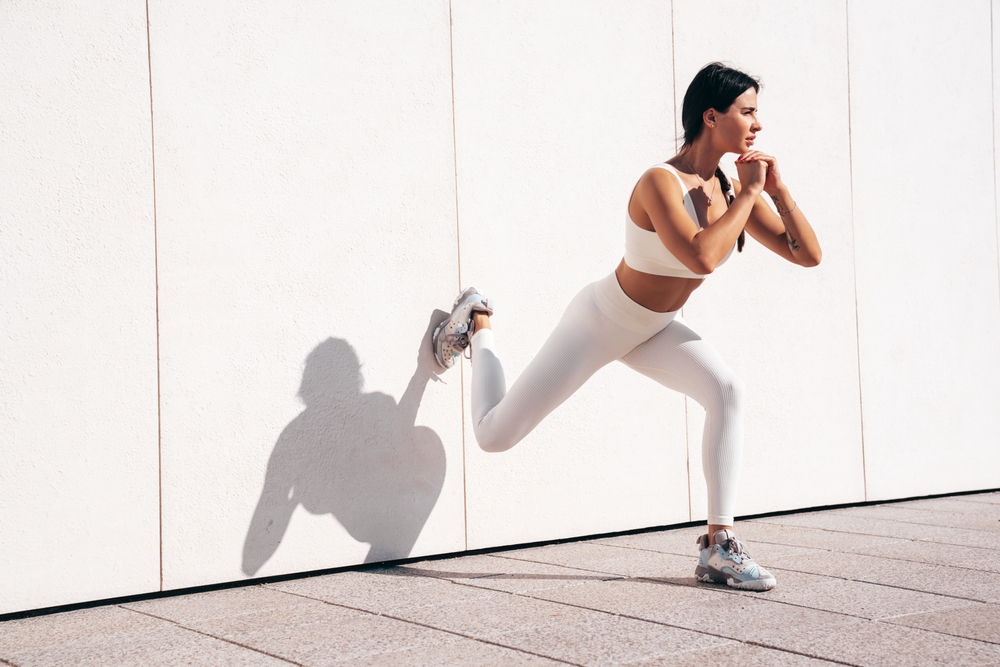
Wall Pilates is a variation of traditional Pilates that incorporates a wall as a support surface and resistance tool. The wall serves two primary functions: it provides stability for balance-challenged movements, and it creates resistance for strength-building exercises.
Traditional Pilates requires significant core strength and body awareness to maintain proper form on a mat. Wall Pilates removes this barrier by allowing the wall to assist with balance and positioning. Beginners can focus on learning proper movement patterns without worrying about falling or losing their balance.
How the Wall Provides Stability and Builds Confidence
The wall in Wall Pilates functions as a training partner that never moves. When performing exercises like wall push-ups, wall planks, or wall-supported lunges, the stable surface allows beginners to control their range of motion and resistance level.
Exercises performed in the upright position against a wall build confidence because falling is not possible. Women who feel nervous about getting down on the floor or maintaining balance during traditional exercise find Wall Pilates approachable. The wall provides immediate feedback about body position you can feel when your back is flat, when your shoulders are properly aligned, and when your hips are level.
This stability translates to faster skill acquisition. Beginners learn proper form more quickly because the wall prevents compensatory movements that mask weaknesses or create bad habits.
Low-Impact Alternative to Traditional Strength Training
Wall Pilates is a low-impact exercise modality that builds strength without stressing joints. Low-impact means at least one foot maintains contact with the ground throughout movements, reducing the jarring forces that travel through ankles, knees, hips, and spine.
Research demonstrates that Pilates effectively reduces pain and disability while improving quality of life for individuals with musculoskeletal conditions. The client-focused approach allows intervention to be tailored to individual preferences, function, and goals.
For women over 40 experiencing joint pain, previous injuries, or conditions like arthritis, Wall Pilates provides a training method that builds strength while respecting physical limitations. The wall allows modified versions of exercises that would otherwise be too challenging or painful.
Many women wonder how Wall Pilates compares to other exercise methods. Each approach offers different benefits depending on your fitness level, goals, and physical limitations. Wall Pilates stands out as particularly accessible for beginners due to the wall's stability and the low equipment requirements.
The key difference between Wall Pilates and traditional Pilates is the support system. Traditional mat Pilates requires significant core strength to maintain proper form, while Wall Pilates uses the wall to assist with stability and positioning. For beginners who want to understand the specific advantages of each approach, our guide on Wall Pilates vs Pilates explains how to choose the right method for your current fitness level.
Building Core Strength Without Equipment
Core strength refers to the ability of the muscles surrounding the spine and pelvis to stabilize the body during movement. Wall Pilates develops core strength using body weight as resistance and the wall for support no equipment required beyond a flat wall surface.
A study identifies five essentials that form the foundation of all Pilates work: breathing, cervical alignment, rib and scapular stabilization, pelvic mobility, and utilizing the transverse abdominis. Wall Pilates incorporates all five essentials while using the wall to assist proper positioning.
The equipment-free nature of Wall Pilates removes barriers to starting and maintaining a practice. No gym membership, no expensive reformer machines, no waiting for equipment just a wall in your home and the knowledge of how to use it effectively.
Essential Setup and Safety Guidelines
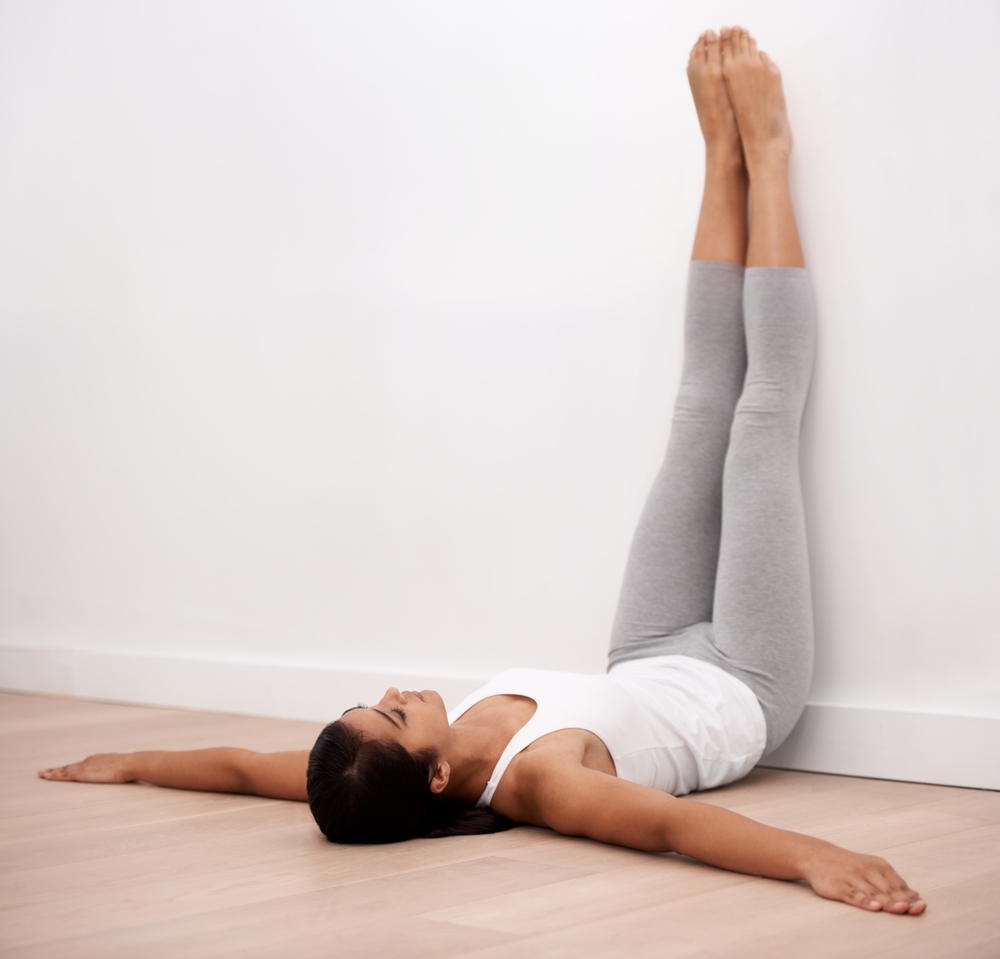
Proper setup ensures safe and effective Wall Pilates practice. The requirements are minimal, but the details matter for preventing injury and maximizing results.
Choosing the Right Wall Space
The ideal wall space for Wall Pilates has four characteristics: stability, clearance, surface texture, and accessibility.
Stability means the wall is solid not a hollow partition or movable surface. Load-bearing walls work best. Test stability by pushing firmly against the wall; it should not flex or move.
Clearance requires enough space to extend your arms fully in all directions and to place a mat both parallel and perpendicular to the wall. Measure at least 6 feet of clear floor space extending from the wall.
Surface texture should be smooth enough to allow sliding movements but not slippery. Painted drywall works well. Avoid textured surfaces, wallpaper that might tear, or walls with protruding fixtures.
Accessibility means you can practice without moving furniture each time. Choosing a dedicated space increases practice consistency because the friction of setup disappears.
What You Actually Need (Minimal Equipment)
Wall Pilates requires one piece of equipment: a wall. Everything else is optional but potentially beneficial.
Required:
- A stable, flat wall surface
Recommended:
- Exercise mat (yoga or Pilates mat) for floor work and cushioning
- Comfortable, form-fitting clothing that allows movement observation
- Bare feet or non-slip socks
Optional additions for progression:
- Pilates ball (small, 9-inch) for added core challenge
- Resistance bands for upper body work
- Pilates ring for inner thigh and arm exercises
The mat selection matters more than most beginners realize. Choose a mat thick enough for comfort when lying on hard floors (at least 6mm) but firm enough to provide stability for standing movements. Yoga mats tend to be thinner and grippier; Pilates mats are typically thicker and denser. Either works for Wall Pilates.
Safety Considerations for Women Over 40
Women over 40 experience physiological changes that affect exercise capacity and recovery. Declining estrogen levels impact bone density, muscle mass, joint lubrication, and cardiovascular function. These changes do not prevent exercise they inform how to exercise safely.
Bone density considerations: Wall Pilates is weight-bearing when performed standing, which supports bone health. However, women with diagnosed osteoporosis should avoid deep forward flexion exercises (like full roll-downs) without medical clearance, as these movements increase vertebral fracture risk.
Muscle mass changes: Sarcopenia (age-related muscle loss) begins accelerating after 40. Wall Pilates provides the resistance training needed to slow or reverse muscle loss. Start with lower repetitions and longer rest periods than you think necessary, then progress gradually.
Joint considerations: Joint cartilage thins with age, reducing cushioning between bones. Wall Pilates' low-impact nature protects joints, but any position causing pain should be modified or avoided. Sharp pain is always a signal to stop immediately.
Cardiovascular factors: Women with hypertension or heart conditions should avoid breath-holding during exercises and maintain low to moderate intensity. The Pilates breathing pattern (detailed below) naturally prevents breath-holding when practiced correctly.
General safety guidelines:
- Listen to your body discomfort is acceptable, pain is not
- Start with shorter sessions (10-15 minutes) and increase gradually
- Allow 48 hours between sessions initially for adequate recovery
- Stay hydrated before, during, and after practice
- Consult your healthcare provider if you have specific medical conditions
Understanding how age-related changes affect exercise is crucial for safe practice. For comprehensive information on how Pilates benefits women in this life stage, our guide on Pilates for women over 40 covers the specific physical changes that occur and how Pilates addresses them.
Mastering Core Breathing and Alignment

Breathing and alignment form the foundation of all Pilates practice. Mastering these fundamentals before learning exercises ensures every movement is effective and safe.
The Pilates Breathing Pattern Explained
Pilates breathing is a specific technique called lateral thoracic breathing that engages the core while allowing full oxygen intake. This breathing pattern differs from typical breathing because it emphasizes ribcage expansion rather than belly expansion.
How to perform Pilates breathing:
- Inhale through your nose slowly and deeply
- Direct the breath into your ribcage, feeling it expand sideways and backward (not forward into your belly)
- Maintain a lifted, proud chest as your lungs fill this lengthens your spine
- Exhale slowly through your mouth while drawing your abdominal muscles gently inward toward your spine
- Engage your pelvic floor gently on the exhale, as if stopping the flow of urine
Why this breathing pattern matters:
The exhale with core engagement creates stability through the trunk during the most challenging part of each movement. Inhaling prepares the body; exhaling with engagement provides the power and stability for movement.
Practice the breathing pattern lying down with one hand on your chest and one on your ribcage until it becomes automatic. The ribcage hand should move more than the chest hand during inhalation. Once comfortable lying down, practice standing against the wall.
Finding Neutral Spine Against the Wall
Neutral spine is the natural curvature of the spine that creates optimal alignment and distributes forces evenly across vertebrae and discs. Finding neutral spine against the wall teaches body awareness that transfers to all other exercises and daily activities.
How to find neutral spine:
- Stand with your back against the wall, feet hip-width apart and approximately 6 inches from the wall
- Let your head, shoulder blades, and buttocks touch the wall naturally do not force contact
- Place one hand palm-down between your lower back and the wall
- Tilt your pelvis backward to flatten your lower back completely against your hand (this is posterior pelvic tilt)
- Then arch your lower back away from your hand by tilting your pelvis forward (this is anterior pelvic tilt)
- Find the position between these two extremes where your natural lumbar curve exists a small space remains between your lower back and the wall, just large enough for your flat hand
What neutral spine feels like:
In neutral spine, you should feel balanced weight through both feet, relaxed shoulders away from your ears, a lengthened neck, and a natural lower back curve that could accommodate a flat hand but not a fist. Your abdominal muscles should feel lightly engaged, not gripped or completely relaxed.
Engaging Your Core Correctly
Core engagement in Pilates means activating the deep stabilizing muscles of the trunk, not sucking in your stomach or holding your breath. Proper core engagement creates a stable cylinder around the spine that protects against injury and powers movement.
The four muscles of the deep core:
- Transverse abdominis: The deepest abdominal muscle that wraps around the trunk like a corset
- Pelvic floor: The muscles at the base of the pelvis that support internal organs
- Multifidus: Small muscles along the spine that provide segmental stability
- Diaphragm: The breathing muscle that forms the top of the core cylinder
How to engage the core correctly:
- Find your neutral spine against the wall
- Place one hand on your lower abdomen, below your navel
- Inhale, allowing gentle expansion through the ribcage
- Exhale and draw your lower abdomen gently inward, as if zipping up tight pants
- Maintain this engagement while continuing to breathe normally
Common core engagement mistakes to avoid:
- Gripping or bearing down: Core engagement should feel like approximately 30% of maximum effort enough to feel, not enough to prevent breathing
- Holding your breath: If you cannot breathe normally, you are engaging too intensely
- Engaging only upper abs: The engagement should feel low, below the navel, not at the ribcage
- Forgetting pelvic floor: A gentle lift of the pelvic floor accompanies abdominal engagement
5 Foundational Wall Pilates Movements
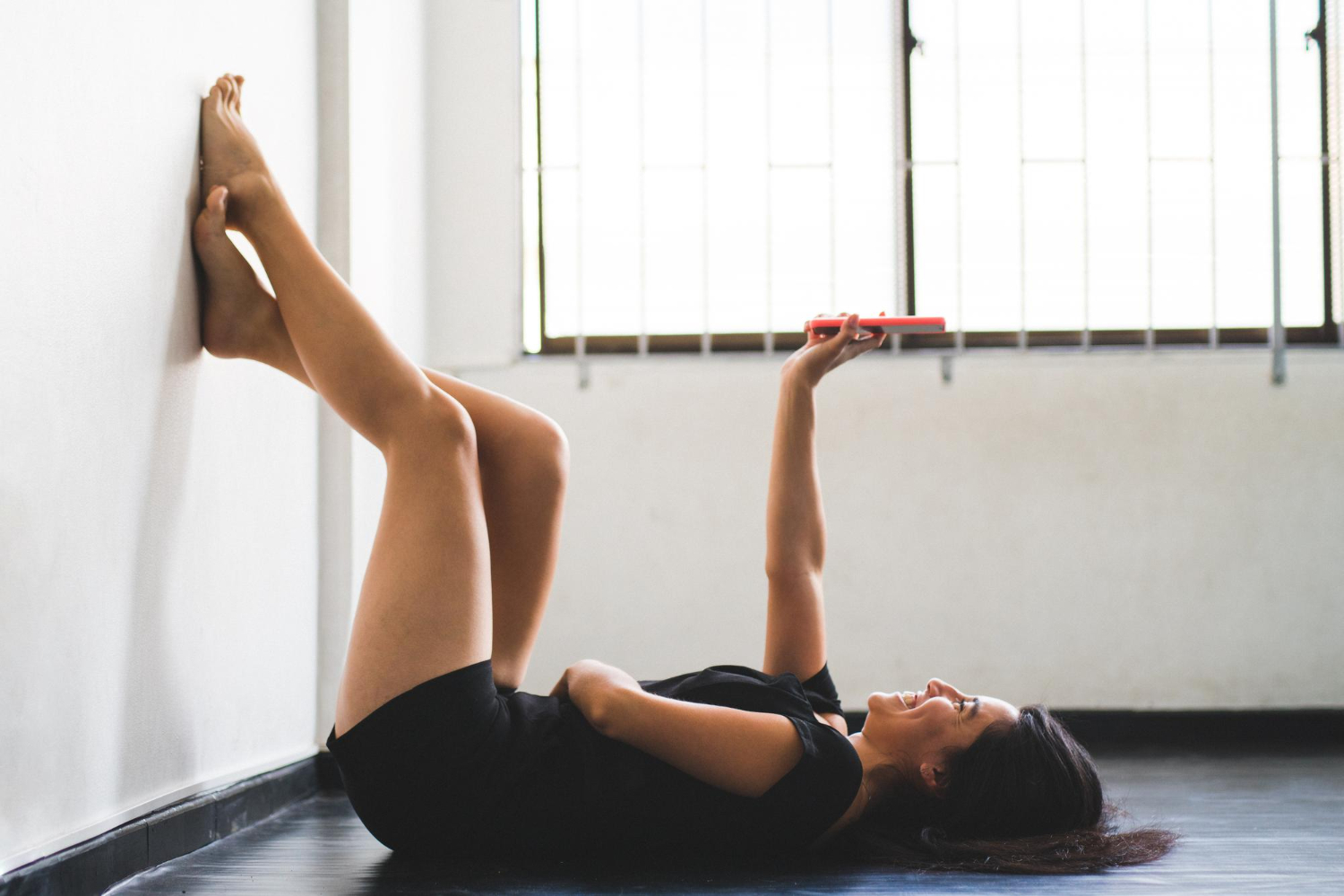
These five movements form the foundation of Wall Pilates practice. Master these exercises before progressing to more advanced variations. Each exercise includes target muscles, detailed step-by-step instructions, and professional tips for proper execution.
Wall Plank: Building Upper Body and Core Strength
The wall plank is a standing variation of the traditional plank that builds core stability and upper body endurance without the wrist strain of floor planks. Using the wall allows beginners to control resistance by adjusting their distance from the wall.
Target muscles:
- Transverse abdominis (deep core stabilizer)
- Rectus abdominis (front abdominal muscles)
- Obliques (side core muscles)
- Anterior deltoids (front shoulders)
- Pectoralis major and minor (chest)
- Triceps (back of upper arms)
- Serratus anterior (muscles along the ribs)
How to perform wall planks:
- Stand facing the wall at arm's length
- Place your forearms flat against the wall, elbows at shoulder height and shoulder-width apart
- Step both feet back until your body forms a straight diagonal line from head to heels
- Engage your core by drawing your navel gently toward your spine
- Hold this position while breathing normally using the Pilates breathing pattern
- Maintain for 20-30 seconds initially, building to 60 seconds over time
Professional tips for wall planks:
- Beginners should stand closer to the wall to reduce resistance. As strength increases, step farther back to increase challenge.
- Keep your hips level avoid sagging (hips dropping) or piking (hips lifting too high).
- Maintain neutral spine throughout; avoid arching or rounding your lower back.
- Press forearms firmly into the wall rather than just resting against it.
- Look at the wall, not down at your feet, to maintain proper cervical alignment.
Wall Sit: Strengthening Legs and Core
The wall sit is an isometric exercise that builds leg strength and endurance without moving through a range of motion. Isometric training has been shown to improve muscle size, strength, and tendon structure benefits particularly valuable for women over 40 experiencing age-related muscle loss.
Target muscles:
- Quadriceps (front of thighs)
- Hamstrings (back of thighs)
- Gluteus maximus (buttocks)
- Hip adductors (inner thighs)
- Calves (lower legs)
- Transverse abdominis (deep core)
How to perform wall sits:
- Stand with your back flat against the wall, feet shoulder-width apart
- Walk your feet forward approximately 18-24 inches while sliding your back down the wall
- Lower your body until your thighs are parallel to the floor (knees bent at approximately 90 degrees)
- Ensure your knees are positioned directly above your ankles, not extending past your toes
- Press your entire back from shoulders to tailbone firmly against the wall
- Hold while maintaining Pilates breathing throughout
- Start with 15-20 seconds, building to 60 seconds over time
Professional tips for wall sits:
- Beginners should start with a shallower angle (knees at 45-60 degrees) and shorter holds, progressing gradually.
- If your knees extend past your toes, walk your feet farther from the wall before lowering.
- Avoid holding your breath this unnecessarily raises blood pressure and reduces core engagement.
- Focus on pressing your back firmly into the wall rather than just holding position passively.
- Shake out your legs between sets to prevent cramping and promote blood flow.
Wall Push-Up: Developing Chest and Arm Strength
The wall push-up is a modified push-up that allows beginners to build pressing strength progressively. The wall angle reduces the percentage of body weight being lifted compared to floor push-ups, making it accessible for those who cannot yet perform traditional push-ups.
Target muscles:
- Pectoralis major (chest)
- Anterior deltoids (front shoulders)
- Triceps (back of upper arms)
- Transverse abdominis (deep core)
- Serratus anterior (muscles along ribs)
How to perform wall push-ups:
- Stand facing the wall, arms extended, hands placed flat on the wall at shoulder height and slightly wider than shoulder-width apart
- Step back until your arms are straight and your body is at a slight diagonal angle to the wall
- Engage your core to maintain a straight line from head to heels
- Inhale as you bend your elbows, lowering your chest toward the wall in a controlled motion
- Lower until your elbows reach approximately 90 degrees or your nose nearly touches the wall
- Exhale as you push back to the starting position, straightening your arms completely
- Perform 8-12 repetitions for 2-3 sets
Professional tips for wall push-ups:
- Keep your elbows at a 45-degree angle to your body, not flared out to 90 degrees, to protect shoulder joints.
- Maintain rigid core engagement throughout no sagging through the hips or arching through the lower back.
- The farther you stand from the wall, the harder the exercise becomes. Progress gradually.
- Control the lowering phase; do not simply fall toward the wall. The lowering phase builds strength.
- Squeeze your chest muscles actively as you push away from the wall.
Wall Roll-Down: Improving Spine Mobility and Control
The wall roll-down is a standing spinal articulation exercise that improves posture, spinal mobility, and body awareness. This movement teaches segmental spinal control the ability to move one vertebra at a time which is essential for spinal health and injury prevention.
Target muscles:
- Erector spinae (back extensors)
- Rectus abdominis (front core)
- Obliques (side core)
- Transverse abdominis (deep core)
- Hamstrings (back of thighs)
How to perform wall roll-downs:
- Stand with your back against the wall, feet hip-width apart and approximately 6 inches from the wall
- Ensure your head, shoulder blades, and buttocks touch the wall in your starting position
- Inhale to prepare, lengthening through your spine
- Exhale and begin by nodding your chin gently toward your chest
- Continue rolling down, peeling one vertebra at a time off the wall, starting from the neck
- Let your arms hang heavy and relaxed as you roll forward
- Roll down as far as comfortable aim for hands reaching mid-shin or the floor
- Pause at the bottom for one complete breath
- Inhale, then exhale to begin rolling up, restacking each vertebra against the wall from the bottom up
- Finish by lengthening your neck and returning your head to the wall
- Perform 5-8 repetitions with full attention to each vertebral segment
Professional tips for wall roll-downs:
- Focus on articulating each spinal segment individually rather than folding forward in one piece.
- Keep your weight centered over your feet; do not shift forward onto your toes as you roll down.
- Your buttocks should maintain contact with the wall throughout the entire movement.
- Bend your knees slightly if hamstring tightness prevents a full roll-down flexibility will improve with practice.
- Move slowly this exercise is about control and awareness, not speed.
Wall Bridge: Activating Glutes and Core
The wall bridge is a supine exercise that uses the wall to position the feet elevated, intensifying the targeting of glutes and core while protecting the lower back. This exercise builds the posterior chain the muscles on the back of the body that are critical for posture, walking, and functional movement.
Target muscles:
- Gluteus maximus (buttocks)
- Hamstrings (back of thighs)
- Transverse abdominis (deep core)
- Obliques (side core)
- Erector spinae (lower back stabilizers)
How to perform wall bridges:
- Lie on your mat with your head away from the wall, knees bent, feet flat on the wall
- Position your feet approximately 12 inches up the wall, hip-width apart
- Rest your arms at your sides, palms facing down for stability
- Find neutral spine and engage your core gently
- Inhale to prepare
- Exhale and press your feet firmly into the wall while lifting your hips toward the ceiling
- Lift until your body forms a straight line from knees to shoulders do not over-arch
- Pause at the top for one complete breath, squeezing your glutes
- Inhale as you lower your spine back to the mat, articulating one vertebra at a time from upper back to tailbone
- Perform 10-12 repetitions for 2-3 sets
Professional tips for wall bridges:
- Focus on lifting with your glutes, not pushing primarily with your legs think of the movement originating from your hips.
- Avoid over-arching your lower back at the top; maintain a straight line from knees to shoulders.
- Lower with control, articulating through the spine segment by segment rather than dropping.
- Keep your weight evenly distributed between both feet; avoid shifting to one side.
- Place your hands on your hip bones to feel whether your pelvis stays level throughout the movement.
Common Beginner Mistakes and How to Avoid Them

Even simple exercises can become ineffective or lead to injury when performed incorrectly. These three mistakes are the most common among Wall Pilates beginners, and addressing them accelerates progress significantly.
Holding Your Breath During Movements
Breath-holding during exercise is a natural response to effort, but it undermines Pilates practice and can raise blood pressure to dangerous levels.
Why this happens: Concentration on new movements captures all attention, causing automatic breathing patterns to stop. The Valsalva maneuver (bearing down while holding breath) feels like it provides stability, but it actually creates harmful pressure.
Why it is problematic: Holding breath prevents proper core engagement, raises blood pressure unnecessarily, reduces oxygen delivery to working muscles, and creates tension in the neck and shoulders that interferes with movement quality.
How to fix it: Practice the Pilates breathing pattern for 2-3 minutes at the beginning of every session before starting any exercises. During movements, if you notice you have stopped breathing, pause, take a full breath, and continue. With consistent practice, proper breathing becomes automatic within 2-3 weeks.
Positioning Too Close or Far From the Wall
Distance from the wall determines resistance level and movement quality. Both extremes create problems that limit progress.
When positioned too close: Range of motion becomes limited, muscles are not challenged sufficiently for strength gains, and maintaining proper body alignment becomes difficult.
When positioned too far: Resistance becomes excessive, form breaks down under the load, and injury risk increases. Beginners often compensate by arching the back or bending excessively at the hips.
How to find correct distance: For most standing exercises, start by facing the wall with your toes almost touching it, then take one normal step backward. Perform a test repetition. You should feel challenged but able to maintain perfect form throughout the entire movement. Adjust distance as needed closer for less challenge, farther for more until you find the position that allows quality movement with appropriate effort.
Rushing Through Movements
Speed undermines everything Pilates is designed to accomplish. Quick movements bypass the deep stabilizing muscles, eliminate the mind-body connection, and increase injury risk.
Why this happens: Rushing feels like efficiency, and slow movements feel boring to people accustomed to faster-paced exercise. There is also a tendency to want to "get through" the workout rather than experience it.
Why it is problematic: Fast movements use momentum rather than muscle control, reducing effectiveness. The eccentric (lowering) phase often rushed or skipped is where significant strength gains occur. Rushing also prevents proper breathing coordination, which is essential for core engagement.
How to fix it: Use a 4-count tempo for all movements: 4 seconds for each phase of movement. For example, in a wall push-up, count 4 seconds while lowering toward the wall, pause for 1 second at the bottom, then count 4 seconds while pushing back to start. This tempo ensures muscle control throughout the entire range of motion and makes every repetition more effective.
Creating Your First Wall Pilates Routine
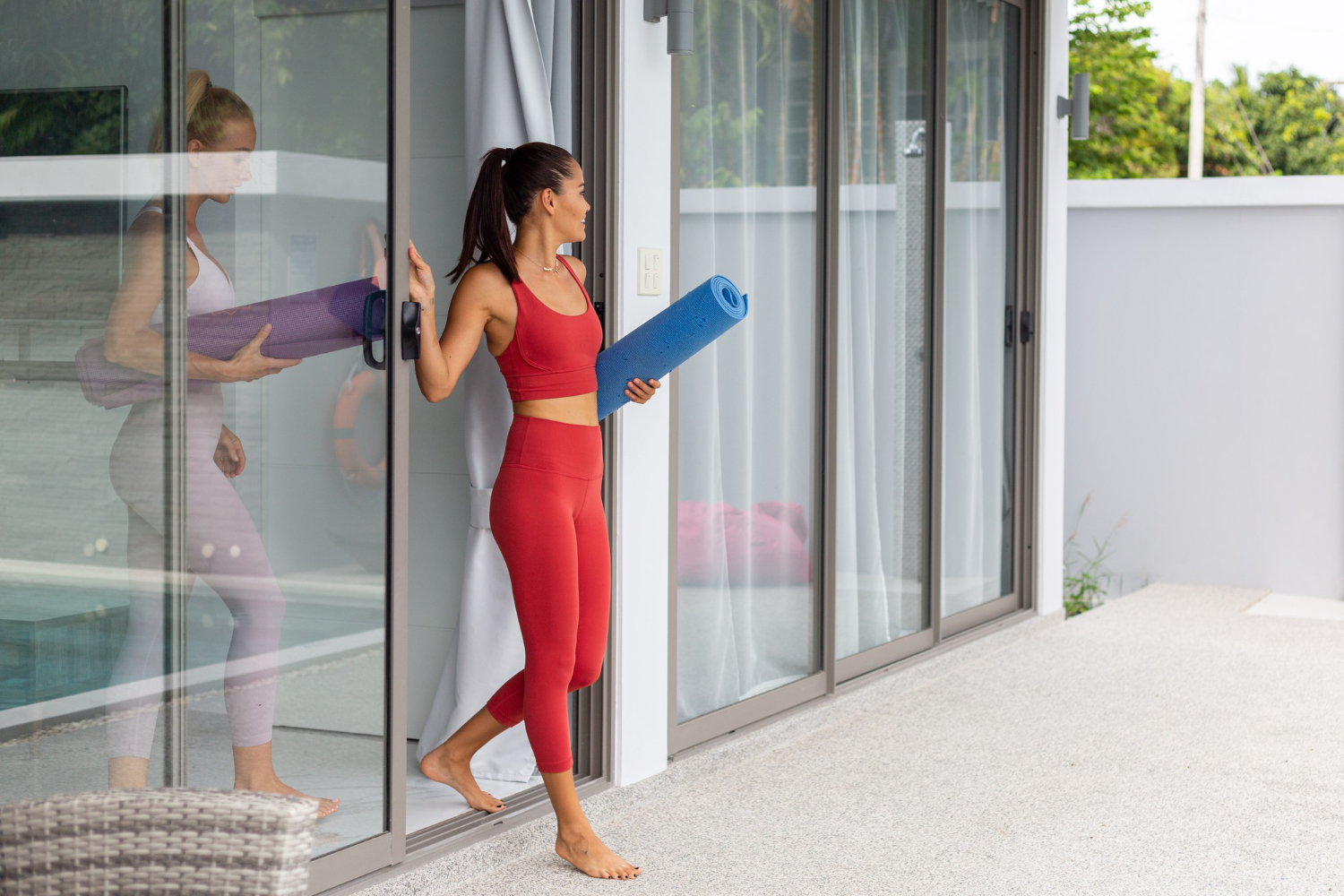
A well-structured routine maximizes results while preventing overtraining. These guidelines help beginners create effective practice sessions that build strength progressively.
Sample 15-Minute Beginner Sequence
This sequence uses the five foundational exercises in an order that warms up the body progressively and balances different muscle groups.
| Exercise | Sets | Duration/Reps | Rest |
|---|---|---|---|
| Breathing and Core Engagement | 1 | 60 seconds | 20 seconds |
| Wall Roll-Down | 2 | 6-8 reps | 30 seconds |
| Wall Plank | 2 | 20-30 seconds | 45 seconds |
| Wall Push-Up | 2 | 8-10 reps | 45 seconds |
| Wall Sit | 2 | 20-30 seconds | 45 seconds |
| Wall Bridge | 2 | 10-12 reps | 45 seconds |
Why this sequence works:
The routine begins with breathing practice to establish the mind-body connection and activate the deep core. Wall roll-downs warm up the spine and reinforce proper vertebral articulation. Wall planks activate the entire core in preparation for more challenging upper body work. Wall push-ups and wall sits provide targeted upper and lower body strength training. Wall bridges finish the session by targeting the posterior chain while the body is fully warm and prepared for floor work.
How Often to Practice as a Beginner
Beginners should practice Wall Pilates 2-3 times per week with at least one full rest day between sessions.
Why not practice daily: Muscles need recovery time to repair and strengthen. Daily practice without adequate recovery leads to overtraining, diminished results, and increased injury risk. This is especially important for women over 40, whose recovery capacity is reduced compared to younger exercisers. Women considering high-intensity alternatives often ask whether faster-paced workouts produce better results. Our comparison of Wall Pilates vs HIIT explains why low-impact training often delivers superior long-term outcomes for women over 40.
Why not practice only once weekly: Once per week is insufficient stimulus to build either skill or strength. The body needs regular, repeated stimulus to adapt. Twice weekly is the minimum effective frequency for beginners to see measurable progress.
Optimal scheduling options:
- Monday, Wednesday, Friday (provides 48-hour recovery between each session)
- Tuesday, Thursday, Saturday (allows Sunday as a full rest day)
- Any three non-consecutive days that fit your personal schedule
As proficiency and fitness increase, sessions can extend from 15 minutes to 30-45 minutes. Frequency should generally remain at 3-4 times per week with adequate recovery between sessions. Quality of movement always matters more than quantity of sessions.
Tracking Progress Without Obsession
Progress tracking provides motivation and ensures continued challenge, but obsessive measurement creates stress that undermines results and enjoyment.
What to track:
- Duration and repetitions: Record holds and reps for each exercise. Progress means more reps, longer holds, or increased distance from wall (more resistance).
- Perceived difficulty: Rate each exercise 1-10 on effort. Exercises becoming easier indicate readiness to progress.
- Body awareness: Note improvements in balance, posture, and movement quality.
- Energy and mood: Track how you feel before and after sessions.
How to track effectively:
Review progress every 4 weeks rather than obsessing over daily changes. Take baseline measurements at the start: how long you can hold a wall sit, how many wall push-ups you can complete with good form, and subjective ratings of energy and posture. Repeat these measurements monthly.
Progress in Pilates often appears in qualitative rather than quantitative improvements: better posture throughout the day, easier daily movements like climbing stairs or carrying groceries, reduced back pain, improved balance. These functional changes matter more than numbers on a tracking sheet.
Progressing Beyond the Basics
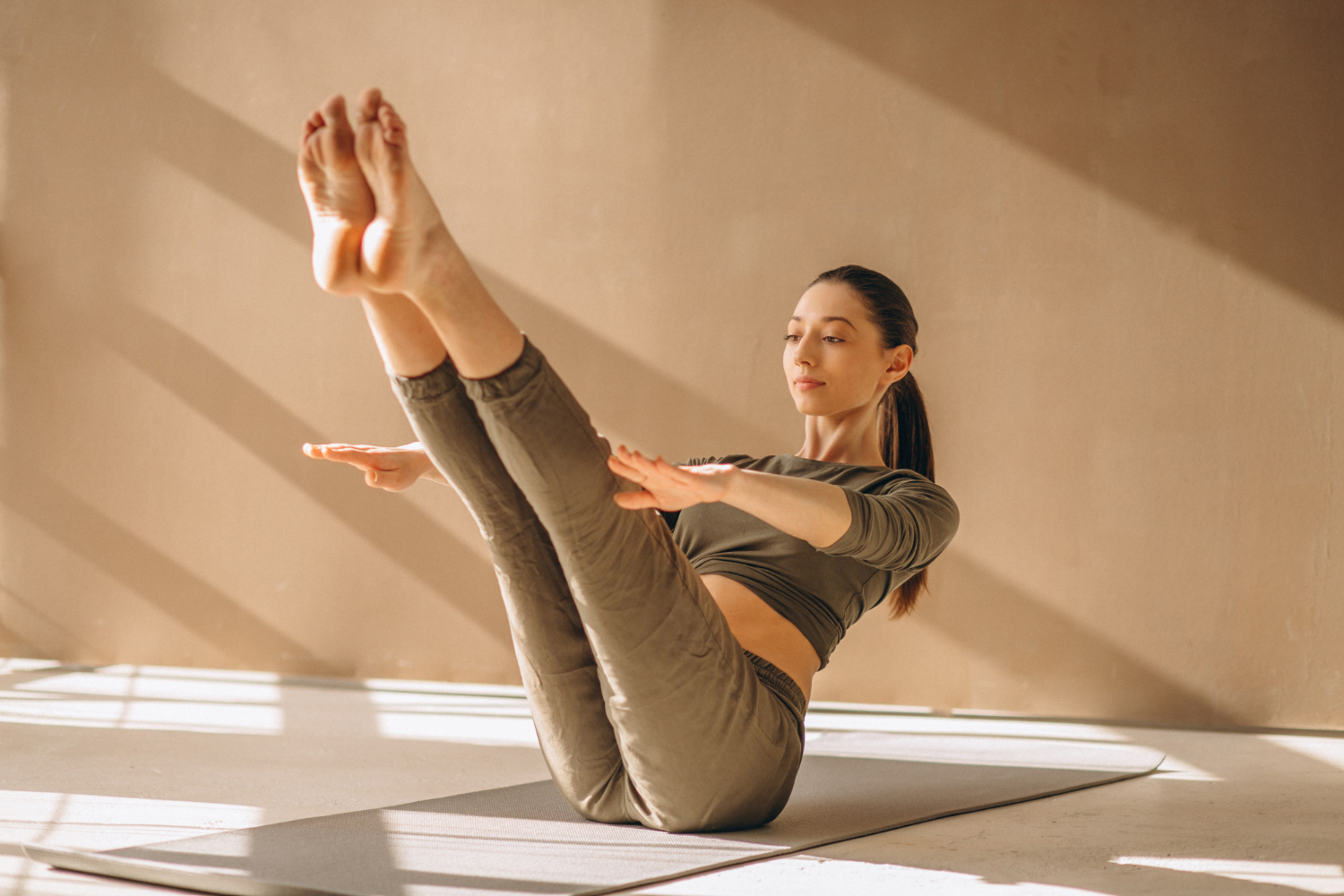
Progression ensures continued results as your body adapts to training stimulus. However, advancing too quickly causes injury and frustration. These guidelines help beginners know when and how to progress safely.
When You Are Ready to Advance
Readiness to progress shows through specific indicators. All of the following should be present before increasing difficulty:
Perfect form throughout all repetitions. If form breaks down before completing your target reps, you are not ready to progress. Master current exercises completely before adding challenge.
Controlled breathing maintained. Proper Pilates breathing continues throughout each exercise without conscious effort or strain.
Reduced perceived effort. Exercises that once felt challenging now feel moderate. You could hold a conversation during movements without gasping.
Full recovery between sessions. No lingering soreness, fatigue, or discomfort 48 hours after practice.
Consistent practice for at least 4 weeks. Physical adaptation takes time. Premature progression prevents the neuromuscular learning that creates lasting change.
Adding Holds and Pulses
Before adding new exercises, increase challenge with your current movements using these techniques:
Extended holds: For isometric exercises (wall plank, wall sit), add 5-10 seconds to your hold time. Progress gradually toward 60-second holds before adding other challenges.
Pulses: At the most challenging point of a movement, add small pulsing movements. In a wall sit, pulse up and down 1-2 inches for 10 pulses at the bottom position. In a wall bridge, pulse hips up and down at the top.
Pauses: Add 2-3 second pauses at the most difficult point of each repetition. In wall push-ups, pause at the bottom with elbows bent before pushing back up. This increases time under tension and accelerates strength development.
Distance progression: Move feet farther from the wall for wall planks and wall push-ups, increasing the percentage of body weight you are controlling and the challenge to your muscles.
Connecting to Intermediate Movements
Each Wall Pilates exercise has a natural progression path toward more challenging variations:
| Beginner Exercise | Intermediate Progression | Advanced Goal |
|---|---|---|
| Wall Plank | Forearm plank on floor | Full plank on floor |
| Wall Push-Up | Incline push-up (hands on bench) | Full push-up on floor |
| Wall Sit | Bodyweight squat | Single-leg squat variations |
| Wall Roll-Down | Standing roll-down (no wall) | Full roll-up from floor |
| Wall Bridge | Floor bridge (feet on floor) | Single-leg bridge |
Understanding this progression provides both motivation and direction. Each beginner exercise builds the specific strength and control needed for its intermediate version. Trust the process attempting to skip steps leads to frustration and potential injury.
Some women exploring low-impact options also consider Callanetics, another wall-supported exercise method that uses small, precise movements. Both Callanetics and Wall Pilates offer gentle, equipment-free approaches to strength building. For a detailed comparison of these two methods, including their unique benefits and which might suit your goals better, see our guide on Callanetics vs Wall Pilates.
Many women also wonder whether Wall Pilates can help with weight management. Wall Pilates builds lean muscle that increases resting metabolism, meaning you burn more calories even at rest. Combined with proper nutrition, consistent practice supports sustainable weight loss. You can estimate your calorie expenditure using a Pilates calories burned calculator to understand how your practice contributes to your overall fitness goals.
Getting Started with Wall Pilates: Key Takeaways

Wall Pilates offers women over 40 a safe, accessible, equipment-free path to building strength, improving flexibility, and enhancing overall well-being all from the comfort of home.
What this guide covered:
- What Wall Pilates is and why it works specifically for beginners (wall provides stability, low-impact protects joints, no equipment needed)
- Essential setup requirements (stable wall, adequate space, optional mat)
- Core breathing and alignment fundamentals (lateral thoracic breathing, neutral spine, proper core engagement)
- Five foundational movements with complete step-by-step instructions (wall plank, wall sit, wall push-up, wall roll-down, wall bridge)
- Common beginner mistakes and exactly how to avoid them (breath-holding, incorrect positioning, rushing)
- How to create your first 15-minute routine with proper frequency and rest
- When and how to progress safely beyond beginner exercises
Your next step: Start with the 15-minute beginner sequence twice this week, focusing on proper breathing and form rather than speed or intensity. Master the fundamentals before adding challenge. Once these five movements feel comfortable and controlled, explore our Wall Pilates program for structured progression and expanded exercise options designed specifically for women over 40.
15 mins Pilates on your terms – anytime, anywhere.
Get your planSources
Barnet-Hepples, T., Amorim, A.B., de Azevedo Nogueira, C., de Melo, M.C.S., Dario, A.B., Latey, P., Gomes, S.R.A. and de Brito Macedo, L. (2025) 'Pilates lessens pain and disability and improves quality of life in people with musculoskeletal conditions in the extremities: A systematic review', Annals of Physical and Rehabilitation Medicine, 68(6), 101973. https://www.sciencedirect.com/science/article/pii/S1877065725000387
Kloubec J. Pilates: how does it work and who needs it? Muscles Ligaments Tendons J. 2011 Dec 29;1(2):61-6. PMID: 23738249; PMCID: PMC3666467. https://pmc.ncbi.nlm.nih.gov/articles/PMC3666467/
FAQs
Is Wall Pilates effective for weight loss?
Yes, Wall Pilates supports weight loss by building lean muscle mass that increases resting metabolic rate. Muscle tissue burns more calories than fat tissue even at rest, so adding muscle through consistent Wall Pilates practice creates a metabolic advantage. Combined with proper nutrition, most women see measurable body composition changes within 8-12 weeks of regular practice. Wall Pilates also reduces cortisol (stress hormone) levels, which helps prevent stress-related weight gain common in women over 40.
How long should a beginner Wall Pilates session last?
Beginners should start with 15-20 minute sessions and progress to 30-45 minutes as strength, endurance, and movement quality improve. Session length matters less than movement quality a focused 15-minute session with proper form and breathing produces better results than a rushed 45-minute session with poor technique. Most beginners find 15-20 minutes provides sufficient challenge for the first 4-6 weeks, after which session length can gradually increase.
Can Wall Pilates replace gym workouts entirely?
Yes, for most general fitness goals, Wall Pilates provides sufficient strength training, flexibility work, and functional movement practice without gym equipment. The wall provides resistance equivalent to light weights, and bodyweight exercises build functional strength that transfers to daily activities. Women seeking significant muscle mass gains beyond general fitness may want to eventually supplement with traditional strength training, but Wall Pilates alone meets the exercise needs of most women over 40 focused on health, mobility, and sustainable fitness.
Is Wall Pilates safe for complete beginners with no exercise experience?
Yes, Wall Pilates is one of the safest entry points into regular exercise for complete beginners. The wall provides stability that prevents falls and supports proper form during every movement. Unlike floor-based exercise, wall exercises allow you to control resistance precisely by adjusting your distance from the wall. Start with the five foundational movements described in this guide, master proper breathing and alignment, and progress gradually. If you have specific medical conditions or injuries, consult your healthcare provider before beginning any new exercise program.
How many times per week should I do Wall Pilates as a beginner?
Practice Wall Pilates 2-3 times per week with at least one full rest day between sessions. This frequency provides enough stimulus for strength and skill development while allowing adequate recovery time. Women over 40 generally need more recovery time than younger exercisers, so starting with twice weekly and adding a third session after 4-6 weeks works well for most beginners. Consistency matters more than frequency two quality sessions per week, every week, produces better results than sporadic intense practice.