15 mins Pilates on your terms – anytime, anywhere.
Get your plan
15 mins Pilates on your terms – anytime, anywhere.
Get your plan
Low-impact exercise delivers the same muscle-building and fat-burning benefits as high-impact workouts without the wear and tear that leads to injury and lost training time. The science backs this up. Studies show that adults who train consistently with low-impact methods maintain better overall health and enjoy less fatigue.
This guide breaks down exactly how to build a strong, capable body using low-impact and high-efficiency movements.
Definition: one or both feet stay on ground (or supported)
Low-impact describes any movement where at least one foot maintains contact with the ground or where your body weight gets supported throughout the exercise, like walking or wall push-ups, for example. Water-based activities also qualify because the water supports your joints while providing resistance. Strength training with weights or resistance bands falls into this category, too.
The defining factor isn't how hard you work but whether your joints absorb repetitive shock during the movement.
Low-impact vs. low-intensity (they’re not the same)
Low-impact refers to joint stress, while intensity measures how hard your muscles and cardiovascular system work, and you can absolutely reach high intensity without impact. A resistance band workout that leaves your muscles burning hits high intensity, and a brisk walk up a steep hill gets your heart pounding. The key difference is that your joints stay protected while your muscles get challenged.
Why impact matters more after 40: joints, recovery, longevity
Your body changes in specific ways after 40 that make high-impact exercise riskier. Cartilage naturally thins with age and repairs more slowly after damage, hormonal shifts affect joint lubrication and connective tissue elasticity, and recovery between workouts takes longer because inflammation doesn't subside as quickly.
High-impact activities accelerate cartilage wear and increase inflammation throughout your body, creating a cycle where you need more recovery time between workouts and eventually train less consistently.
Low-impact methods let you train more frequently because your joints recover faster.
Joint preservation and cartilage health
Cartilage acts as a cushion between your bones but lacks its own blood supply. This means damage accumulates slowly and repairs inefficiently compared to muscle tissue. Over time, this repetitive compression wears down protective cartilage layers. Low-impact training removes this constant grinding stress while still loading your joints enough to maintain bone density, among other benefits. The reduced inflammation from avoiding impact stress helps maintain the structural integrity of connective tissues throughout your body.
Better recovery allowing more consistent training
If you train again before fully recovering, performance suffers, and injury risk climbs. Low-impact methods produce less inflammation and tissue damage, letting you train four or five days weekly instead of needing two or three rest days between sessions. Consistent training beats occasional intense sessions every time for building strength and changing body composition.
Lower cortisol response (better for hormones)
Research on exercise and cortisol shows that moderate-intensity activities produce beneficial adaptations without the hormonal disruption that leads to night sweats, disrupted sleep, or stubborn weight gain around the belly, especially during your menopausal years.
Reduced injury risk means no lost training time
Low-impact training dramatically reduces acute injury risk because the movements are controlled and your joints stay protected all throughout. You avoid the sudden directional changes and landing forces that cause most exercise-related injuries.
Staying relatively injury-free means uninterrupted and steady training, which leads to consistent progress month after month.
More sustainable = better long-term results
Fitness isn't about what you can do for 30 days but what you can maintain for months if not years. High-impact programs are great and flashy, but you can’t sustain them long-term. The worst part? It’s not the lack of discipline that leads you to abandon these programs. Instead, the real problem is that the approach simply isn’t built for your body.
Low-impact training, on the other hand, is all about workouts that won’t leave you hobbling and struggling to move the next day. Your body adapts positively instead of breaking down. This consistency compounds over time.
Research: low-impact strength training builds as much muscle as high-impact
This study found that resistance training with controlled movements produced equal or superior muscle gains compared to explosive plyometric training. The low-impact group also reported fewer injuries and better adherence rates. Another study examining bone mineral density in women over 50 showed that progressive resistance training improved skeletal strength without requiring jumping or running, proving that impact plays no role in this process.
Wall Pilates: strength, core, posture in 15-20 minutes
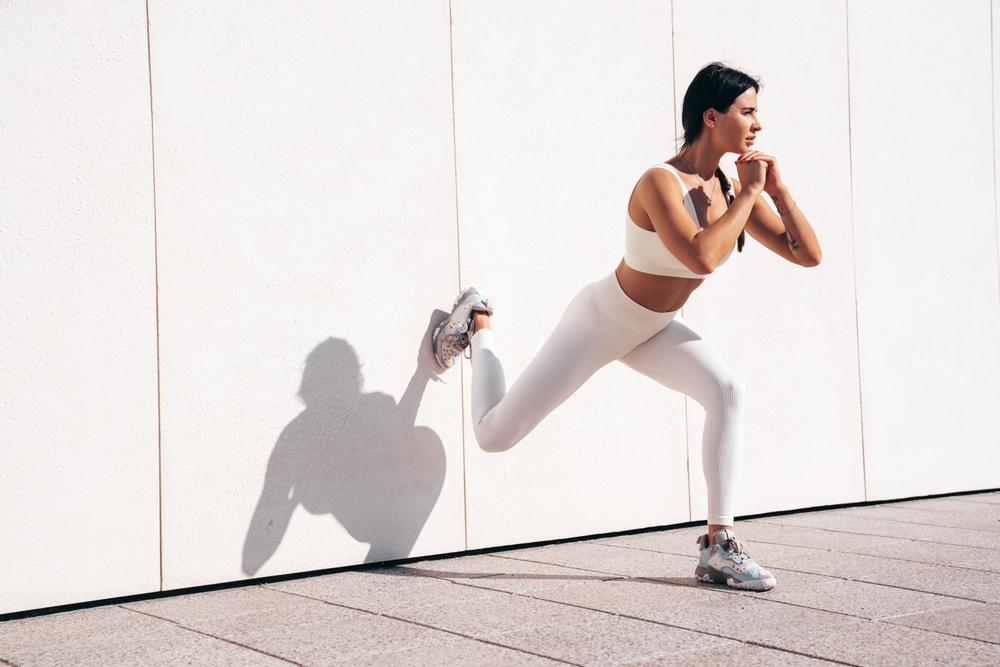
Wall Pilates uses a vertical surface to create stability and resistance for movements targeting your core, glutes, and upper body. The wall provides feedback for proper alignment and allows modifications from beginner to advanced levels. A typical session includes planks against the wall, leg lifts with the hip pressed to the surface, and upper-body presses that challenge your shoulders without joint strain. The controlled pace emphasizes time under tension, driving muscle growth.
Chair Yoga: flexibility, balance, stress reduction
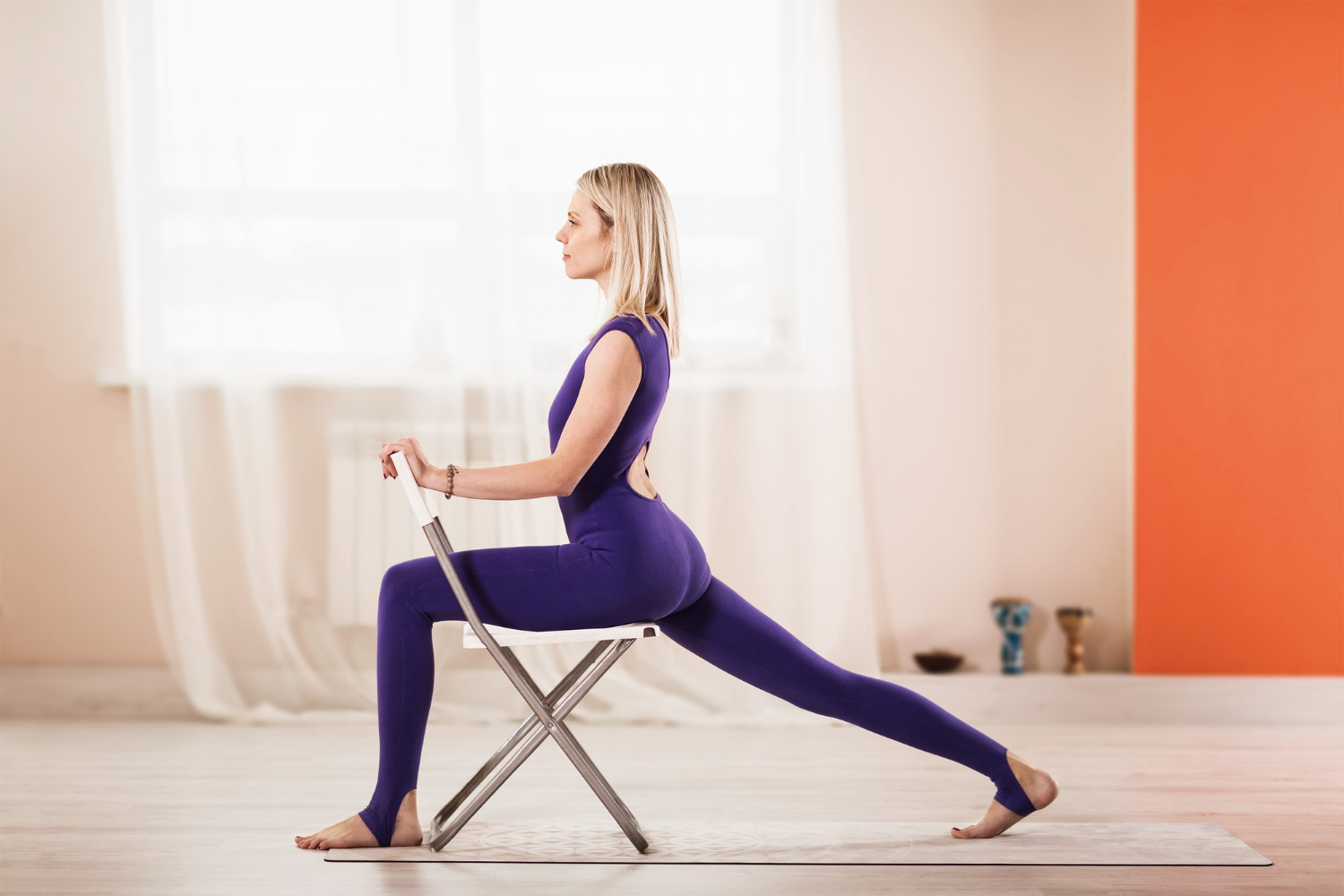
Chair yoga adapts traditional poses using a sturdy chair for support and stability. Poses flow together while focusing on breath work and mindful movement. The practice improves hip and shoulder mobility, often restricted by day-to-day responsibilities, work, and other stressors.
Unlike high-energy fitness classes, chair yoga creates space for your body to relax and release tension while building functional strength for everyday movements.
Somatic movement: nervous system regulation and healing
Somatic exercises focus on internal awareness and gentle movements that reset neurological patterns causing pain and tension. These practices teach your nervous system to release chronic muscle holding that develops from stress, past injuries, or repetitive movements. Sessions involve slow, mindful exploration of how your body moves rather than forcing positions or pushing through discomfort.
Walking: underrated fat burning and NEAT boost
Your body burns a high percentage of fat for fuel during moderate-intensity walking compared to intense exercise that relies more on glucose, making walking one of the most effective fat-burning activities available. Walking also improves insulin sensitivity and helps regulate blood sugar throughout the day.
Resistance training: muscle preservation and metabolic boost
You don't need heavy barbells or complex equipment to do resistance training. Dumbbells, resistance bands, or bodyweight exercises performed with proper form and progressive challenge deliver excellent results. Focus on compound movements like squats, rows, and chest presses that work multiple muscle groups simultaneously. Sessions two or three times weekly, with adequate recovery between workouts, allow your muscles to adapt and grow stronger.
Progressive overload principle applies to all exercise
Your muscles can't distinguish between impact and tension. They respond to the workload placed on them. Progressive overload happens when you increase repetitions, slow down the tempo to extend time under tension, reduce rest periods between sets, or advance to more challenging movement variations.
So, for example, a wall push-up becomes a floor push-up, and a supported squad progresses to a single-leg variation.
Time under tension and muscle growth
Time under tension refers to how long your muscles work during each set. Slowing down your repetitions increases this duration without adding weight or impact. Research on resistance training shows that sets lasting 40 to 70 seconds under continuous tension can lead to more muscle growth.
Remember, low-impact doesn’t mean fast or bouncy. It means deliberate and controlled.
Metabolic benefits of consistent movement
Consistent training increases mitochondrial density in muscle cells, enhancing their fat-burning capacity and improving insulin sensitivity. These metabolic improvements accumulate with regular training regardless of impact and intensity. The compounding effect of showing up regularly outweighs the temporary spike from occasional hard sessions.
EPOC (afterburn) from resistance training
Resistance training produces significant EPOC because your body must repair muscle tissue and restore energy systems. This afterburn effect lasts 24 to 48 hours after training. Low-impact resistance work generates comparable EPOC to high-impact training, leaving your metabolism elevated while your joints recover without the added stress.
Why consistency matters more than intensity after 40
Missing workouts because you're too sore or injured from excessive intensity is counterproductive. It’s better to train with moderate intensity three to four times a week. This reliability and consistency compound into steady strength gains and body composition improvements.
What makes Wall Pilates uniquely effective
The wall serves as both support and resistance in ways that make exercises more accessible without necessarily removing the challenge. Pressing into the wall engages your core constantly, forcing you to exert effort to maintain proper alignment against the vertical surface.
Wall Pilates is also less intimidating, and it’s an effective full-body session that lets you remain mostly upright, making it practical even when you have knee concerns or mobility limitations.
Core-focused movements for functional strength
Your core muscles, one of the primary focuses of wall Pilates, work to stabilize your spine during reaching, lifting, and twisting movements throughout each day. The movements and exercises create strength that you can use and feel almost immediately, instead of just developing muscles for show. Your posture also improves as your deep core muscles become strong enough to provide better support for your spine.
Progressive variations from beginner to advanced
You can start with your hands higher on the wall for modified push-ups or keep both your feet grounded during leg exercises. As you get stronger, you can move your hands lower down the wall to make it more challenging. You can also add small pulses at the end of a hold.
Whenever you feel too comfortable doing a particular exercise, it’s a sign to try a different variation. You can do this without relying on new equipment.
Recommended frequency: 3-4x weekly
Spacing sessions with at least one rest day between prevents overuse while keeping momentum. As for length, it all depends on preference. Do exercises that create the best response from your body. Listen to what it’s telling you, especially when you’re recovering. Muscle soreness from training is normal, but it shouldn’t feel like an injury.
Expected results and timeline
You should notice improved posture and core awareness within the first two weeks of consistent practice. Movements that initially challenged balance or created shaking muscles become noticeably easier by week three or four. Visible changes in core definition and arm tone typically appear around week six to eight with regular training. Throughout, back pain should improve and decrease as your core strength provides better support for the spine.
Benefits beyond flexibility: balance, strength, stress relief
Balance improves as you work through standing poses with chair support, training the small stabilizer muscles in your ankles and hips. These same movements build the leg strength needed for daily activities. Upper body poses develop shoulder mobility and arm endurance. The flowing nature of practice keeps your heart rate gently elevated for cardiovascular benefits. Meanwhile, focused breathing activates your parasympathetic nervous system, which counters stress hormones and promotes a sense of calmness.
Ideal for joint sensitivity or mobility limitations
Past injuries, arthritis, and other forms of mobility limitations can make any movement painful at 40 and beyond. Chair yoga virtually eliminates all resistance by adapting traditional poses to work within your current range of motion. As an added benefit, the chair provides stability that allows you to push the limits of your flexibility without the fear of falling. As your body adapts, you naturally regain the same range of motion and confidence you once had years ago.
Mind-body connection and cortisol reduction
This mindful approach helps you reconnect with your body after years of rushing through life disconnected from physical sensations. You learn to notice tension patterns and consciously release them. Regular practice lowers baseline cortisol levels, improving hormonal balance and reducing stress-related weight gain.
Recommended frequency: 2-4x weekly
Chair yoga, two to four times weekly, provides enough practice to improve flexibility and balance while leaving room for strength training. Your body needs consistent training and rest to improve your flexibility.
Combining with strength-focused exercise
Chair yoga is supplemental to strength training. Tight hips restrict squat depth, while limited shoulder flexibility affects overhead movements. Regular yoga practice addresses these restrictions, allowing you to perform strength exercises through a fuller range of motion for better results. A balanced weekly schedule might include two strength sessions, two yoga practices, and daily walking.
Minimum effective dose: 150 minutes weekly
Research on physical activity shows that 150 minutes of moderate-intensity movement per week produces significant health benefits. You can consider this as your baseline. Once you’ve established this, you can gradually increase it to 200 to 250 minutes a week without overwhelming your body.
Sample weekly schedule: Wall Pilates + Chair Yoga + walking
A practical weekly schedule might look like this:
- Monday - 20 minutes of Wall Pilates followed by a 15-minute walk.
- Tuesday - 30 minutes of chair yoga.
- Wednesday - 20-minute Wall Pilates session.
- Thursday - 30 minutes of walking.
- Friday - 15 minutes of chair yoga with 20 minutes of walking.
- Saturday - 25 minutes of Wall Pilates.
- Sunday - Active recovery day with gentle stretching or a leisurely 20-minute walk.
This schedule totals about 180 minutes of structured movement plus additional walking. The variety prevents boredom while addressing strength, flexibility, and cardiovascular fitness. You can adjust session lengths and rest days based on your schedule and recovery needs.
Balancing strength, flexibility, and cardio
A complete fitness program includes all three components working together: strength training for muscle mass, flexibility work to keep joints moving through full ranges and prevent injury, and cardiovascular exercise for heart health and burn calories.
Recovery days: active vs. complete rest
Active recovery includes gentle movement like easy walking, light stretching, or leisurely swimming that promotes blood flow without creating additional stress. On the other hand, complete rest means minimal structured exercise beyond normal daily activities. Both are important. Your body will likely respond well to one or two complete rest days weekly and fill other days with either training or active recovery based on how your body feels.
Progressive plan: month 1, month 2, month 3+
In your first month, focus on establishing consistent habits and learning proper form. Keep sessions shorter and intensity moderate while your body adapts to new movement patterns. You might practice Wall Pilates twice weekly for 15 minutes, chair yoga once or twice weekly, and walk 20 minutes most days, and that’s okay. Month two is when you try to increase frequency or duration as you start to feel more comfortable doing the movements. This is when you try adding a third Wall Pilates session or extending walking to 30 minutes. By month four and beyond, you'll have established solid habits and can continue advancing based on your goals and how your body responds.
Increasing time under tension (slower reps)
Slowing down movement tempo forces muscles to work longer during each repetition. A standard squat might take two seconds down and two seconds up. Doubling that to four seconds each significantly increases difficulty without adding weight or impact. This controlled pace also improves mind-muscle connection and form. You can't rely on momentum when moving slowly, so your target muscles do the actual work. Try this with any exercise once the standard tempo feels manageable. Wall push-ups, leg lifts, and seated exercises all become substantially more challenging when executed slowly. Your muscles will fatigue faster despite using the same movements.
Adding holds and isometric work
Hold the bottom of a wall squat for 10 seconds before rising. Pause halfway through a wall push-up. These isometric holds build strength at specific joint angles and teach your muscles to maintain tension.
Reducing stability (advancing variations)
The beauty of stability progressions is that you can always scale back. Your body dictates the appropriate level rather than forcing yourself into movements beyond what you’re currently capable of doing.
Increasing volume (more sets/reps)
If three sets of 10 wall push-ups feel comfortable, try three sets of 12 or add a fourth set of 10. The additional volume creates greater metabolic stress and muscle damage, which trigger growth during recovery.
Reducing rest periods
If you currently rest 60 seconds between exercises, try reducing to 45 seconds, then eventually to 30 seconds. Shorter rest also makes workouts more time-efficient without requiring additional exercises.
Mistake 1: assuming you need high-impact for results
Muscle growth requires progressive tension and adequate recovery regardless of impact level. A good workout doesn’t always leave you gasping for your breath and sweating hard.
Mistake 2: not progressively challenging yourself
As we’ve mentioned several times already, low-impact training delivers equivalent or superior results because you can maintain consistency with minimal injury risk. Besides, your joints will thank you in 10 years when you’re still training pain-free and not dealing with chronic issues.
Mistake 3: skipping strength work entirely
You must gradually increase difficulty through longer holds, slower tempos, more repetitions, or advanced variations. Challenge feels uncomfortable, but it creates the adaptation that your body needs to improve and get stronger.
The goal is finding the balance between pushing yourself and respecting your body’s ability to recover.
Mistake 4: doing too much too soon (overuse)
Jumping from no exercise to daily hour-long sessions is a recipe for disaster. Start with manageable amounts of exercise and increase gradually. Pushing through fatigue and ignoring pain signals leads to setbacks that you could’ve easily avoided with patience.
Mistake 5: neglecting recovery and sleep
Without adequate sleep, your body can't repair tissues, balance hormones, or consolidate the neuromuscular patterns you practiced. Aim for seven to nine hours of sleep a night.
Strength gains: tracking reps, hold times, progressions
Keep a simple log of your workouts, noting exercises performed, repetitions completed, and hold durations. Take note of concrete improvements that demonstrate your body’s adaptation to consistent training. Tracking also helps identify when you've plateaued and need to increase challenge through one of the progressive overload methods.
Numbers don’t lie. When you start getting lazy, reviewing your progress log reminds you how far you’ve come.
Body composition changes: measurements and photos
Measure your waist, hips, thighs, and arms every 4 weeks to track circumference changes. Progress photos from consistent angles and lighting reveal visual changes you can't see in the mirror.
Functional improvements: daily activities feel easier
The most meaningful progress shows up in the things that you do in your day-to-day life. Functional improvements like stairs no longer leaving you winded, being able to carry groceries in one trip, and doing things that you couldn’t do before effortlessly are the best benefits of low-impact exercises. These mean that your body is working better for everything you’re doing and want to do.
Energy levels and mood
Research shows that regular exercise profoundly impacts energy and mental state. Within weeks, stress will feel more manageable as your focus, mood, and anxiety improve.
Scale weight (but not as primary metric)
Body weight fluctuates daily based on hydration, hormones, sodium intake, and digestive contents. These fluctuations have nothing to do with fat loss or muscle gain. If you choose to track weight, do so weekly at the same time under consistent conditions and look for trends over four to six weeks.
Every 4-6 weeks: add new challenges
Your body adapts to training stimulus within four to six weeks, so plan your program adjustments accordingly to keep progressing. This might mean adding an exercise, increasing hold times, progressing to more advanced variations, or adjusting your weekly schedule. These incremental adjustments accumulate into significant long-term progress while keeping everything manageable.
If progress stalls: increase frequency or intensity
Plateaus happen. This is a sign that your body has fully adapted to your regimen and needs more stimulus. You can try reducing rest periods, slowing down movement tempo, or advancing to more challenging variations, adding volume through more sets or repetitions. Targeted adjustments usually resolve plateaus within two to three weeks.
If feeling overtrained: add recovery or reduce volume
Persistent fatigue, declining performance, mood disruption, or increased resting heart rate signal inadequate recovery relative to training demands. Your body is asking for rest. More exercise won’t solve the problem. In fact, this will make things worse. Take this as a sign to rest for a day or two. This worsens the situation. Learning to recognize early warning signs and respond appropriately prevents burnout and fatigue.
Listening to your body vs. pushing through
Productive training creates discomfort that goes away, or at least is minimized, with rest. Harmful stress creates persistent pain. The former is what you want. As you get to know your body more, you’ll be able to tell if a certain workout feels challenging in a good way or not. Always trust yourself and listen to your body when making appropriate adjustments rather than blindly following programs.
Benefits of following a structured challenge
Structured programs remove the guesswork about what exercises to perform, how long to hold positions, and when to progress to harder variations. Programs also provide logical progression designed by experts, and it’s easier to stay accountable when you’re committed to a defined timeframe.
Progressive video guidance and form corrections
Having an instructor's voice coaching you through holds and transitions keeps you engaged and motivated. The progression built into structured programs challenges you while helping you avoid injuries. Finally, the video format allows you to train anywhere you like without requiring access to the gym.
Accountability and community support
Joining a structured program connects you with other women working toward similar goals. Seeing others' progress motivates you to stay consistent, and sharing experiences normalizes the struggles and breakthroughs everyone encounters.
Expert-designed progression that works
Programs created by experienced trainers incorporate exercise science principles about progressive overload, recovery timing, and balanced programming. The sequence of workouts builds systematically rather than randomly mixing exercises. Experts also anticipate common challenges and build solutions into program design. Rest days appear when most needed. Deload weeks prevent overtraining. Variety prevents boredom while maintaining focus on core movements.
Available programs: 28-day Wall Pilates, Chair Yoga, integration plans
Reverse Health offers structured challenges specifically designed for women over 40. The 28-day Wall Pilates program progresses from foundational movements to advanced variations with daily video guidance. Each session lasts 15 to 20 minutes and includes warm-up and cool-down sequences. The Chair Yoga program provides a similar structured progression through flexibility and balance work, with options for different mobility levels. Integration plans combine multiple modalities into complete weekly schedules, balancing strength, flexibility, and cardiovascular work. These programs remove the planning burden and provide clear paths forward. You can cycle through different challenges to maintain variety while building comprehensive fitness. The app tracks your progress and provides reminders to support consistency.
Sources:
- Chan, Martin L. T., and Doris S. F. Yu. "The Effects of Low-impact Moderate-intensity Stepping Exercise on Fatigue and Other Functional Outcomes in Older Adults with Multimorbidity: A Randomized Controlled Trial." Archives of Gerontology and Geriatrics, vol. 98, 2021, p. 104577, https://doi.org/10.1016/j.archger.2021.104577.
- Singh B, Maurya NK. The Cortisol Connection: Weight Gain and Stress Hormones. Arch Pharm Pharma Sci. 2024; 8: 009-013.
- Kraemer, William J., et al. "Evolution of Resistance Training in Women: History and Mechanisms for Health and Performance." Sports Medicine and Health Science, vol. 7, no. 5, 2025, pp. 351-365, https://doi.org/10.1016/j.smhs.2025.01.005.
- Bocalini, Danilo S., and Andrey J. Serra. "Moderate Resistive Training Maintains Bone Mineral Density and Improves Functional Fitness in Postmenopausal Women." Journal of Aging Research, vol. 2010, 2010, p. 760818, https://doi.org/10.4061/2010/760818.
- Burd, Nicholas A., et al. "Muscle Time under Tension during Resistance Exercise Stimulates Differential Muscle Protein Sub-fractional Synthetic Responses in Men." The Journal of Physiology, vol. 590, no. Pt 2, 2011, p. 351, https://doi.org/10.1113/jphysiol.2011.221200.
- Warburton, Darren E., et al. "Health Benefits of Physical Activity: The Evidence." CMAJ : Canadian Medical Association Journal, vol. 174, no. 6, 2006, p. 801, https://doi.org/10.1503/cmaj.051351.
- Mahindru, Aditya, et al. "Role of Physical Activity on Mental Health and Well-Being: A Review." Cureus, vol. 15, no. 1, 2023, p. e33475, https://doi.org/10.7759/cureus.33475.
15 mins Pilates on your terms – anytime, anywhere.
Get your planSources
FAQs
What are some examples of low-impact exercises suitable for women over 40?
Low-impact exercises include walking, swimming, cycling, and using an elliptical machine. Resistance training with bands or light weights, yoga, and Pilates also qualify as they minimize joint stress while enhancing strength and flexibility.
How can low-impact exercises help with joint preservation?
Low-impact exercises reduce repetitive stress on joints, which helps preserve cartilage and connective tissues. They provide enough load to maintain bone density without the compression that accelerates cartilage wear, supporting long-term joint health.
Why is it important to focus on low-impact exercises after 40?
After 40, your body undergoes changes like thinning cartilage and slower recovery, making high-impact exercises riskier for joint health. Low-impact exercises allow for frequent training without the added risk of injury, ensuring consistent progress.
Can low-impact workouts still be effective for weight loss and muscle building?
Yes, low-impact workouts can be highly effective for both weight loss and muscle building. By focusing on intensity and challenging the muscles through resistance training or brisk cardiovascular activities, you can achieve significant fitness gains without joint strain.
Should I incorporate low-impact exercises into my routine if I'm already active?
Incorporating low-impact exercises can enhance an active routine by providing variety and reducing injury risk. They offer a way to maintain fitness levels while allowing the body to recover, particularly beneficial if you're experiencing joint discomfort or seeking longevity in your fitness journey.