15 mins Pilates on your terms – anytime, anywhere.
Get your plan
15 mins Pilates on your terms – anytime, anywhere.
Get your plan
For many women, Pilates has become their go-to form of exercise for strengthening joints, improving mobility, enhancing function, and improving well-being.
However, for others looking to start, they are confronted with concerns such as, "I've never done Pilates”, “Will I need expensive equipment?” “Is this safe for my joints?”
Fortunately, Wall Pilates is the perfect starting point, offering progressive, gentle, and inclusive movements that help you build up strength, flexibility, and function.
In this article, we discuss Wall Pilates fundamentals for beginners. We highlight what makes it perfect for beginners, the benefits, common mistakes, and five foundation Wall Pilates movements to help you get started.
What Makes Wall Pilates Perfect for Beginners
Wall Pilates is perfect for beginners, offering a modified version of traditional Pilates while using the wall for support and applying resistance. Below, we discuss what makes it perfect for beginners, including how it helps build confidence and is a safe, low-impact alternative to strength training.
Wall Provides Stability and Confidence
Walls in Wall Pilates provide support and stability, which makes them great for developing confidence.
Exercises such as wall push-up, wall planks, wall supported lunges, and wall squats are some of the great exercises that can be performed in the upright position. These allow beginners to perform fundamental movements to develop strength, stability, and confidence.
Low-Impact Alternative to Traditional Strength Training
Wall Pilates, a modification of traditional Pilates and body weight exercises are great low-impact alternatives to strength training.
Sources show that Pilates is effective for lessening pain and disability, and improving quality of life for individuals with musculoskeletal conditions. This is likely due to sessions taking a client-focused approach where intervention is tailored to an individual's preferences, function, and goals.
When individuals with joint pain or pre-existing injuries program their sessions using a wall for support, it allows them to reduce joint stress, allowing them to focus on technique and gradually build up strength.
This allows them to perform traditional exercises such as push-ups, squats, lunges, and hip raises, without having to worry about aggravating pre-existing injuries.
Builds Core Strength Without Equipment
Wall Pilates is developed on the principles of Pilates, focusing on developing core strength, flexibility, and balance.
Sources explain that Pilates is developed from the “five essentials" – breathing, cervical alignment, rib and scapular stabilization, pelvic mobility, and utilizing the transverse abdominis.
These areas combined provide core strength and stability, creating rigidity through the trunk and stabilizing the body. Best of all, it can be done without equipment, making it accessible to everyone.
Essential Setup and Safety Guidelines
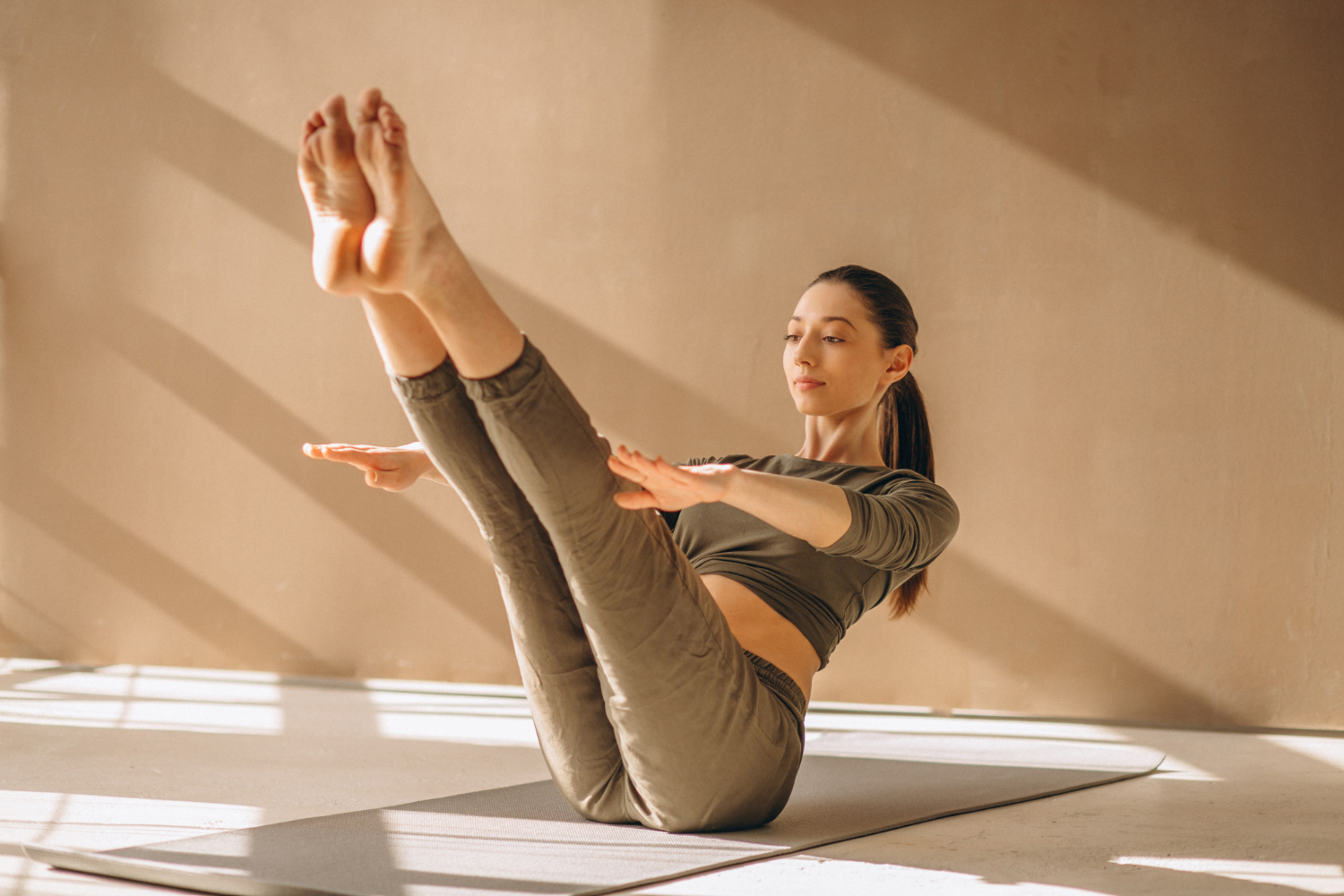
To effectively practice Wall Pilates, you need very little; however, there are certain safety considerations for women over 40. Below, we highlight the essential setup and safety guidelines for your Wall Pilates sessions.
Choosing the Right Wall Space
Choosing the correct wall space is essential for performing Wall Pilates. You want to select a stable wall with enough space for your mat to run both parallel and perpendicular to the wall. This will ensure you have enough room to freely move around and perform different exercises in your routine.
What You Actually Need (Spoiler: Very Little)
The beauty of Wall Pilates is that it requires very little to get in a great workout, because you can use the body as resistance and the wall for support.
For your session, we recommend getting a Pilates or yoga mat that is firm enough for stability and just thick enough for comfort. You can also add items such as Pilates balls, resistance bands, and a Pilates ring for added and alternative resistance.
Safety Considerations for Women 40+
Women over 40 experience a decline in the sex hormone estrogen, signalling the end of their reproductive years. This brings on symptoms, including decreased bone and muscle mass, increased risk of chronic illness.
Pre-existing conditions and injuries may also be present. This means exercises and sessions may need to be modified.
For women with decreased muscle mass and joint pain, standing Wall Pilates with smaller ranges of motion may be required to gradually build up strength. For those with heart-related issues such as high blood pressure, performing your sessions at a low to moderate intensity will allow you to safely build up your fitness.
During this time, it is important to listen to your body, focus on technique, and gradually progress. If you have any other concerns, consult your healthcare professional. They will advise you on safe train guidelines specific to your condition.
Mastering Core Breathing and Alignment
Mastering breathing and alignment is essential when performing your Wall Pilates sessions. Below, we discuss principles such as breathing patterns, neutral spine, and core engagement to help you get the most out of each session.
The Pilates Breathing Pattern Explained
Breathing is a major component of Pilates, helping to engage the core, stabilize the spine, and engage the target muscle. To achieve this, it follows a specific pattern which includes the following steps:
- Take a deep breath through your nose.
- Allow your breath to fill your lungs and expand your ribcage, as you feel your lungs move back and to the sides.
- This creates a proud chest, lengthening the spine.
- Breathe out slowly through the mouth, while engaging your abdominal muscles and pelvic floor.
- Exhaling with effort. This will create core stability.
Finding Neutral Spine Against the Wall
When performing Wall Pilates, it is important to find a neutral spine. This can be done with the following steps.
- Stand with your back and heels firmly against the wall.
- Engage your shoulder blades by gently pulling them back and down.
- Place your hand behind your lower back with your palm facing the wall.
- Tilt your hips back to flatten your spine against your hands.
- Then arch your back so it lifts off your hand.
- Then relax in between these two extremes.
Engaging Your Core Correctly
Proper core engagements requires correct breathing and a neutral spine. Use these steps to engage your core:
- Place one hand behind your lower back, and the other hand on the front of your lower abdomen.
- Find your neutral spine.
- Inhale, then exhale and draw your belly button toward your spine.
- Contract your abdomen.
5 Foundational Wall Pilates Movements
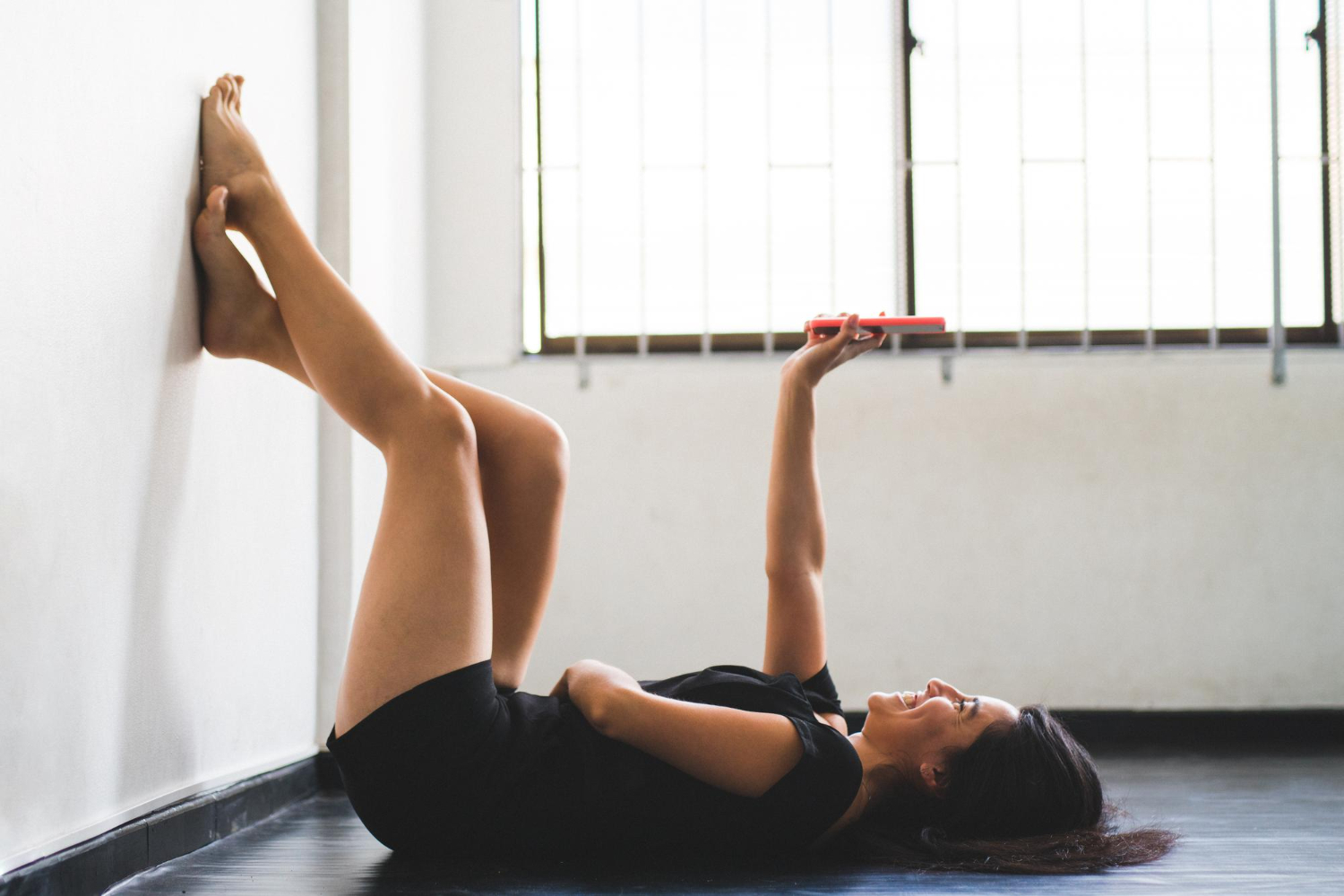
Here are the 5 foundation wall Pilates movements to help you begin developing core stability and awareness. Each exercise contains a brief description, target muscles, instructions, and professional tips to help you perform the movements correctly.
Wall Plank: Building Upper Body Strength
The wall plank is a variation of the traditional plank, which activates the core and engages the entire body. Using the wall allows you to perform the plank in a standing position, modifying the resistance, and allowing you to build up strength.
Target Muscles
- Transverse abdominis
- Obliques
- Rectus abdominis
How To Do Wall Planks
- Stand facing the wall, and place your forearms against the wall at head height.
- In this position, take one step back
- Hold this position for the desired durations.
Professional Tips
- Beginners should start with a smaller distance between their feet and the wall. This will reduce body weight.
- Maintain a neutral spine for the duration of the plank, avoiding sagging or bending the hips.
Wall Sit: Strengthening Legs and Core
The wall sit targets the legs and core muscles. Isometric training has been shown to improve muscle hypertrophy and tendon structure, two benefits that are invaluable for women over 40.
Target Muscles
- Quadriceps
- Hamstrings
- Glutes
- Adductor
- Calves
- Transverse abdominis
How To Do Wall Sits
- Stand with your back and heels against the wall with feet shoulder-width apart.
- Press your back firmly against the wall, and take a step with each foot.
- Gradually slide yourself down until your knees are bent at 90 degrees.
- Hold for the designated duration.
Professional Tips
- Beginners should start with a shallow squat or hold for a shorter duration. This will help them build up strength.
- Focus on performing the Pilates breathing technique and maintain a neutral spine for the duration of the exercise.
Wall Push-Up: Arm and Chest Development
The wall push-up is a modified variation of the traditional exercise, which allows beginners to gradually build up strength. Targeting the chest, shoulders, triceps, and core, it is great for developing upper body strength and improving spinal stability.
Target Muscles
- Pectoralis Major
- Anterior Deltoids
- Triceps
- Transverse Abdominis
How to Do Wall Push-Ups
- Stand facing the wall, place your hands on the wall at shoulder height.
- Take a step back so your arms are straightened.
- Begin by inhaling, allowing your elbows to bend as you lower your chest to the wall.
- Lower until your elbows are bent at 90-degree angles.
- Then exhale, brace your core, and push yourself back to the starting position.
Professional Tips
- Beginners should start with their feet closer to the wall. Like the wall plank, this will reduce resistance.
- Focus on correct breathing, engaging the core muscles with each repetition. This will help keep the spine stable and aligned.
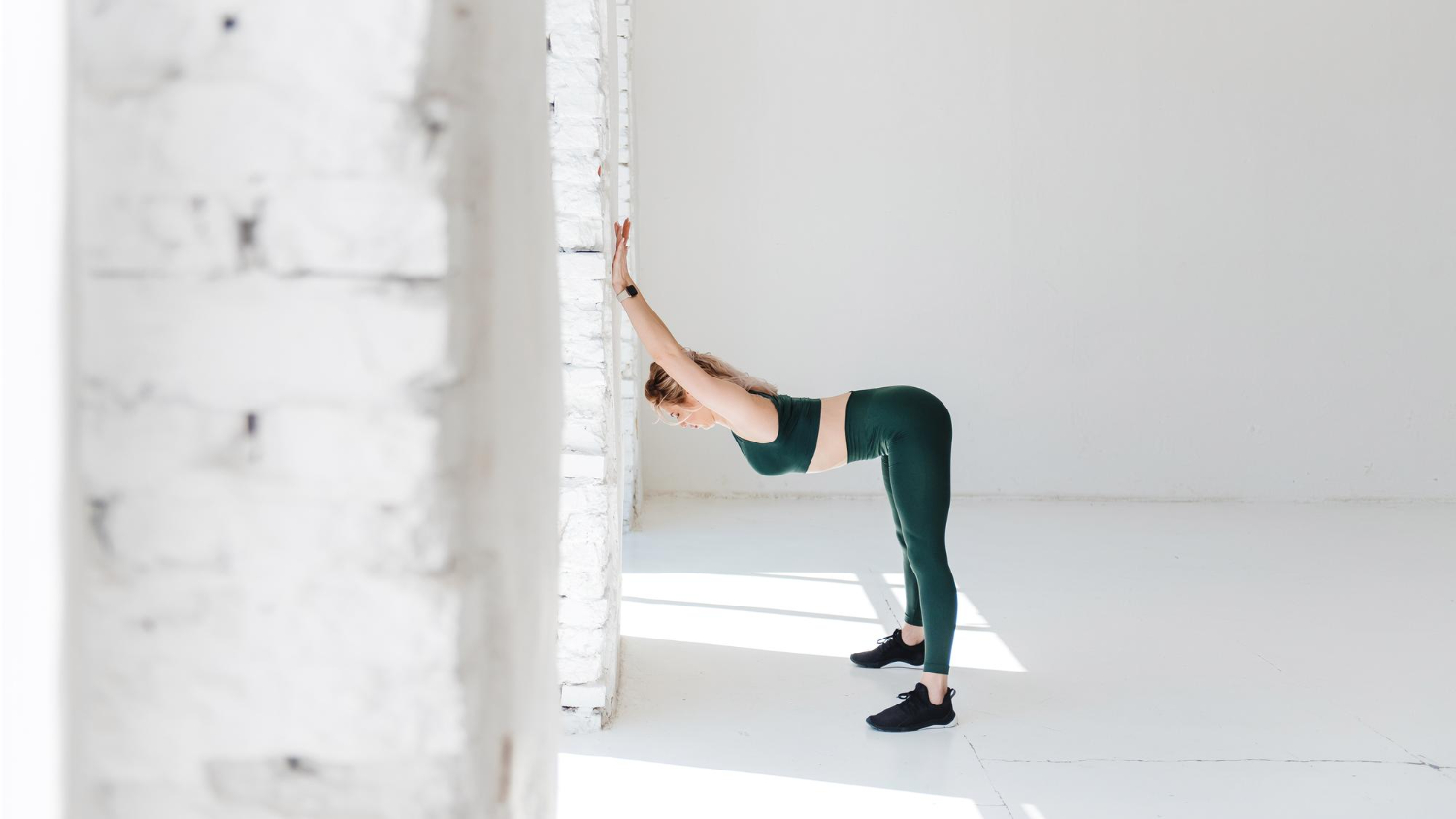
Wall Roll-Down: Spine Mobility and Control
The wall roll-down is a standing variation of a staple Pilates exercise. Used to strengthen abdominal muscles, improve posture, spinal mobility, and flexibility, it is an excellent addition to your Wall-Pilates workout.
Target Muscles
- Paraspinals
- Rectus abdominis
- Obliques
- Transverse Abdominis
- Hamstrings
How To Do Wall Roll-Downs
- Stand with your back and heels firmly against the wall.
- Inhale, and then exhale, begin curling your trunk forward, allowing your arms to hang forward.
- Lower yourself until your head reaches knee height or your hands touch the floor.
- Then begin lifting and rolling your torso and back up until you return to the upright position.
Professional Tips
- Focus on rolling each segment of the spine off the wall as you exhale. This will help the mobility of each spinal joint.
- When rolling up, perform the movement the same, but in reverse.
Wall Bridge: Glute & Core
The wall bridge is an excellent introduction to Wall Pilates floor exercises. Performed in the lying position, it targets the glutes, hamstrings, and core. This also makes it incredibly safe, reducing the risk of falling.
Target Muscles
- Glutes
- Hamstrings
- Transverse Abdominis
- Obliques
How To Do Wall Bridges
- Position your Pilates mat on the floor, perpendicular to the wall.
- Lie on the mat with your feet toward the wall.
- Find your neutral spine and then place your feet on the wall approximately 30 cm off the floor.
- Inhale, then exhale and engage your core muscles.
- Lift your hips off the floor until your trunk and thighs are in a straight line.
- Pause for one second, then inhale and lower yourself down to the floor.
Professional Tips
- Focus on lifting your hip off the floor rather than pushing down through the legs. This will help target the glutes and core.
- Place your hands on the floor by your sides, face down. This will help create a base for stability.
Common Beginner Mistakes and How to Avoid Them
Wall-Pilates is great for beginners; however, there are common mistakes to watch out for. Below, we highlight these mistakes and how to avoid them.
Holding Your Breath During Movements
Holding your breath during movements is one of the most common mistakes when doing Wall-Pilates. Whether this is due to focusing on all the technical uses or the challenge of performing a movement, it can stop you from correctly engaging your core, impacting the flow of movement.
To remedy this, practice the Pilates breathing pattern at the beginning of each session. This will coordinate your breathing and establish a mind-body connection, which will carry into your session.
Positioning Too Close or Far From Wall
Correct positioning is essential during your Wall Pilates workouts as it dictates the amount of support and resistance for each exercise.
For example, when the feet are too close to the wall, movement is limited, and resistance will decrease. When the feet are too far, the resistance will be too great, while the support will be insufficient.
To find the balance, we recommend standing facing the wall, with your toes almost touching the wall. Then take one step back and perform a quick test repetition. This will help you find the correct position before beginning your first working set.
Rushing Through Movements
Rushing through movement is another mistake made by beginners. This impacts the ability to engage the core, affecting technique and control.
This can be avoided by performing each repetition with a tempo of 4 seconds down, 4 seconds up. This will help build strength and control, improving your results.
Creating Your First Wall Pilates Routine
Below, we show you how to create your first sample 15-minute Wall Pilates routine, including sets, repetitions, and rest times, to help you begin your Wall-Pilates practice.
Sample 15-minute Beginner Sequence
This is a short 15-minute sequence created using the exercises above. The program focuses on establishing breath and core stability before starting the program. This will help keep it engaged for the duration of the session.
How Often to Practice as a Beginner
Beginners should perform Wall Pilates 2–3 times per week. This amount enables you to develop strength, endurance, function, and proficiency for each exercise.
The amount should be modified to match your schedule and pre-existing conditions.
Tracking Progress without Obsession
Tracking your progress is essential when performing your Wall Pilates program. To do this healthily, recommend taking baseline measurements such as weight, measurements, energy levels, mood, and any notes regarding existing injuries or conditions.
Alongside this, you should record sets, repetitions, and duration for each workout. This will help you plan and continue progressing. After 8–12 weeks, you can then retake your measurements and review the progress of your goals and exercises.
Progressing Beyond the Basics
In the beginning, Wall Pilates can seem overwhelming as there are so many new exercises and techniques to learn. However, over time, you will build proficiency and need to progress beyond the basics. Below, we explore how to modify your training to progress beyond the basics and implement intermediate movements.
When You’re Ready to Advance
You will know that you are ready to progress when your existing routine becomes too easy. This may present as exercises being less challenging, core engagement feeling easier, and feeling like you are not tired following your session.
If you still having energy after your session, or the exercises aren’t challenging, or you no longer feel stimulated, then it is time to progress.
Adding Holds and Pulses
Advancing training doesn’t just mean adding sets, repetitions, and extending the duration of your exercise; it also means modifying exercise by adding holds and pulses.
This may look like extending the duration of your wall plank, adding pulses to your wall push-ups, and pausing in the middle of each rep, increasing the difficulty and intensity of the exercise. Adding these small changes helps you continue challenging yourself without altering your existing routine.
Connecting to Intermediate Movements
Each Wall Pilates exercise is designed with a natural progression, allowing you to jump from beginner movements to advanced exercises.
Here, all push-ups become assisted push-ups (kneeling). Wall planks become kneeling planks, and wall squats progress to bodyweight squats.
Connecting from beginner movements to intermediate movements will not only give you a goal, but it will also help you understand the purpose of the movement. This allows you to build toward progression.
15 mins Pilates on your terms – anytime, anywhere.
Get your planSources
- Barnet-Hepples, T., Amorim, A.B., de Azeyêdo Nogueira, C., de Melo, M.C.S., Dario, A.B., Latey, P., Gomes, S.R.A. and de Brito Macedo, L. (2025) ‘Pilates lessens pain and disability and improves quality of life in people with musculoskeletal conditions in the extremities: A systematic review’, Annals of Physical and Rehabilitation Medicine, 68(6), 101973. https://www.sciencedirect.com/science/article/pii/S1877065725000387
- Kloubec J. Pilates: how does it work and who needs it? Muscles Ligaments Tendons J. 2011 Dec 29;1(2):61-6. PMID: 23738249; PMCID: PMC3666467.https://pmc.ncbi.nlm.nih.gov/articles/PMC3666467/
FAQs
What is Wall Pilates and how is it different from traditional Pilates?
Wall Pilates is a modified form of traditional Pilates that uses the wall for support and resistance. This approach provides added stability and helps build confidence, especially for beginners, making it a low-impact alternative that reduces joint stress while enhancing strength and flexibility.
Why is Wall Pilates a good exercise option for women over 40?
Wall Pilates is beneficial for women over 40 because it offers a gentle, low-impact workout that supports joint health and is adaptable to individual abilities. It focuses on core strength, flexibility, and balance without the need for expensive equipment, making it accessible and safe for strengthening the body.
What are some foundational Wall Pilates exercises to start with?
Beginner-friendly Wall Pilates exercises include wall push-ups, wall planks, wall-supported lunges, and wall squats. These exercises help build strength, stability, and confidence while using the wall for support and maintaining proper form.
How much space do I need to practice Wall Pilates at home?
To practice Wall Pilates at home, ensure you have a stable wall with enough space for a mat to run both parallel and perpendicular to the wall. This allows sufficient room to move freely and perform various exercises in your routine safely.
Should I use any equipment for Wall Pilates, and if so, what kind?
While Wall Pilates primarily uses body weight and the wall for resistance, a Pilates or yoga mat is recommended for comfort and stability. Optional equipment like Pilates balls, resistance bands, and Pilates rings can be added for variety and increased resistance.