15 mins Pilates on your terms – anytime, anywhere.
Get your plan
15 mins Pilates on your terms – anytime, anywhere.
Get your plan
Women over 40 experience a decline in the reproductive hormone estrogen, which has a far-reaching impact on the body.
This results in peri-menopause and menopause, which brings on several symptoms, including common menopause symptoms such as night sweats, hot flashes, increased stress, mood changes, and depression.
Somatic movements are an incredible form of physical activity that is fundamentally different from traditional exercises. While exercise typically focuses on strength and performance, somatic movements take a mindful approach, focusing on sensing the body and releasing tension, making them suitable for women over 40.
In this article, we discuss the somatic movement for women over 40. We cover what makes it different from traditional exercise, core principles, six foundation somatic movements, and more.
What Makes Somatic Movement Different

Somatic movement, focusing on body awareness, makes it very different from other forms of exercise.
Sources describe somatic movement as a focus on body awareness through reflection of movement, explaining it as “attention to body sensation and interpreting them with a perspective that aims to enhance a quality of life in which one stays present, mindful, even while moving: consciously acting."
Below, we highlight the key differences, including the release versus strength, sense over performance, and the nervous system focus.
Release Versus Strengthen Approach
Somatic movement is based on the notion that the body holds physical and emotional tension. The results of trauma, pain, and stress manifest in restrictions and impaired movement.
Somatic movements focus interactions on mindfulness, mind-muscle connection, and awareness, helping participants to identify areas of tension, relax to release, and be followed by retraining of movement patterns.
Meanwhile, strength focuses on performance, using sets, repetition, resistance, and intensity. This is done to place stress on the body for growth; however, it can increase stress and tension in the body.
While this isn’t inherently bad, the focus is far more external, while somatic movement is internal body awareness.
Internal Sensing Over External Performance
Research explains that somatic movement practices focus on developing body awareness through sensory awareness, movement, touch, breath, and mental imagery.
A 2025 study explored the efficacy of somatic movement on body awareness and spinal mobility in older adults, discovering that it has a significant improvement in spinal mobility and body and postural awareness for those with less experience.
The practice of internally sensing is based on developing a mind-body connection and proprioception, the body’s awareness of itself in space.
Nervous System Focus
Somatic movement focuses on regulating the nervous system to shift from the stressed state (fight) to a peaceful state (flight, rest, and digestion).
When the body is in a heightened state, also known as “fight-or-flight” (sympathetic nervous system activation), it is unable to relax as heart rate, blood pressure, and breathing increase. While this is vital for survival, it can make it difficult to develop the mind-muscle connection, proprioception, and body awareness.
Somatic movements focus on shifting this to a peaceful state known as “rest and digest” (parasympathetic nervous system activation). This calm state allows the development of body awareness and release of tension, trauma, and forms new, healthier neural pathways.
Understanding Sensory-Motor Amnesia After 40
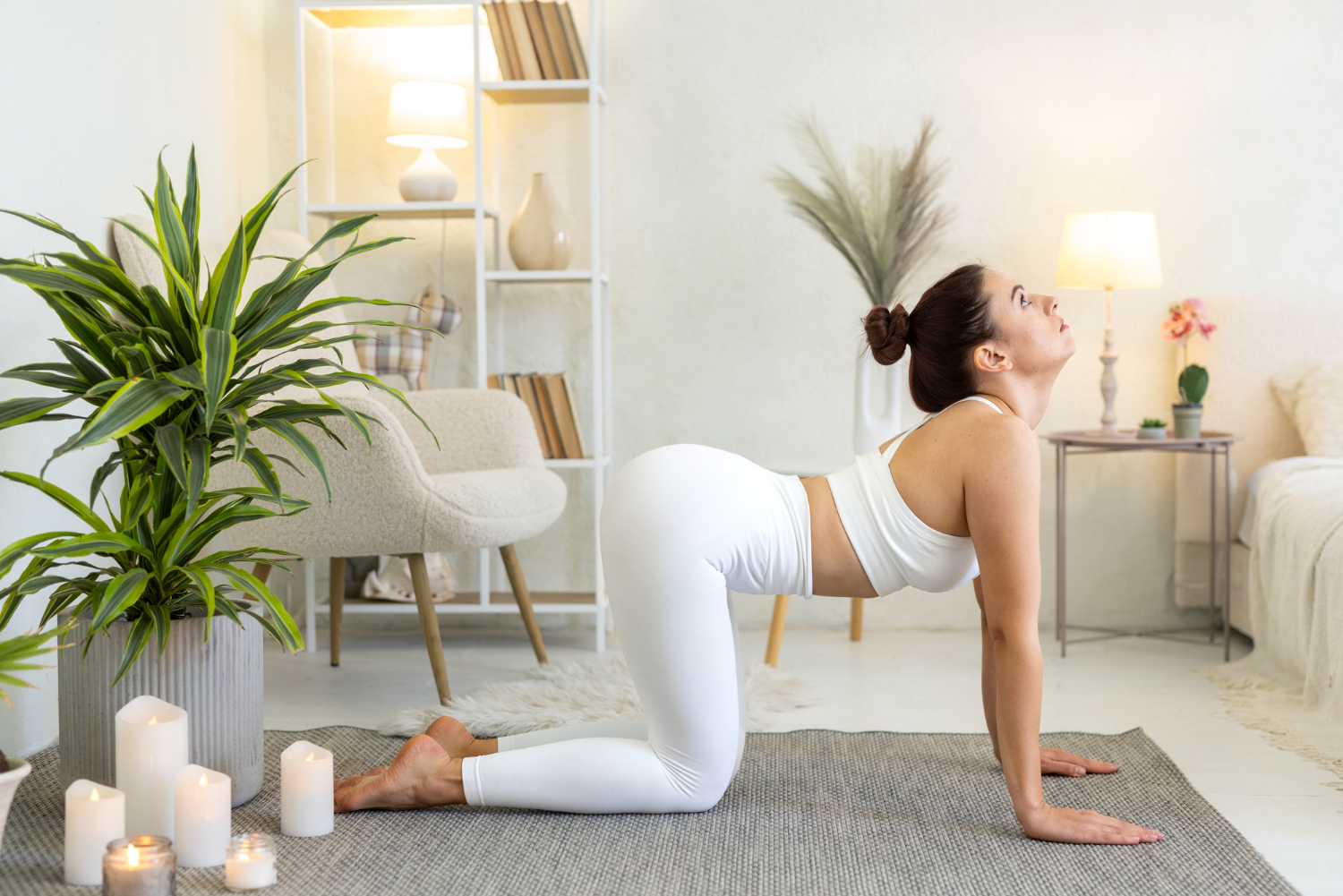
Research explains that sensory-motor amnesia is the tendency of the human brain to forget certain movements, creating muscles and muscle groups, leaving them chronically contracted.
Below, we explore sensory-motor amnesia, including how tension patterns develop, stress's impact on muscular holding, and why stretching alone doesn’t resolve it.
How Chronic Tension Patterns Develop
Chronic tension patterns develop when the central nervous system regularly engages muscle reflexes due to stress, trauma, injury, and habits. Like a negative form of muscle memory, the body begins to hold tension, which can lead to impaired function.
This begins with a triggering of reflexes that become habitual, ingraining it in the brain and nervous system as the default state. What follows is a loss of sensory awareness and voluntary control, ultimately leading to chronic tension and dysfunction.
Stress Impact on Muscular Holding
Once the body has developed chronic tension and set a new default state. This can lead to restrictions that alter posture and joint range of motion, which can result in pain and dysfunction.
Why Stretching Alone Doesn’t Resolve It
Stretching is an effective means of lengthening muscle and alleviating restrictions. However, when the nervous system has assigned a new default position, simply lengthening tissue will make little difference to realign and reset the muscle and the nervous system back to its true state.
Core Principles Of Somatic Practice
Somatic movement relies on a series of core principles to improve body awareness and release tension. We discuss somatic release techniques, mindful movements, and developing internal awareness to help you effectively perform somatic movement sessions.
Pandiculation: The Somatic Release Technique
Research explains that pandiculation is the involuntary stretching of soft tissue that is performed by animals, including humans. Most commonly practiced as a full-body stretch and yawn, it resets the nervous system to the waking state after sleep.
This is performed to restore the structural and functional balance of the fascia, preparing the body for environmental stimulus.
This reset is used in somatic movement training to neurologically reset chronically tight muscles, resulting in improved muscle control, lengthening, and reduction of pain.
Slow, Mindful Movement Importance
Somatic movement utilizes slow, mindful movement, allowing participants to deepen their mind-body connection. When movements are performed rapidly, it can be difficult for the nervous system to regulate and for us to sense the effect it has on the body.
Performing movements slowly and mindfully helps calm the nervous system. This provides the mental clarity required to focus on points of tension and how to use the movements to release tension, improve function, and address pain.
Developing Internal Awareness
Somatic movement is unique because it is focused on internal awareness rather than performance. When movements are performed slowly and mindfully, it helps develop an internal sense, mentally mapping out the effects that breathing, movements, and touch have on the body.
6 Foundational Somatic Exercises

Here are the six foundation somatic exercises to help you deepen your mind-body connection, calm the nervous system, and begin to address tension and pain. Each exercise comes with a brief description, instructions, and professional cues to help you improve your connection with your body.
1. Arch & Flatten
The arch and flatten is a stable somatic exercise that encourages movement of the lower back. Performed by arching and flattening the lower back, it helps develop awareness and mobility while decreasing tension.
How To Do Arch & Flatten
- Lie on your back and place your feet flat on the floor, with knees bent.
- Breathe in and tilt your pelvis forward to arch your lower back.
- Breathe out and tilt your pelvis backward to flatten your lower back until it makes contact with the floor.
Professional Cues
- Perform the exercise alongside your breath and allow it to create a flow with your movement.
- If you have lower back pain or limited mobility, begin with small tilts and focus on developing your mind-body connection.
2. Pelvic Clock
The pelvic clock is designed to develop awareness and mobility. During the movement, you will need to imagine your pelvis is the face of a clock. From here, you will tilt it based on the different times (3, 6, 9, 12). This helps release tension, improve mind-body connection, and enhance mobility.
Here are the times and the associated movements.
- Three: Tilting or circling to the left.
- Six: Bottom of the pelvis. Tilt the pelvis forward and arch the back.
- Nine: Titling orcircling to the right.
- Twelve: Top of the pelvis. Titling the pelvis backward and flattening the back.
How To Do Pelvic Clock
- Lie on your back, place your feet firmly on the floor with your knees bent, shoulder-width apart.
- Imagine your pelvis as the face of a clock.
- Tilt your pelvis back, pressing your tailbone down at 6 o’clock, arching your lower back.
- Then tilt your pelvis forward, curling your tailbone at 12 o’clock, flattening your back
- Then tilt your right hip down, lifting your left hip bone to 3 o’clock.
- Then tilt your left hip down, lifting your right hip bone to 9 o’clock.
- This can also be performed in a circular motion.
Professional Cues
- Perform the tilts gently and familiarize yourself with the sensation and how your body responds.
- Take it slow and allow your body to flow and relax into each tilt.
3. Shoulder Rolls
Shoulder rolls are excellent for developing awareness of scapula function, improving mobility, and releasing tension of the upper body. Performed by shrugging and lowering the shoulders in a rolling motion, it helps to deepen the upper body mind-body connection, which is essential for breathing and maintaining posture and spinal alignment.
How To Do Shoulder Rolls
- Stand upright with a relaxed posture, chin tucked, and your shoulder blades gently engaged back and down.
- Inhale and shrug your shoulders upward.
- Then exhale and slowly roll them downward, gently pulling them toward the floor.
- Perform in a rolling motion for the set duration of a number of repetitions.
Professional Cues
- Perform with diaphragmatic breathing, inhaling as you lift the shoulders, and exhaling as you roll them down. This will help to release tension.
- Perform slowly with control and allow the sensation of each roll to guide you. This will help improve mobility.
4. Gentle Neck Tilt
Gentle neck tilts are a safe and slow exercise that releases tension and encourages movement, and helps to restore alignment to the cervical spine.
How To Do Neck Tilts
- Stand upright with your spine aligned and your chin gently tucked.
- Inhale, then exhale and tilt your head to the right.
- Inhale, return the head back to the middle, and perform the movement for the opposite side.
- Repeat for the set duration.
Professional Cues
- Keep your nose pointing forward and avoid turning your head. This ensures you are performing a true tilting movement.
- Individuals with existing neck tension should begin with small ranges of motion and use their senses to guide them through the movement.
5. Knee Drop
The knee drop is designed to release tension and mobility around the hip and pelvis, performed by lowering one knee to the floor and the other to loosely follow, it gently develops awareness through sensation of movement.
How To Do Knee Drop
- Lie on your back, bend your knees, and place your feet flat on the mat shoulder-width apart.
- Lower the left knee to the floor on the left side, allowing your torso to gently rotate.
- Return the left knee to the starting position so both knees are vertical.
- Drop the right knee to the right side, allowing your torso to gently rotate.
- Alternate this movement pattern for the desired number of repetitions.
Professional Cues
- When lowering the knee, keep the foot on the opposite side on the floor and let it rotate to the midline of the body.
- Focus on diaphragmatic breathing, relaxing and flowing into each repetition,
6. Hip Circles (Small)
Hip circles encourage hip and pelvic mobility. Perform with knees tucked with a circular motion, which enhances the mind-body connection and releases tension to improve mobility.
How To Do Hip Circles
- Lie on your back with knees bent and feet flat, shoulder-width apart.
- Lift your feet off the floor and bring your knees to your chest.
- With your hands on your knees, make small circles.
- Perform in one direction for a designated number of repetitions or duration, then change direction.
Professional Cues
- Focus on deep breathing, feeling your diaphragm move, and your ribs move.
- Concentrate on linking your breath to your movement and allow it to guide your circles.
Practicing Somatically: The How-To
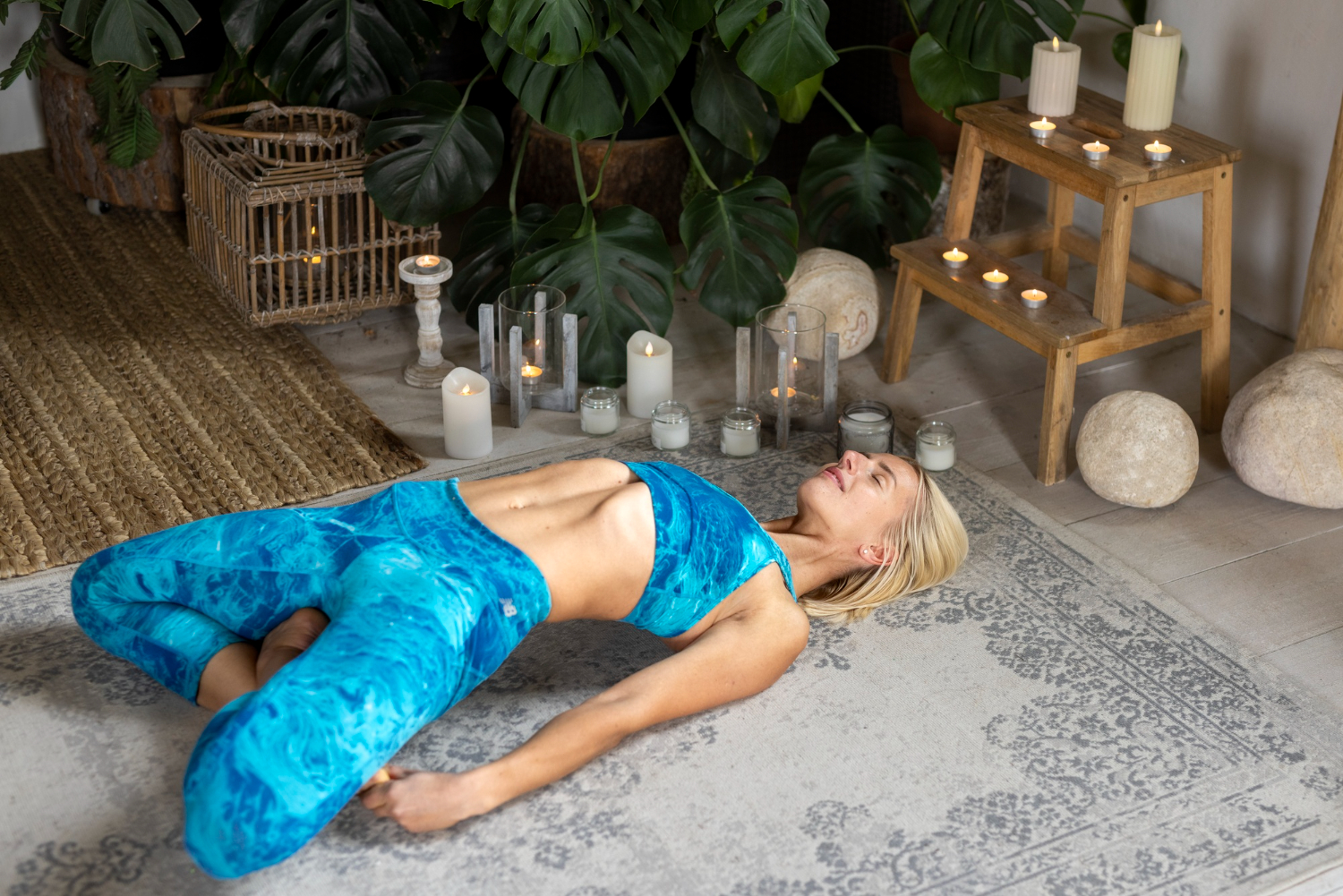
Somatic exercise’s slow, deliberate, and flowing session requires you to be more present and connected to your body. Below, we discuss tips for practicing exercise effectively, including resting and an appropriate environment, how to focus, and common mistakes to avoid.
Creating Appropriate Environment
Resting a calming space free from distractions is essential for performing somatic exercises. This allows you to focus and develop awareness, mind-body connection, and work on releasing tensions.
Here are ways you can create a laming environment for your somatic movement sessions.
- Dedicated Room: Dedicating a space for your somatic movement session will help shift your focus, making it easier to relax and engage your mind-body connection.
- Remove Distractions: Removing devices such as computers, phones, and televisions will help keep you focused. This means each session is about you and your body.
- Mood Lighting: Light the room with soft, ambient light such as lamps, string lights, or natural light.
- Remove Clutter: Keep your space lean and tidy, organized and free from clutter. This will help you disconnect from the outside world as soon as you step into your room.
Attentional Focus During Movement
Attentional focus is vital as it turns the focus inward to assess the bodily sensation during your somatic movement session. This allows you to identify shifts in tension and changes to breathing, heart rate, and function.
However, unlike regular exercises, which focus on addressing restriction, somatic exercise utilizes these signals for observation, sensing how they impact the body and movement.
Common Mistakes in Somatic Practice
Common mistakes from somatic parties arise from the desire not to fix and immediately address signals, tension, and observations, including:
- Overthinking: This can pull you away from sensation, leading to frustration, making it difficult to feel them and observe their patterns.
- Expecting Quick Solutions: This can lead to frustration, making it difficult for all the nervous system and establishing a mind-body connection.
- Rushing: Moving quickly makes it more difficult to develop awareness.
- Skipping Reflection: Stops you from identifying the small changes that happen during the session.
- Lake of Consistency: Make it difficult for a connection with the body, reducing the benefits.
- Addressing Issues With Force: Pushing through against or through restriction and activating a flight for fight response, making it difficult to maintain a connection with the body.
Addressing Specific Tension Patterns
Developing mind-body awareness allows you to identify specific tension patterns. Below, we explain how to address tension patterns of the neck and shoulders, lower back, and hips.
Chronic Neck and Shoulder Holding
Tension surrounding the neck and shoulders can be the result of poor posture, overuse, or stress and anxiety. The muscles of the neck and shoulders pass over the same joints, which leads to holding patterns that restrict the entire area.
Performing movements such as gentle head tilts and shoulder rolls helps address tension for both areas simultaneously, when encouraging a greater release.
Lower Back Tension Release
Tension surrounding the spine is often caused by poor posture, muscle strains, and stress, impacting the spine and leading to dysfunction.
Exercises such as arching and flattening and pelvic clock help to gently release tension, lengthen tissues, and improve pelvic and lumbar joint mobility.
Hip Tightness and Holding
Tension patterns of the hips can be the result of injuries, and muscle imbalances, often manifesting in dysfunction and poor movement quality.
This can be addressed by performing knee drops and small hip circles, helping restore awareness of movement, release tension, and encourage healthy function.
Integrating Somatic Awareness into Daily Life
Somatic movements help to improve awareness, which can carry over into your daily life. Below, we explore how to integrate somatic awareness, including noticing tension, mini somatic resets, and complementing other movement practices.
Noticing Tension Patterns Throughout Day
The mind-body connection you establish from somatic movements allows you to identify restriction and tension throughout the day.
During initial sessions, identifying tension can come as a surprise as you discover factors such as poor mechanics, lack of mobility, and how you should be functioning. However, over time, you will begin to understand the correct mechanics and be able to identify points of tension and how they are impacting your body.
This level of awareness provides an advantage. Allowing you to note changes, providing issues to begin exploring during your next session.
Mini Somatic Resets
Integrating tension patterns also allows you to perform mini somatic resets throughout the day. These are miniature, easy to perform versions of somatic movements that can be performed anywhere.
Here is a list of mini somatic resets you can use to address tension for previously identified issues. We recommend approaching in a similar way as your sessions, by focusing on breathing, identifying tension and emotional significance, followed by gentle movement.
- Body Scans: Can be performed by closing your eyes and scanning the body for tension patterns.
- Neck Tilts: Can be performed in the seated and standing position, releasing tension and restoring mobility.
- Shoulder Shrugs: These can be performed seated or standing when you have identified tension and restriction through the upper and neck.
- Pelvic Tilts: Performed like the arch and flatten, this mini reset helps to reduce tension and restore mobility to the lower back. Best of all, it can be performed sitting or standing.
- Diaphragmatic Breathing: Perform by placing a hand on the belly and performing deep breathes, this style of breathing helps to reduce tension, promote relaxation. This can be used alongside the other mini resets to help establish your mind-body connection.
Complementing Other Movement Practices
The mind-body connection and awareness that is developed with somatic movements can also complement other forms of exercise and daily movement practices.
For example, breathing is a powerful tool for calming the mind and body for Pilates and yoga, and incredibly providing oxygenated blood to working muscles during more intense forms of exercise.
While diaphragmatic breathing is not always used in other forms of movement and physical activity, it may help improve awareness around healthy breathing patterns.
Sources
- Meehan E, Carter B. Moving With Pain: What Principles From Somatic Practices Can Offer to People Living With Chronic Pain. Front Psychol. 2021 Jan 25;11:620381. doi: 10.3389/fpsyg.2020.620381. PMID: 33569028; PMCID: PMC7868595. https://pmc.ncbi.nlm.nih.gov/articles/PMC7868595/
- Lara, D.K., Hamel, K.A. and Anderson, D.I. (2025) ‘Somatic movement intervention among older adults to improve body awareness and spine mobility: A pilot study’, Journal of Bodywork and Movement Therapies, 42, pp. 319–330. https://www.sciencedirect.com/science/article/pii/S1360859224005771
- Huang Q, Babgi AA. Effect of Hanna Somatic Education on Low Back and Neck Pain Levels. Saudi J Med Med Sci. 2022 Sep-Dec;10(3):266-271. doi: 10.4103/sjmms.sjmms_580_21. Epub 2022 Sep 7. PMID: 36247048; PMCID: PMC9555036. https://pmc.ncbi.nlm.nih.gov/articles/PMC9555036/
- Bertolucci LF. Pandiculation: nature's way of maintaining the functional integrity of the myofascial system? J Bodyw Mov Ther. 2011 Jul;15(3):268-80. doi: 10.1016/j.jbmt.2010.12.006. Epub 2011 Jan 14. PMID: 21665102. https://pubmed.ncbi.nlm.nih.gov/21665102/
15 mins Pilates on your terms – anytime, anywhere.
Get your planSources
FAQs
What is somatic movement and how is it different from traditional exercise?
Somatic movement is a form of physical activity that emphasizes body awareness and mindfulness rather than strength and performance. It focuses on sensing the body and releasing tension, making it distinct from traditional exercises that often prioritize external performance metrics such as strength and endurance.
How can somatic movement benefit women over 40?
For women over 40, somatic movement can help release chronic tension and improve body awareness, which may be particularly beneficial during peri-menopause and menopause. It aids in managing stress, improving mood, and enhancing overall well-being by fostering a deeper mind-body connection.
Why is focusing on the nervous system important in somatic movement?
Somatic movement emphasizes the regulation of the nervous system, helping shift from a stressed 'fight-or-flight' state to a calm 'rest and digest' state. This transition is crucial for reducing tension and trauma, improving relaxation, and fostering better body awareness.
Can somatic movement help with sensory-motor amnesia?
Yes, somatic movement can address sensory-motor amnesia by re-engaging the brain with forgotten movements. This practice helps release chronically contracted muscles and retrains movement patterns, which stretching alone may not resolve.
Should somatic movement be a part of my regular fitness routine?
Incorporating somatic movement into your fitness routine can be highly beneficial, especially for women over 40. It complements other forms of exercise by focusing on internal awareness and relaxation, which can enhance overall movement quality and reduce stress.